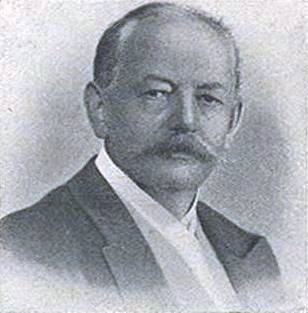
File:Engler_in_NYPL.jpg · Wikimedia Commons · See Wikimedia Commons
Adolf Engler
Sign in to saveAlso known as Engl., Heinrich Gustav Adolf Engler, A. Engler, H. G. A. Engler
German botanist (1844-1930)
Key facts
- Born
- Heinrich Gustav Adolf Engler , 25 March 1844 ( 1844-03-25 ) , Sagan , Prussia (now Żagań , Poland)
- Died
- 10 October 1930 (1930-10-10) (aged 86), Berlin , Germany
- Alma mater
- University of Breslau
- Known for
- Die Natürlichen Pflanzenfamilien
- Awards
- Linnean Medal (1913)
- Fields
- Botany , plant taxonomy
- Institutions
- Botanical Institute of Munich , Kiel University , Friedrich Wilhelm University of Berlin
- Author abbrev botany
- Engl.
via Wikipedia infobox
Wikidata facts
- Instance of
- human
- Given name
- Heinrich
- Family name
- Engler
- Gender
- male
- Citizenship
- Weimar Republic
- Place of birth
- Żagań
- Place of death
- Berlin
- Occupation
- editor
- Educated at
- Magdalenaeum Wrocław
- Employer
- Technical University of Munich
- Languages spoken
- German
- Award
- Linnean Medal
- Notable work
- Engler system
- Academic degree
- Doctor of Philosophy
- Doctoral advisor
- Heinrich Göppert
- Doctoral student
- Max Burret
- Field of work
- taxonomy
- Image
- Engler in NYPL.jpg
- Residence
- Germany
Show 11 more facts
- Commons Creator page
- Adolf Engler
- Commons category
- Adolf Engler
- member of
- Russian Academy of Sciences
- date of birth
- 1844-03-25
- date of death
- 1930-10-10
- student
- Franz Ewald Bachmann
- place of burial
- Botanic Garden and Botanical Museum Berlin
- writing language
- German
- P6944
- Adolf Engler
- P8168
- Merkheuli
- interested in
- botany
via Wikidata · CC0
~7 min read
Encyclopedic overview
Heinrich Gustav Adolf Engler (25 March 1844 – 10 October 1930) was a German botanist. He is notable for his work on plant taxonomy and phytogeography, such as Die natürlichen Pflanzenfamilien (The Natural Plant Families), edited with Karl A. E. von Prantl.
Even now, his system of plant classification, the Engler system, is still used by many herbaria and is followed by writers of many manuals and floras. It is still the only system that treats all 'plants' (in the wider sense, algae to flowering plants) in such depth.
Excerpted from Wikipedia’s “Adolf Engler” article, available under the CC BY-SA 4.0 licence.