Amazon Leo
Sign in to saveAlso known as Project Kuiper
Amazon's satellites and space-based systems project
Described at
Amazon Leo
Project Kuiper is an initiative to increase global broadband access through a constellation of 3,236 satellites in low Earth orbit (LEO). Its mission is to bring fast, affordable broadband to unserved and underserved communities around the world.
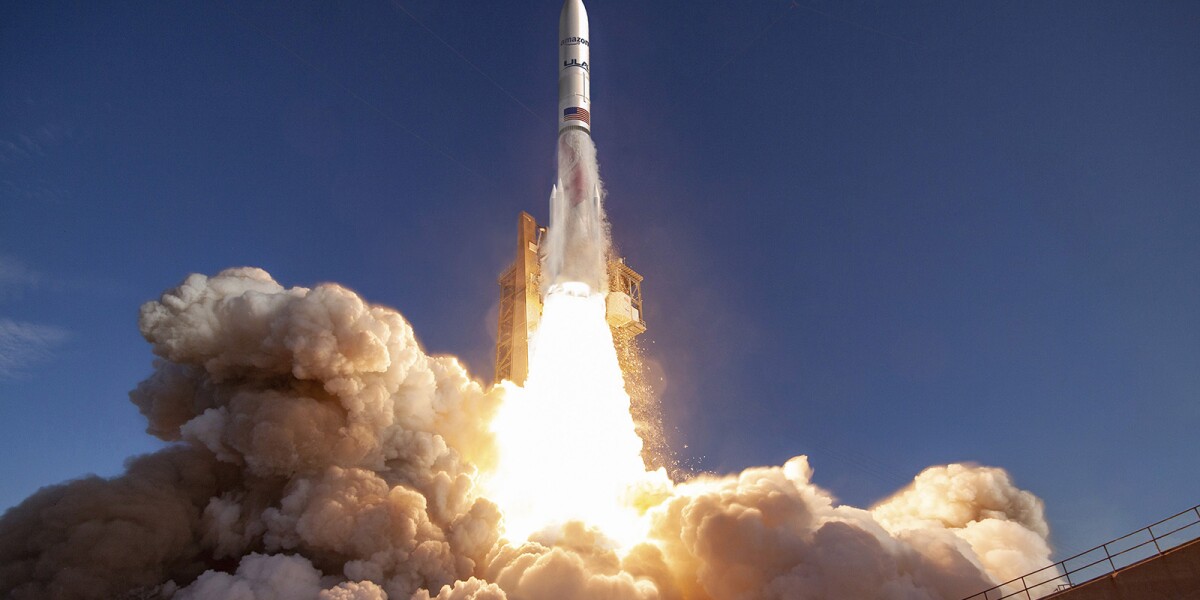
aboutamazon.com →Amazon Leo is Amazon’s low Earth orbit satellite network. Its mission is to deliver fast, reliable internet to customers and communities beyond the reach of existing networks. Get answers to your questions about how Amazon will provide internet connectivity from space. South Africa's largest fixed internet service provider, Herotel, will use Amazon's satellite network to connect homes and small businesses beyond the reach of fiber and fixed wireless. Amazon's investments are boosting the Sunshine State's economy while creating opportunities for Floridians. Amazon Leo will launch 36 satellites on its next mission, the largest payload to date for Amazon and Ariane 6. Jassy told CNBC’s Jim Cramer that Amazon has invested $4 billion in rural delivery infrastructure while "other companies have been backing away." There are billions of people on the planet who lack high-speed internet access, and millions of businesses, governments, and other organizations operating in places without reliable connectivity. We started Amazon Leo (formerly Project Kuiper) to help address this gap and extend fast, reliable internet to more people around the world. Amazon Leo began a full-scale deployment of its satellite constellation in April 2025 with the first of 80+ launches from Arianespace, Blue Origin, SpaceX, and United Launch Alliance (ULA). Those agreements comprise the largest commercial procurement of launch capacity in history, and support thousands of suppliers and highly skilled jobs across the U.S. and Europe. Amazon Leo is powered by a constellation of more than 3,000 satellites in low Earth orbit, connected by high-speed optical links and communicating with a secure global network of gateway stations, fiber, and internet connection points on the ground. Customers connect to the network using one of three compact, high-performance antennas—Leo Nano, Leo Pro, and Leo Ultra—extending high-speed, low-latency broadband to virtually any location on the planet. Amazon's data centers are 7x more water-efficient than the industry average. Here’s how we do it.
Excerpt from a page describing this subject · 12,607 chars · not written by Vinony
Wikidata facts
- Instance of
- spacecraft constellation
- Named after
- Kuiper Belt
- Official name
- Amazon Leo
- Country
- United States
- Operator
- Amazon
- Country of origin
- United States
- Developer
- Kuiper Systems
- Manufacturer
- Amazon
- Official website
- leo.amazon.com
- Has use
- satellite Internet access
- Has parts of class
- communications satellite
Show 5 more facts
- inception
- 2019-00-00
- Commons category
- Project Kuiper
- number of viewers/listeners
- 286743
- social media followers
- 6100
- described at URL
- www.aboutamazon.com/what-we-do/devices-services/amazon-leo
Sources (9)
via Wikidata · CC0