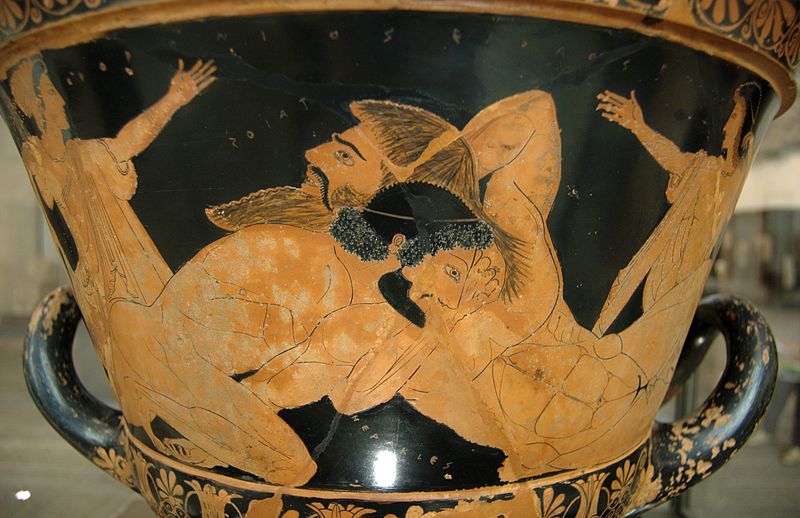
File:Herakles_Antaios_Louvre_G103.jpg · Wikimedia Commons · See Wikimedia Commons
Antaeus
Sign in to saveAlso known as Antæus
Antaeus (; , derived from ), known to the Berbers as Anti, was a figure in Berber and Greek mythology. He was famed for his defeat by Heracles as part of the Labours of Heracles.
Key facts
- Deity.name
- Antaeus
- Deity.type
- greek
- Deity.abode
- Libya
- Deity.parents
- Poseidon and Gaia
- Deity.children
- Iphinoe
- Deity.deity_of
- Giant King of Libya
- Deity.member_of
- the Libyan Royal Family
- Deity.consort
- Tinjis
- Deity.other_names
- Anti
- Deity.image
- Herakles Antaios Louvre G103.jpg
- Deity.caption
- Heracles and Antaeus, red-figured krater by Euphronios, 515–510 BC, Louvre
via Wikipedia infobox
~8 min read
Encyclopedic overview
9 sectionsContents
- Family
- Mythology
- Location in Africa
- Gallery
- See also
- Notes
- References
- Further reading
- External links
Antaeus (; , derived from ), known to the Berbers as Anti, was a figure in Berber and Greek mythology. He was famed for his defeat by Heracles as part of the Labours of Heracles.
== Family == In Greek sources, he was the son of Poseidon and Gaia, who lived in the interior desert of Libya. According to the Roman geographer Pomponius Mela, his wife was the goddess Tinjis, for whom it was claimed that the city of Tangier in Morocco was named (though it could be the other way around). Another daughter, Iphinoe, consorted with Heracles.
Excerpted from Wikipedia’s “Antaeus” article, available under the CC BY-SA 4.0 licence.