File:Mickey_Mouse_(poster_version).svg · Wikimedia Commons · See Wikimedia Commons
anthropomorphism
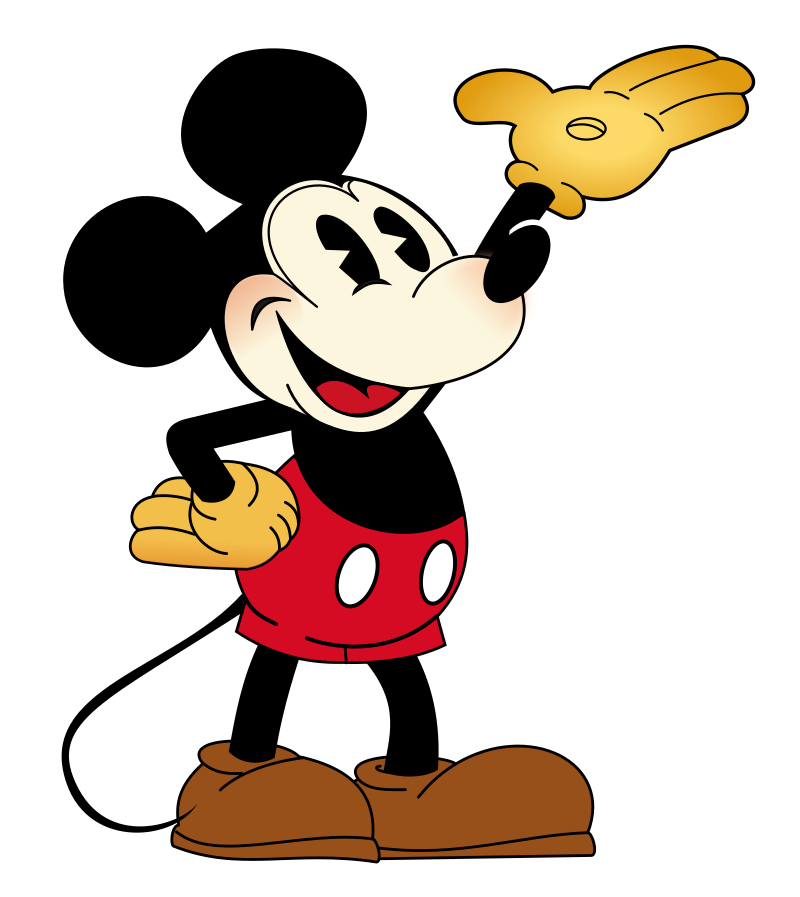
Sign in to savethumb|Mickey Mouse, an anthropomorphic mouse and an American cartoon character co-created in 1928 by [[Walt Disney and Ub Iwerks, showing typical elements of anthropomorphism: bipedalism, human-like hands with opposable thumbs, human facial expressions, and wearing clothing.]] Anthropomorphism is the ascribing of human personality, appearance, conduct, cognition, or other attributes to non-human entities, often including non-human animals. In fiction and folklore, it is specifically the endowing of non-human characters with human-like behaviors, speech, facial expressions, etc; common examples
Anthropomorphism is the practice of giving human qualities—like personalities, facial expressions, and behaviors—to non-human things, especially animals. It appears frequently in fiction and folklore, like in cartoons where animal characters walk upright, wear clothes, and speak like people.
AI-generated from the Wikipedia summary — may contain errors.
Wikidata facts
- Instance of
- concept
- Image
- The North Wind and the Sun - Wind - Project Gutenberg etext 19994.jpg
Show 3 more facts
- partially coincident with
- personification
- Commons category
- Anthropomorphism
- topic's main category
- Category:Anthropomorphism
Sources (2)
via Wikidata · CC0
~37 min read
Encyclopedic overview
34 sectionsContents
- Etymology
- Examples in prehistory
- In religion and mythology
- Criticism
- In literature
- Religious texts
- Fables
- Fairy tales
- Modern literature
- In film
- In television
- In video games
- Art history
- Claes Oldenburg
- Minimalism
- Post-minimalism
- Mascots
- Animals
- In science
- In computing
- Psychology
- Foundational research
- Three-factor theory
- Developmental perspective
- Effect on learning
- In mental health
- In marketing
- Image gallery
- See also
- Notes
- References
- Sources
- Further reading
- External links
thumb|Mickey Mouse, an anthropomorphic mouse and an American cartoon character co-created in 1928 by [[Walt Disney and Ub Iwerks, showing typical elements of anthropomorphism: bipedalism, human-like hands with opposable thumbs, human facial expressions, and wearing clothing.]] Anthropomorphism is the ascribing of human personality, appearance, conduct, cognition, or other attributes to non-human entities, often including non-human animals. In fiction and folklore, it is specifically the endowing of non-human characters with human-like behaviors, speech, facial expressions, etc; common examples include intelligent talking animals, talking trees, anthropomorphized food, and sentient toys.
As a general human tendency, anthropomorphism is considered innate to human psychology. Personification, which usually refers to a literary device, is the related attribution of human form and characteristics to non-animal organisms, inanimate objects, or abstract concepts such as nations, emotions, and natural forces like weather or the seasons. Both have ancient roots as storytelling and artistic devices, and most cultures have traditional fables with anthropomorphized animals as characters. People have also routinely attributed human emotions and behavioral traits to wild as well as domesticated animals.
Excerpted from Wikipedia’s “anthropomorphism” article, available under the CC BY-SA 4.0 licence.
Gallery (26)
Available in 73 languages
- Español
- Français
- Deutsch
- 中文
- 日本語
- Русский
- Português
- Italiano
- العربية
- Afrikaans
- Albanian
- Armenian
- Azerbaijani
- Bahasa Indonesia
- Bangla
- Basque
- be_x_old
- Belarusian
Show 54 more
- Bikol
- Bosnian
- Breton
- Bulgarian
- Catalan
- Chuvash
- Croatian
- Czech
- Danish
- Esperanto
- Estonian
- Finnish
- Galician
- Georgian
- Greek
- Hebrew
- Hungarian
- Icelandic
- Interlingua
- Kazakh
- Kurdish
- Kyrgyz
- Latvian
- Limburgish
- Luxembourgish
- Malay
- Moksha
- Mongolian
- Nederlands
- Norwegian
- Norwegian Nynorsk
- Occitan
- Polski
- Romanian
- Serbian
- Serbian (Latin)
- simple
- Slovak
- Slovenian
- Svenska
- Swahili
- Tajik
- Tamil
- Tiếng Việt
- Türkçe
- Ukrainian
- Urdu
- Uzbek
- Western Frisian
- Wu Chinese
- zh_yue
- فارسی
- ไทย
- 한국어
via Wikidata sitelinks · CC0