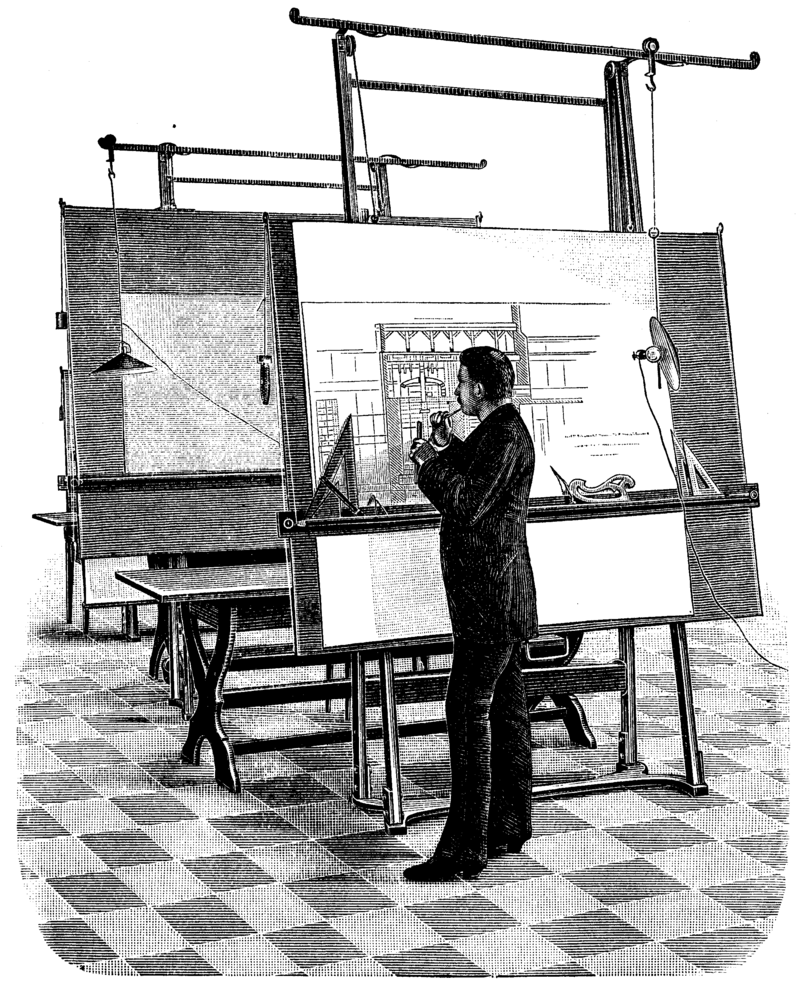
File:Architect.png · Wikimedia Commons · See Wikimedia Commons
architect
Sign in to saveAlso known as building architects
An architect is a person who plans, designs, and oversees the construction of buildings. To practice architecture means to provide services in connection with the design of buildings and the space within the site surrounding the buildings that have human occupancy or use as their principal purpose. Etymologically, the term architect derives from the Latin , which derives from the Greek (-, chief + , builder), i.e., chief builder.
An architect is a professional who designs buildings and the spaces around them, then oversees their construction. This work matters because architects shape the physical environments where people live and work, making decisions about how buildings function and how they fit into their surroundings.
AI-generated from the Wikipedia summary — may contain errors.
Key facts
- Occupation.image
- 250px
- Occupation.caption
- An architect, 1893
- Occupation.official_names
- Architect
- Occupation.type
- Profession
- Occupation.activity_sector
- ArchitectureCivil engineeringStructural engineeringConstructionProject managementUrban planningInterior designVisual arts
- Occupation.competencies
- Engineering, technical knowledge, building design, planning and management skills
- Occupation.formation
- See professional requirements
via Wikipedia infobox
Wikidata facts
- Instance of
- profession
- Image
- Architect.png
- Patron saint
- Benedict of Nursia
- Field of occupation
- construction
Show 9 more facts
- topic has template
- Template:Infobox architect
- male form of label
- arquitecto
- female form of label
- مهندسه معماريه
- Commons category
- Architects
- topic's main category
- Category:Architects
- ISCO-88 occupation class
- 2161
- category for eponymous categories
- Category:Wikipedia categories named after architects
- P8168
- Hannibal
- ISCO-08 occupation class
- 2161
via Wikidata · CC0
~19 min read
Encyclopedic overview
14 sectionsContents
- Origins
- Architecture
- Practice
- Design role
- Means of design
- Environmental role
- Construction role
- Alternate practice and specialisations
- Professional requirements
- Fees
- Professional organizations
- Prizes and awards
- See also
- References
An architect is a person who plans, designs, and oversees the construction of buildings. To practice architecture means to provide services in connection with the design of buildings and the space within the site surrounding the buildings that have human occupancy or use as their principal purpose. Etymologically, the term architect derives from the Latin , which derives from the Greek (-, chief + , builder), i.e., chief builder.
The professional requirements for architects vary from location to location. An architect's decisions affect public safety, and thus the architect must undergo specialised training consisting of advanced education and a practicum (or internship) for practical experience to earn a license to practice architecture. Practical, technical, and academic requirements for becoming an architect vary by jurisdiction though the formal study of architecture in academic institutions has played a pivotal role in the development of the profession.
Excerpted from Wikipedia’s “architect” article, available under the CC BY-SA 4.0 licence.
Gallery (96)
Available in 98 languages
- Español
- Français
- Deutsch
- 中文
- 日本語
- Русский
- Português
- Italiano
- العربية
- हिन्दी
- Albanian
- azb
- Azerbaijani
- Bahasa Indonesia
- Bangla
- Basque
- be_x_old
- Belarusian
Show 79 more
- Bikol
- Bosnian
- Bulgarian
- Catalan
- Central Kurdish
- Chuvash
- Czech
- Danish
- Egyptian Arabic
- Esperanto
- Estonian
- Filipino
- Finnish
- Galician
- Georgian
- Haitian Creole
- Hausa
- Hebrew
- Hungarian
- Icelandic
- Ido
- Interlingua
- Javanese
- Kannada
- Kazakh
- Khmer
- Kurdish
- Latin
- Latvian
- Limburgish
- Lombard
- Macedonian
- Maithili
- Malay
- Malayalam
- Maltese
- Marathi
- Mazanderani
- Mongolian
- Nederlands
- Norwegian
- Norwegian Nynorsk
- Occitan
- Polski
- Punjabi
- roa_rup
- Romanian
- Sardinian
- Scots
- Scottish Gaelic
- Serbian
- Serbian (Latin)
- Sicilian
- simple
- Sinhala
- Slovak
- Slovenian
- Sundanese
- Svenska
- Tajik
- Tamil
- Telugu
- Tiếng Việt
- Türkçe
- Ukrainian
- Urdu
- Uzbek
- Welsh
- West Flemish
- Western Frisian
- Western Panjabi
- Wu Chinese
- Yiddish
- Zaza
- zh_min_nan
- zh_yue
- فارسی
- ไทย
- 한국어
via Wikidata sitelinks · CC0