
Артемида
Sign in to saveAlso known as Project Artemis, Artemis Mission
американская пилотируемая лунная программа
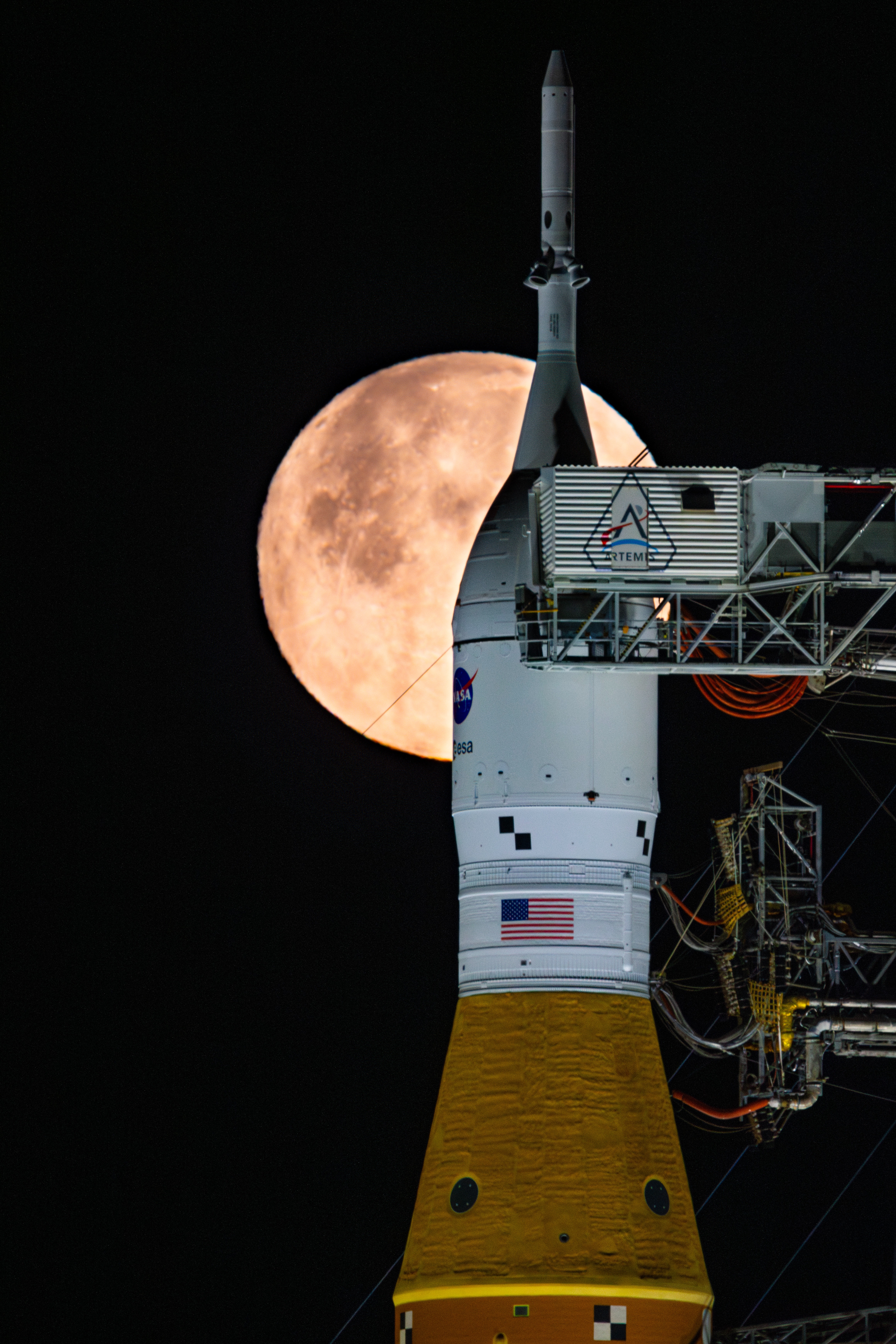
The Artemis program is NASA's plan to return astronauts to the Moon for the first time since the Apollo missions and to establish a permanent base there. It matters because it represents a major step forward in human space exploration and could serve as a stepping stone for future missions to Mars and beyond.
AI-generated from the Wikipedia summary — may contain errors.
Wikipedia views (30d)
113,990 totalvia Wikimedia Pageviews API
Official website
Moon to Mars | NASA's Artemis Program - NASA
Explore how NASA’s Artemis mission will return humans to the Moon, prepare for Mars, and shape the future of space exploration.
nasa.gov →NASA explores the unknown in air and space, innovates for the benefit of humanity, and inspires the world through discovery. Technicians inside the Payload Hazardous Servicing Facility at Kennedy Space Center in Florida install and test antennas on a solar array on Wednesday, March 20, 2024, for the agency’s Europa Clipper spacecraft. NASA’s future will continue to be a story of human exploration, technology, and science. We will go back to the Moon to learn more about what it will take to support human exploration to Mars and beyond. We will continue to nurture the development of a vibrant low-Earth orbit economy that builds on the work done to date by the International Space Station. NASA engineers will develop new technologies to improve air transport at home and meet the challenges of advanced space exploration. Our scientists will work to increase an understanding of our planet and our place in the universe. The Artemis II crew, from left: NASA astronauts Reid Wiseman and Christina Koch; CSA (Canadian Space Agency) astronaut Jeremy Hansen; and NASA astronaut Victor Glover pose for a group photo after viewing the Orion spacecraft in the well deck of the USS John P. Murtha, Saturday, April 11, 2026, in the Pacific Ocean off the coast of California. When NASA opened for business on October 1, 1958, it accelerated the work already started on human and robotic spaceflight, and over the last 65 years it has continued to push the boundaries of aeronautics and space exploration. Now NASA is preparing to take humankind farther than ever before, as it helps to foster a robust commercial space economy near Earth, and pioneers further human and robotic exploration as we venture into deep space. NASA’s Perseverance Mars rover took a selfie with the Ingenuity helicopter, seen here about 13 feet from the rover. This image was taken by the WASTON camera on the rover’s robotic arm on April 6, 2021, the 46th Martian day, or sol, of the mission. Jared “Rook” Isaacman is the 15th Administrator of the National Aeronautics and Space Administration. An entrepreneur and skilled pilot, Isaacman commanded Inspiration4, the first all-civilian orbital spaceflight aboard the Dragon spacecraft. The mission was a major milestone in commercial spaceflight. Matt Anderson is NASA’s deputy administrator. Anderson is a decorated Air Force command pilot in multiple aircraft with more than 5,000 flight hours, including more than 650 in combat. Throughout his 24-year Air Force career, he served on several senior U.S. Department of War staffs and commanded at multiple levels before retiring in 2021. Amit Kshatriya is NASA’s associate administrator. Kshatriya serves as the highest-ranking civil servant at the agency and as a senior advisor to the administrator. Kshatriya leads the agency’s 10 center directors, as well as the mission directorate associate administrators at NASA Headquarters in Washington. Align your talents with your passion and find out why NASA consistently is named a best place to work in the federal government. At NASA, you'll have an opportunity to work on unique and challenging projects that truly make an impact on humanity. Stay up-to-date on the latest news from NASA–from Earth to the Moon, the Solar System and beyond.
Read more on their site →Excerpt from the official site · 40,000 chars · not written by Vinony
Wikidata facts
- Has part
- Starship
- Named after
- Artemis
- Country
- United States
- Operator
- NASA
- Official website
- www.nasa.gov/specials/artemis
- Image
- Lunar Orbital Platform-Gateway with approaching Orion spacecraft.jpg
- Significant event
- maiden flight
Show 10 more facts
- has goal
- exploration of the Moon
- Commons category
- Artemis program
- topic's main category
- Category:Artemis program
- topic has template
- Template:Artemis program
- social media followers
- 480791
- start time
- 2017-00-00
- start point
- Kennedy Space Center
- uses
- Blue Moon
- capital cost
- 35000000000
- hashtag
- Artemis
via Wikidata · CC0
Article · Русский
Артеми́да (англ. Artemis) — американская программа исследования Луны, возглавляемая космическим агентством НАСА, и в которой участвуют три других партнёрских агентства: Европейское космическое агентство, Японское агентство аэрокосмических исследований и Канадское космическое агентство. В случае успеха программа «Артемида» восстановит присутствие человека на Луне впервые после миссии «Аполлон-17» в 1972 году. Основными компонентами программы являются ракета-носитель Space Launch System, космический корабль «Орион», космическая станция «Lunar Gateway» и коммерческие системы посадки человека, включая Starship HLS. Долгосрочная цель программы состоит в создании постоянной базы на Луне и облегчении пилотируемых полётов на Марс. Программа «Артемида» — это сотрудничество космических агентств и компаний по всему миру, связанных друг с другом Соглашениями Артемиды (англ. Artemis Accords) и вспомогательными контрактами. Соглашения были подписаны 13 октября 2020 года директорами восьми национальных космических агентств: США, Австралии, Великобритании, Италии, Канады, Люксембурга, ОАЭ и Японии. Позже к договору присоединились Украина, Южная Корея, Новая Зеландия, Бразилия, Польша, Мексика, Израиль, Румыния, Бахрейн, Сингапур, Колумбия, Франция и Саудовская Аравия. Программа была официально учреждена в 2017 году при администрации Дональда Трампа, однако многие из её компонентов, такие как космический корабль «Орион», были разработаны во время предыдущей программы «Созвездие» (2005–2010) и после её отмены. Первый запуск «Ориона» и Space Launch System был первоначально запланирован на 2016 год, позже планировалось запустить их в 2022 году как миссию «Artemis 1» с роботами и манекенами на борту. Согласно плану, запуск «Artemis 2» с экипажем состоится в 2024 году, посадка «Artemis 3» с экипажем на Луну — в 2025 году, стыковка «Artemis 4» с Lunar Gateway — в 2027 году, а затем будущие ежегодные посадки на Луну.
Abstract from DBpedia / Wikipedia · CC BY-SA
Gallery (14)
Available in 66 languages
- Español
- Français
- Deutsch
- 中文
- 日本語
- Русский
- Português
- Italiano
- العربية
- हिन्दी
- Afrikaans
- Aragonese
- Asturian
- Azerbaijani
- Bahasa Indonesia
- Bangla
- Basque
- Belarusian
Show 47 more
- Bhojpuri
- Bosnian
- Breton
- Bulgarian
- Catalan
- Central Kurdish
- Chuvash
- Croatian
- Czech
- Esperanto
- Estonian
- Finnish
- Galician
- Greek
- Hebrew
- Hungarian
- Irish
- Kazakh
- Kurdish
- Latin
- Lithuanian
- Macedonian
- Malay
- Malayalam
- Nederlands
- Norwegian
- Pashto
- Polski
- Punjabi
- Romanian
- Sicilian
- simple
- Sinhala
- Slovak
- Slovenian
- Svenska
- Tiếng Việt
- Toki Pona
- Türkçe
- Ukrainian
- Urdu
- Welsh
- Western Panjabi
- zh_yue
- فارسی
- ไทย
- 한국어
via Wikidata sitelinks · CC0