
Artemisprogrammet
Sign in to saveAlso known as Project Artemis, Artemis Mission
amerikanskt bemannat rymdfärdsprogram med månen som mål
The Artemis program is NASA's plan to return astronauts to the Moon for the first time since the Apollo missions and to establish a permanent base there. It matters because it represents a major step forward in human space exploration and could serve as a stepping stone for future missions to Mars and beyond.
AI-generated from the Wikipedia summary — may contain errors.
Wikipedia views (30d)
113,990 totalvia Wikimedia Pageviews API
Official website
Moon to Mars | NASA's Artemis Program - NASA
Explore how NASA’s Artemis mission will return humans to the Moon, prepare for Mars, and shape the future of space exploration.
nasa.gov →NASA explores the unknown in air and space, innovates for the benefit of humanity, and inspires the world through discovery. Technicians inside the Payload Hazardous Servicing Facility at Kennedy Space Center in Florida install and test antennas on a solar array on Wednesday, March 20, 2024, for the agency’s Europa Clipper spacecraft. NASA’s future will continue to be a story of human exploration, technology, and science. We will go back to the Moon to learn more about what it will take to support human exploration to Mars and beyond. We will continue to nurture the development of a vibrant low-Earth orbit economy that builds on the work done to date by the International Space Station. NASA engineers will develop new technologies to improve air transport at home and meet the challenges of advanced space exploration. Our scientists will work to increase an understanding of our planet and our place in the universe. The Artemis II crew, from left: NASA astronauts Reid Wiseman and Christina Koch; CSA (Canadian Space Agency) astronaut Jeremy Hansen; and NASA astronaut Victor Glover pose for a group photo after viewing the Orion spacecraft in the well deck of the USS John P. Murtha, Saturday, April 11, 2026, in the Pacific Ocean off the coast of California. When NASA opened for business on October 1, 1958, it accelerated the work already started on human and robotic spaceflight, and over the last 65 years it has continued to push the boundaries of aeronautics and space exploration. Now NASA is preparing to take humankind farther than ever before, as it helps to foster a robust commercial space economy near Earth, and pioneers further human and robotic exploration as we venture into deep space. NASA’s Perseverance Mars rover took a selfie with the Ingenuity helicopter, seen here about 13 feet from the rover. This image was taken by the WASTON camera on the rover’s robotic arm on April 6, 2021, the 46th Martian day, or sol, of the mission. Jared “Rook” Isaacman is the 15th Administrator of the National Aeronautics and Space Administration. An entrepreneur and skilled pilot, Isaacman commanded Inspiration4, the first all-civilian orbital spaceflight aboard the Dragon spacecraft. The mission was a major milestone in commercial spaceflight. Matt Anderson is NASA’s deputy administrator. Anderson is a decorated Air Force command pilot in multiple aircraft with more than 5,000 flight hours, including more than 650 in combat. Throughout his 24-year Air Force career, he served on several senior U.S. Department of War staffs and commanded at multiple levels before retiring in 2021. Amit Kshatriya is NASA’s associate administrator. Kshatriya serves as the highest-ranking civil servant at the agency and as a senior advisor to the administrator. Kshatriya leads the agency’s 10 center directors, as well as the mission directorate associate administrators at NASA Headquarters in Washington. Align your talents with your passion and find out why NASA consistently is named a best place to work in the federal government. At NASA, you'll have an opportunity to work on unique and challenging projects that truly make an impact on humanity. Stay up-to-date on the latest news from NASA–from Earth to the Moon, the Solar System and beyond.
Read more on their site →Excerpt from the official site · 40,000 chars · not written by Vinony
Article · Svenska
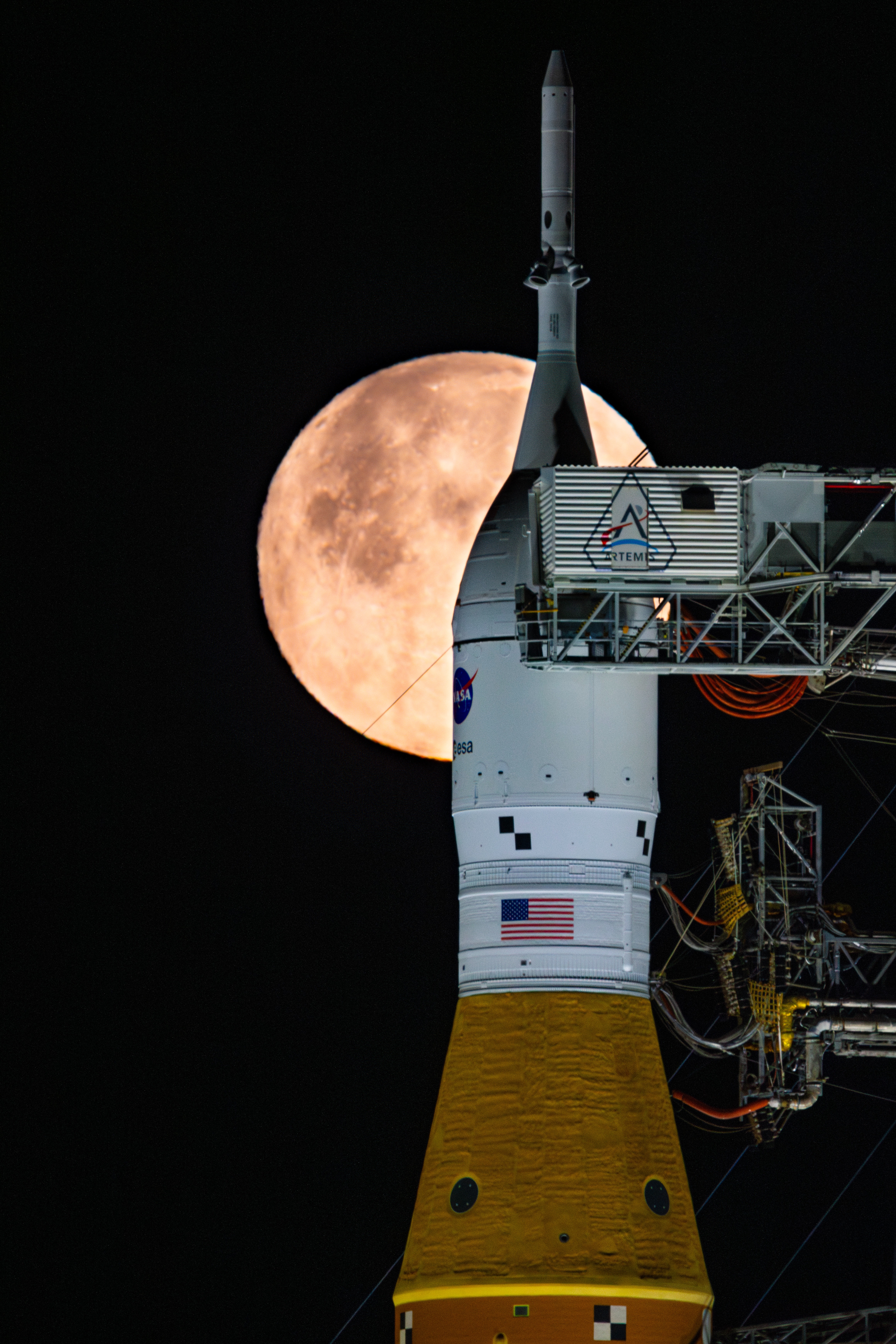
Artemisprogrammet är ett pågående bemannat rymdprogram som genomförs av den amerikanska rymdstyrelsen NASA, i samarbete med bland annat ESA och privata amerikanska företag, i syfte att genomföra en bemannad månlandning på månens sydpol år 2024. NASA anger att programmet är ett första steg mot att i ett senare skede genomföra bemannade rymdfärder till Mars. NASA menar att Artemisprogrammet möjliggör att pröva ny teknik, möjligheter och samarbetsmodeller som kan göra en bemannad marsexpedition möjlig. Utöver detta anger NASA att syftet med programmet bland annat innefattar att etablera ett amerikanskt ledarskap och strategisk närvaro på månen, bredda och fördjupa samarbeten med internationella och kommersiella aktörer samt inspirera en ny generation till karriärer inom teknik, matematik och ingenjörsvetenskap. Artemisprogrammets primära uppskjutningsfarkost är Space Launch System (SLS) som kan bära rymdfarkosten Orion vilken utgår från ett snarlikt koncept som Apolloprogrammets kommando- och servicemodul Apollo CSM. NASA avser också använda raketer utvecklade av privata aktörer för vissa obemannade uppdrag. Som en del av Artemisprogrammet avses också en rymdstation med namnet Lunar Gateway placeras i omloppsbana runt månen. Artemisprogrammet namngavs i maj 2019 och fick sitt namn efter Artemis, jaktens och månens gudinna i grekisk mytologi som var Apollons tvillingsyster - en koppling till Apolloprogrammet.
Abstract from DBpedia / Wikipedia · CC BY-SA
Gallery (14)
Available in 66 languages
- Español
- Français
- Deutsch
- 中文
- 日本語
- Русский
- Português
- Italiano
- العربية
- हिन्दी
- Afrikaans
- Aragonese
- Asturian
- Azerbaijani
- Bahasa Indonesia
- Bangla
- Basque
- Belarusian
Show 47 more
- Bhojpuri
- Bosnian
- Breton
- Bulgarian
- Catalan
- Central Kurdish
- Chuvash
- Croatian
- Czech
- Esperanto
- Estonian
- Finnish
- Galician
- Greek
- Hebrew
- Hungarian
- Irish
- Kazakh
- Kurdish
- Latin
- Lithuanian
- Macedonian
- Malay
- Malayalam
- Nederlands
- Norwegian
- Pashto
- Polski
- Punjabi
- Romanian
- Sicilian
- simple
- Sinhala
- Slovak
- Slovenian
- Svenska
- Tiếng Việt
- Toki Pona
- Türkçe
- Ukrainian
- Urdu
- Welsh
- Western Panjabi
- zh_yue
- فارسی
- ไทย
- 한국어
via Wikidata sitelinks · CC0