File:Hecht_Museum,_Israel_–_figurines_010.JPG · Wikimedia Commons · See Wikimedia Commons
Asherah
Sign in to saveAlso known as Ascherah, Ashera
Asherah (; ; ; ; Qatabanian: '') was a goddess in ancient Semitic religions. She also appears in Hittite writings as Ašerdu(š) or Ašertu(š)'' (), and as Athirat in Ugarit as the consort of ʾEl. Asherah was a major goddess in ancient Northwest Semitic cultures, often associated with fertility, motherhood, and sacred trees. Asherah was the goddess of the sea while "her husband El" was the god of 'heaven.'
Key facts
- Deity.type
- Canaanite
- Deity.name
- Asherah
- Deity.image
- File:Hecht Museum, Israel – figurines 010.JPG
- Deity.caption
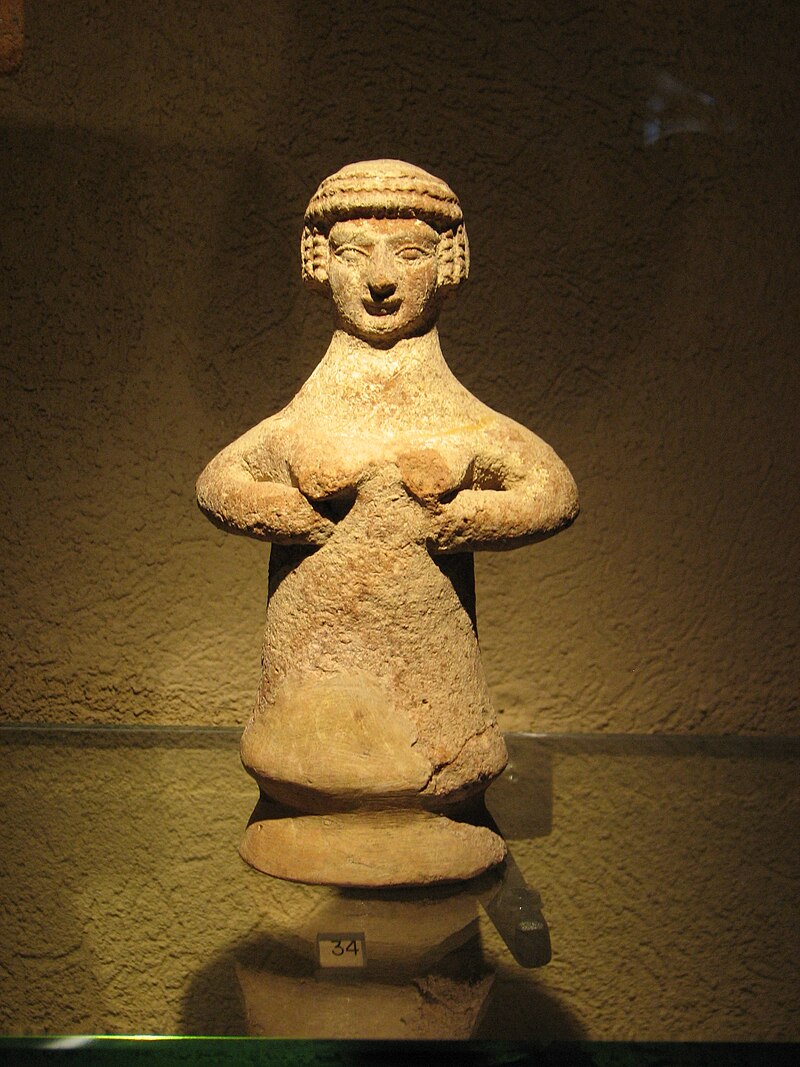
- Figurine of Asherah, Hecht Museum, Israel
- Deity.deity_of
- Lady Asherah (of the) Sea or Day
- Deity.other_names
- Athirat
- Deity.cult_center
- Levant
- Deity.symbol
- Tree
via Wikipedia infobox
Wikidata facts
- Instance of
- goddess
- Gender
- female
- Spouse
- Amurru
- Child
- Shapshu
- Image
- Asherah 13th century BC Israel Museum.jpg
- Said to be same as
- Ninhursag
Show 4 more facts
- Commons category
- Asherah
- worshipped by
- Canaanite religion
- described by source
- The Nuttall Encyclopædia
- nickname
- קנית אלם
via Wikidata · CC0
~24 min read
Encyclopedic overview
29 sectionsContents
- Name
- Etymology
- Grammar
- Title
- Interpretation
- Iconography
- By region
- Sumer
- Akkad
- Hittites
- Ugarit
- Equation with Shapshu
- Israel and Judah
- Inscriptions
- Sacred prostitution
- In the Hebrew Bible
- Philistine records
- In Egyptian sources
- Arabia
- See also
- Deities
- Other
- Notes
- References
- Bibliography
- External links
- Asherah
- Kuntillet ʿAjrud inscriptions
- Israelite
Asherah (; ; ; ; Qatabanian: '') was a goddess in ancient Semitic religions. She also appears in Hittite writings as Ašerdu(š) or Ašertu(š)'' (), and as Athirat in Ugarit as the consort of ʾEl. Asherah was a major goddess in ancient Northwest Semitic cultures, often associated with fertility, motherhood, and sacred trees. Asherah was the goddess of the sea while "her husband El" was the god of 'heaven.'
Asherah was sometimes called Elat, the feminine equivalent of El, and held titles such as "holy" (qdš), "lady" (rbt), or "progenitress of the gods" (qnyt ỉlm). Asherah's iconography frequently depicted her with pronounced sexual features, often combined with tree motifs like date palms, highlighting her role as a fertility goddess. Some artifacts, such as the Revadim Asherah figurines, illustrate her suckling children or displaying sexual imagery, emphasizing her maternal and generative symbolism. Her worship may also be reflected in asherah poles, cultic objects frequently mentioned in the Hebrew Bible, though scholars debate whether these represent the goddess herself or sacred symbols.
Excerpted from Wikipedia’s “Asherah” article, available under the CC BY-SA 4.0 licence.