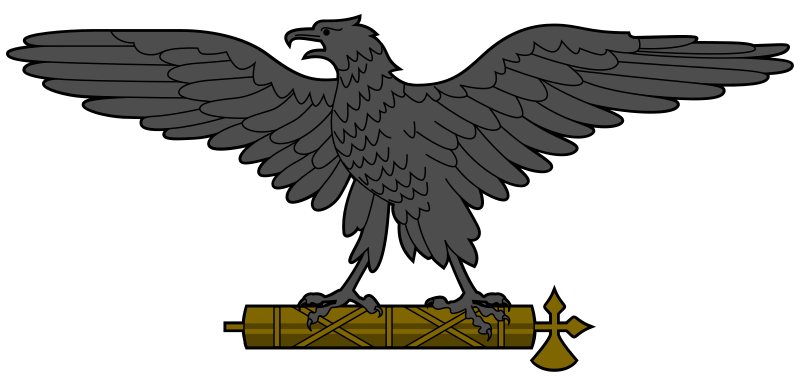
File:Eagle_with_fasces.svg · Wikimedia Commons · See Wikimedia Commons
Also known as Axis powers, Rome–Berlin Axis, Rome–Berlin–Tokyo Axis, the Axis, AOOO
日独伊を中心とする同盟諸国
The Axis Powers were the main alliance of countries that fought against the Allied forces during World War II, led primarily by Nazi Germany, Imperial Japan, and Fascist Italy. This alliance matters because understanding it is central to understanding one of history's most significant and destructive global conflicts.
AI-generated from the Wikipedia summary — may contain errors.
Described at
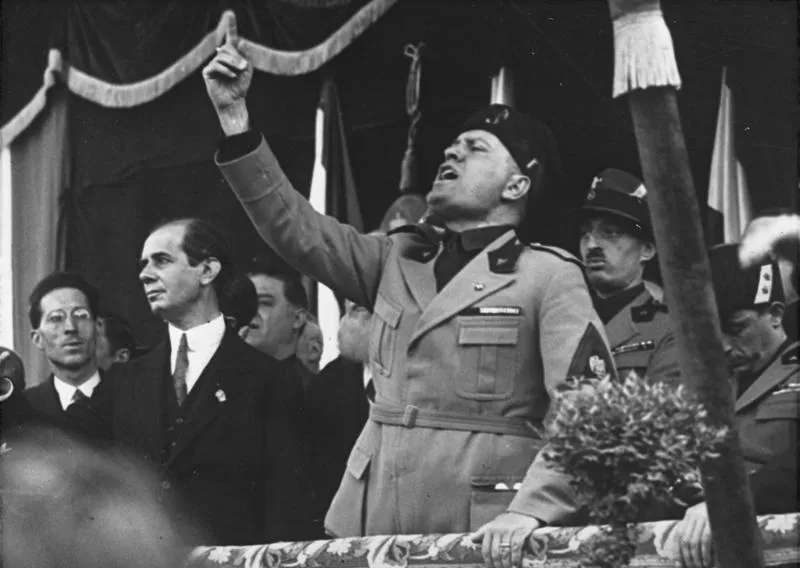
Why We Call the Axis Powers the Axis Powers
On this day in 1936, Italian dictator Benito Mussolini declared an axis between Berlin and Rome, coining a term that would be used by both sides in WWII
smithsonianmag.com →Link to a page describing this subject · 8,536 chars · not written by Vinony
Wikidata facts
- Instance of
- military alliance
- Has part
- Independent State of Croatia
- Participant in
- World War II
- Conflict
- World War II
- Image
- DOL 1938 03 16 1 Achse Rom Berlin.png
Show 8 more facts
- inception
- 1940-01-01
- dissolved, abolished or demolished date
- 1945-01-01
- topic's main category
- Category:Axis powers
- different from
- Central Powers
- on focus list of Wikimedia project
- Wikipedia:Vital articles/Level/4
- Commons category
- Axis powers
- native label
- 枢軸国
via Wikidata · CC0
Article · 日本語
枢軸国(すうじくこく、旧字体: 樞軸國、独: Achsenmächte、仏: Les forces de l'axe、伊: Potenze dell'Asse、英: Axis powers)とは、第二次世界大戦時に連合国と戦った諸国のことである。 具体的にはドイツ、日本、イタリアの日独伊三国同盟を中心に、ハンガリー、ルーマニア、ブルガリアの東欧諸国、さらにフィンランド、タイ、イラクなどの国も参戦した。他に連合国が承認していない国家としては、フィリピン第二共和国、ビルマ国、スロバキア共和国、クロアチア独立国、満洲国、中華民国南京政府などがあるが、これらは全て日独伊などの傀儡政権とされるため、枢軸国には含まれない場合もある。 ヴェルサイユ体制における植民地を「持たざる国」であることと反共主義を共通の基盤としていた。
Abstract from DBpedia / Wikipedia · CC BY-SA
Gallery (12)
Available in 100 languages
- Español
- Français
- Deutsch
- 中文
- 日本語
- Русский
- Português
- Italiano
- العربية
- हिन्दी
- Afrikaans
- Albanian
- Armenian
- Asturian
- azb
- Azerbaijani
- Bahasa Indonesia
- Bangla
Show 81 more
- Basque
- be_x_old
- Belarusian
- Bosnian
- Breton
- Bulgarian
- Burmese
- Catalan
- Central Kurdish
- Chuvash
- Croatian
- Czech
- Danish
- Egyptian Arabic
- Esperanto
- Estonian
- Faroese
- Filipino
- Finnish
- Galician
- Georgian
- Greek
- Guarani
- Hebrew
- Hungarian
- Icelandic
- Ido
- Interlingua
- Javanese
- Kazakh
- Khmer
- Lao
- Latin
- Latvian
- Lithuanian
- lld
- Macedonian
- Malagasy
- Malay
- Malayalam
- Maltese
- Manx
- Marathi
- Mongolian
- Nederlands
- Norwegian
- Norwegian Nynorsk
- Occitan
- Ossetic
- Palatine German
- Pashto
- Polski
- Punjabi
- Romanian
- Rusyn
- Scots
- Serbian
- Serbian (Latin)
- Sicilian
- simple
- Slovak
- Slovenian
- Svenska
- Tamil
- Telugu
- Tiếng Việt
- Toki Pona
- Türkçe
- Ukrainian
- Urdu
- Uyghur
- Uzbek
- Waray
- Western Panjabi
- Wu Chinese
- zh_classical
- zh_min_nan
- zh_yue
- فارسی
- ไทย
- 한국어
via Wikidata sitelinks · CC0