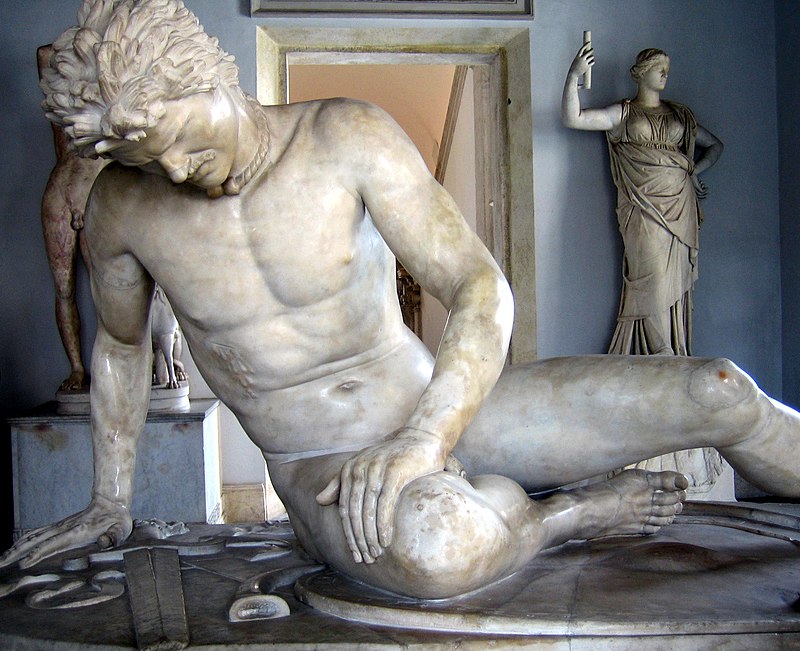
File:Dying_gaul.jpg · Wikimedia Commons · See Wikimedia Commons
barbarian
Sign in to saveAlso known as barbarians
thumb|237px|19th-century portrayal of the Huns as barbarians
A barbarian is a person from a culture outside the Mediterranean world that ancient Greeks and Romans considered uncivilized or primitive. The term reflects how these classical societies viewed foreigners who didn't share their language, customs, and urban ways of life, and it remains important because it shows how societies often judge other cultures as inferior based on their own standards.
AI-generated from the Wikipedia summary — may contain errors.
Wikidata facts
- Instance of
- ethnophaulism
- Subclass of
- people
- Image
- Rome Head of a Barbarian.jpg
Show 3 more facts
- Commons category
- Barbarians
- different from
- Barbarian
- topic's main category
- Category:Barbarians
via Wikidata · CC0
~48 min read
Encyclopedic overview
31 sectionsContents
- Etymology
- Ancient Greece
- Ancient Rome
- Other cultures
- English semantics
- In classical Greco-Roman contexts
- Historical developments
- Hellenic stereotypes
- The Dying Galatian statue
- Utter barbarism, civilization, and the noble savage
- East Asia
- China
- History and terminology
- Idealization
- Pejorative Chinese characters
- Cultural and racial barbarianism
- Modern reinterpretations
- Barbarian puppet drinking game
- Japan
- Middle East and North Africa
- India
- Pre-Columbian Americas
- Barbarian mercenaries
- Early modern period
- 20th-century barbarianism
- Marxist use of term
- Modern popular culture
- See also
- References
- Further reading
- External links
thumb|237px|19th-century portrayal of the Huns as barbarians
A barbarian is, etymologically, a foreigner, specifically someone whose language and customs differ from those of the speaker. In ancient Greece, the term designated non-Greeks, while in the Roman world it referred more generally to peoples living outside the cultural and political sphere of the empire. In modern English, the word has developed a pejorative sense, commonly meaning a "rude, wild, uncivilized person".
Excerpted from Wikipedia’s “barbarian” article, available under the CC BY-SA 4.0 licence.
Gallery (38)
Available in 79 languages
- Español
- Français
- Deutsch
- 中文
- 日本語
- Русский
- Português
- Italiano
- العربية
- Albanian
- Armenian
- azb
- Azerbaijani
- Bahasa Indonesia
- Basque
- Belarusian
- Bosnian
- Breton
Show 60 more
- Bulgarian
- Buriat
- Burmese
- Catalan
- Croatian
- Czech
- Danish
- Egyptian Arabic
- Esperanto
- Estonian
- Filipino
- Finnish
- Galician
- Georgian
- Greek
- Hausa
- Hebrew
- Hungarian
- Icelandic
- Ido
- Kurdish
- Kyrgyz
- Latin
- Latvian
- Lithuanian
- Macedonian
- Malagasy
- Malay
- Malayalam
- nds_nl
- Nederlands
- Nepali
- Norwegian
- Norwegian Nynorsk
- Papiamento
- Polski
- Romanian
- Serbian
- Serbian (Latin)
- Sicilian
- simple
- Slovak
- Slovenian
- Svenska
- Tamil
- Tibetan
- Tiếng Việt
- Türkçe
- Tuvinian
- Ukrainian
- Urdu
- Uzbek
- Waray
- Welsh
- Western Frisian
- Western Panjabi
- Wu Chinese
- فارسی
- ไทย
- 한국어
via Wikidata sitelinks · CC0