Basil & Elise Goulandris Foundation Museum, Athens
Also known as Goulandris Museum of Contemporary Art, Athens, Goulandris Museum of Modern Art, Athens, Goulandris Museum
museum in Pangrati, Athens, Greece
Described at
A modern art repository 30 years in the making | eKathimerini.com
Works from Elise and Basil Goulandris’ impressive collection finally go on display to the public in the museum they spent years dreaming of.
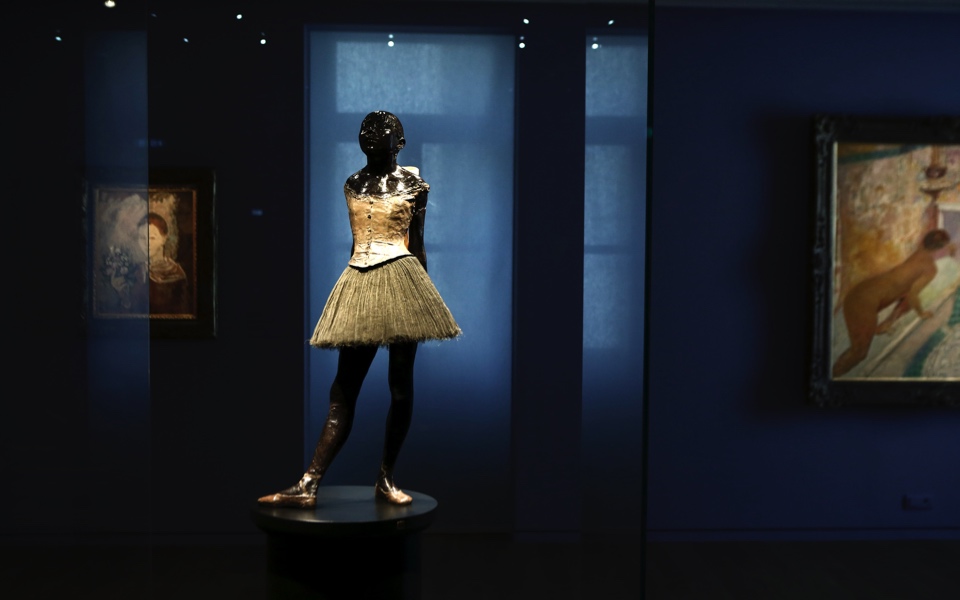
ekathimerini.com →“Everyone wants to understand art. Why not try to understand the song of a bird? Why does one love the night, flowers, everything around one, without trying to understand them? But in the case of a painting, people have to understand,” Pablo Picasso once said. When we are children, we first perceive the world through our senses. First come images, and then words. I studied art history because, even now that I can use words, I continue to think in images. When you first visit the new museum of the Basil and Elise Goulandris Foundation, which was inaugurated by Greek President Prokopis Pavlopoulos Tuesday, don’t seek explanations. Surrender yourself to everything that you feel, observing the museum inside and out, on the edge of the central Athens neighborhood of Pangrati next to the Panathenaic Stadium. In July, when Kathimerini photographer Vangelis Zavos shot the first photos of the museum, there was only the architecture to supply the first pieces of a puzzle that was 30 years in the making. At first there was just the white marble and the natural curves of the interior staircase creating a sense of flow. The sculptures then followed, which appear unexpectedly in every alcove of the 11 floors of the new museum, keeping the visitor on their toes from their very first steps into this adventure that the foundation’s president, Fleurette Karadonti, has dubbed “loving and discovering art.” It was still September when I got a sneak preview of the museum, and the first thing I saw was the iconic portrait of Elise Goulandris painted by Marc Chagall in 1969. Approaching, I realized that Elise is not alone in the painting. The faint outline of her husband Basil hovers over her, with the artist capturing the essence of a discreet relationship, that of a couple together in life and in art. Nothing can prepare you for the moment that you see El Greco’s “Veil of Saint Veronica,” the first artwork purchased by Elise and Basil Goulandris in 1956. “This is a personal collection. The works they chose, they lived them; they enjoyed them in their daily lives; they discussed them with their friends and they constantly explored the dialogue between the works every time they repositioned them,” said Maria Koutsomalli, head of collections at the Basil and Elise Goulandris Foundation. For me, it is a collection filled with emotion, with subtle connections that lead from El Greco’s ascetic figure of Christ to the ascetic life of Van Gogh and his painting “Still Life with Coffee Pot,” which depicts everything the painter owned when he moved to Arles alone, without even a bed to sleep in. On my first tour, some days before the official opening on October 1, the labels for the paintings had yet to be installed, but I immediately recognized the small self-portrait of Cezanne, “the father of us all,” as Picasso said, and the father of this collection, as it was the second and most important work that was purchased. Cezanne’s gaze led me across the hall, to Monet’s “Rouen Cathedral in the Morning (Pink Dominant),” with its pastel shades reflecting those of the adjacent work, “Olive Picking” by Van Gogh. The youthful lightness of Degas’ sculpture “Little Dancer Aged Fourteen” converses with the optimistic surrealism of “The Grasshopper” by Joan Miro and Picasso’s 1905 gouache “Boy with Bouquet.” The sweet young man looked into my eyes as if seeking my approval. “Nude Woman with Raised Arms,” the second Picasso work in the collection which dates to 1907, looked as if she couldn’t care less. As I kept walking I realized that painting had now become geometry. And its mask appeared to be telling me, “I am like this and I don’t care if you think I am beautiful or not.” The expressive sculptures of Auguste Rodin and Camille Claudel, another couple that joined forces in life and art, etched the final painting next to them into my memory all the more deeply – “Le Solitaire” by Georges Braque. It is 1942 and the woman in the painting is drinking wine and