
File:Unknown_man,_formerly_known_as_Sir_James_Thornhill_by_John_Closterman.jpg · Wikimedia Commons · See Wikimedia Commons
Bernard Mandeville
Sign in to saveAlso known as Bernard de Mandeville
Anglo-Dutch writer and physician (1670-1733)
OverviewAI-generated
Bernard de Mandeville was a philosopher, economist, physician, and writer born in Rotterdam on 15 November 1670. He was a citizen of the Dutch Republic and educated at Leiden University under doctoral advisor Burchard de Volder. Mandeville wrote in the English language and is described by sources including the Brockhaus and Efron Encyclopedic Dictionary, The Nuttall Encyclopædia, and the Encyclopædia Britannica 11th edition.
His notable works include The Fable of the Bees, also known as The fable of the bees, or, Private vices, public benefits. Other listed works are The mischiefs that ought justly to be apprehended from a Whig-government, The virgin unmask'd; or, Female dialogues betwixt an elderly maiden lady, and her niece, Die symbolik der bienen und ihrer produkte in sage, dichtung, kultus, kunst und bräuchen der völker, and "Le api" di B. [de] Mandeville. He died on 21 January 1733.
Synthesized by Vinony from 21 facts across 3 sources: Wikidata, Open Library, Europeana Sparql. Generated from structured data (not the Wikipedia text) and checked against those facts — may still contain errors.
Person · Open Library
- Born
- 15 November 1670
- Died
- 21 January 1733
- Works
- 89
Top works
- Die symbolik der bienen und ihrer produkte in sage, dichtung, kultus, kunst und bräuchen der völker
- The mischiefs that ought justly to be apprehended from a Whig-government
- The virgin unmask'd; or, Female dialogues betwixt an elderly maiden lady, and her niece
- "Le api" di B. [de] Mandeville
- The fable of the bees, or, Private vices, public benefits
via Open Library + Wikidata
Key facts
- Born
- ( 1670-11-15 ) 15 November 1670, Rotterdam , Dutch Republic
- Died
- 21 January 1733 (1733-01-21) (aged 62), Hackney , Kingdom of Great Britain
- Era
- 18th-century philosophy
- Region
- Western philosophy
- School
- Classical economics
- Main interests
- Political philosophy , ethics, economics
- Notable ideas
- The unknowing co-operation of individuals, modern free market , division of labour
via Wikipedia infobox
Wikidata facts
- Instance of
- human
- Given name
- Bernard
- Gender
- male
- Citizenship
- Dutch Republic
- Place of birth
- Rotterdam
- Occupation
- writer
- Educated at
- Leiden University
- Languages spoken
- English language
- Notable work
- The Fable of the Bees
- Doctoral advisor
- Burchard de Volder
- Image
- Mandeville1a.jpg
Show 6 more facts
- Commons category
- Bernard Mandeville
- date of birth
- 1670-11-15
- date of death
- 1733-01-21
- writing language
- English language
- name in native language
- Bernard de Mandeville
- P8168
- Arietids
Sources (3)
via Wikidata · CC0
Works in European collections
29 objects attributed to Bernard Mandeville, held across European museums, libraries & archives · via Europeana

Lettre critique sur La Fable des abeilles de M. Mandeville
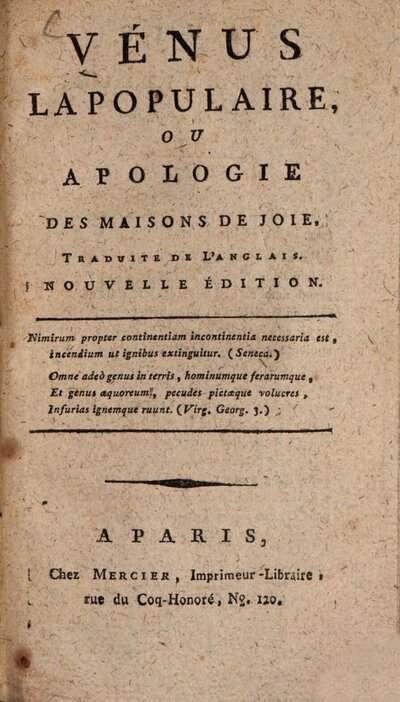
Venus la populaire, ou apologie des maisons de joie
La fable des abeilles, ou les fripons devenus honnetes gens avec le commentaire, ou l'on prouve que les vices des particuliers tendent a l'avantage du public
The fable of the bees: or, private vices, publick benefits. 2. The fable of the bees ; Part II.

Venus la populaire, ou apologie des maisons de joye

Freymüthig-unpartheyische Gedancken von der Religion, Kirche und Glückseligkeit der Engeländischen Nation unter der gegenwärtigen Regierung : zu anderer christlicher Völcker nützlichem Gebrauch, Warnung und Vorsicht, Aus der Engeländischen in die Frantzösische Sprache nun aber teutsch übersetzt
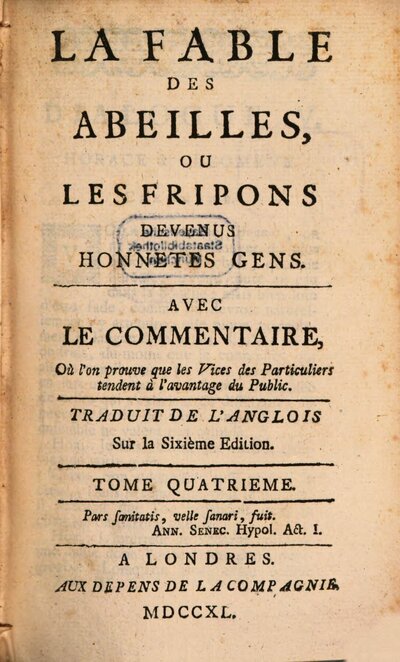
La Fable Des Abeilles, Ou Les Fripons Devenus Honnetes Gens : Avec Le Commentaire Où l'on prouve que les Vices des Particuliers tendent à l'avantage du Public ;, 4

Venus la populaire, ou apologie des maisons de joye
Pensées Libres Sur La Religion, L'Eglise, Et Le Bonheur De La Nation. Traduites De L'Anglois 2
Pensées Libres Sur La Religion, L'Eglise, Et Le Bonheur De La Nation. Traduites De L'Anglois 1

The fable of the Bees
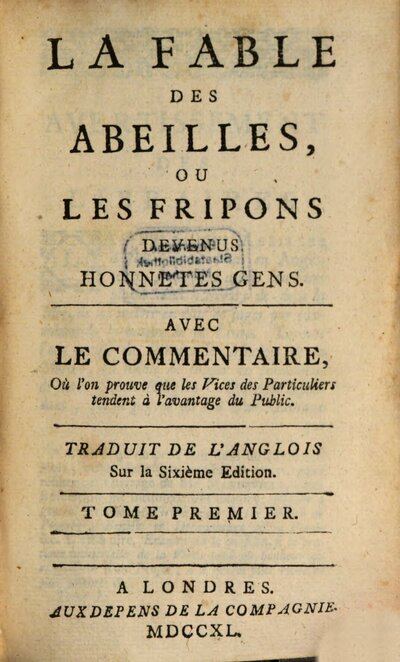
La Fable Des Abeilles, Ou Les Fripons Devenus Honnetes Gens : Avec Le Commentaire Où l'on prouve que les Vices des Particuliers tendent à l'avantage du Public ;, 1

Bernard de Mandeville's Bienenfabel

Vénus la populaire, ou apologie des maisons de joie

Freymüthig-unpartheyische Gedancken von der Religion, Kirche und Glückseligkeit der Engeländischen Nation unter der gegenwärtigen Regierung : zu anderer christlicher Völcker nützlichem Gebrauch, Warnung und Vorsicht, Aus der Engeländischen in die Frantzösische Sprache nun aber teutsch übersetzt
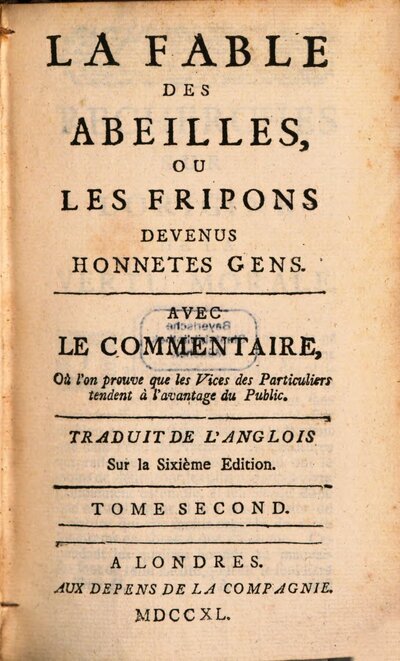
La Fable Des Abeilles, Ou Les Fripons Devenus Honnetes Gens : Avec Le Commentaire Où l'on prouve que les Vices des Particuliers tendent à l'avantage du Public ;, 2

La Fable Des Abeilles, Ou Les Fripons Devenus Honnetes Gens : Avec Le Commentaire Où l'on prouve que les Vices des Particuliers tendent à l'avantage du Public ;, 3
Untitled
Untitled
Untitled
Untitled
Untitled
Untitled
Untitled
Untitled

Untitled

Untitled

Untitled

Untitled
~17 min read
Encyclopedic overview
Bernard Mandeville, or Bernard de Mandeville (/ˈmændəˌvɪl/; 15 November 1670 – 21 January 1733), was an Anglo-Dutch philosopher, political economist, satirist, writer and physician. Born in Rotterdam, he lived most of his life in England and used English for most of his published works. He became famous for The Fable of the Bees.
Life
Excerpted from Wikipedia’s “Bernard Mandeville” article, available under the CC BY-SA 4.0 licence.