(c) Phil Bendle, all rights reserved, uploaded by Phil Bendle
Cambridgea
Sign in to saveCambridgea (common name New Zealand sheetweb spider, bush spider) is a spider genus in the family Desidae and some of the first endemic spiders described from New Zealand. They are known for constructing large horizontal sheet webs measuring up to a square metre in larger species. Cambridgea were originally assigned to the Agelenidae by Dalmas in 1917 but were reassigned to the Stiphidiidae in 1973. Most recently, both Cambridgea and sister genus Nanocambridgea were reassigned to the Desidae, subfamily Porteriinae on the basis of molecular evidence.
Species
Bush Spider
GENUS
- KingdomAnimalia
- PhylumArthropoda
- ClassArachnida
- OrderAraneae
- FamilyDesidae
via GBIF
Museum specimens
- Specimen records
- 13
- Family
- Stiphidiidae
- Collections
- MCZ, QM, FMNH, AM
- Recorded in
- New Zealand, New Caledonia
Wikidata facts
- Instance of
- taxon
- Parent taxon
- Stiphidiidae
- Image
- Cambridgea foliata.jpg
Show 4 more facts
- Commons category
- Cambridgea
- taxon name
- Cambridgea
- taxon rank
- genus
- topic's main category
- Category:Cambridgea
Sources (1)
via Wikidata · CC0
~5 min read
Encyclopedic overview
6 sectionsContents
- Description
- Behaviour
- Male-male competition
- Web building
- Species
- References
Cambridgea (common name New Zealand sheetweb spider, bush spider) is a spider genus in the family Desidae and some of the first endemic spiders described from New Zealand. They are known for constructing large horizontal sheet webs measuring up to a square metre in larger species. Cambridgea were originally assigned to the Agelenidae by Dalmas in 1917 but were reassigned to the Stiphidiidae in 1973. Most recently, both Cambridgea and sister genus Nanocambridgea were reassigned to the Desidae, subfamily Porteriinae on the basis of molecular evidence.
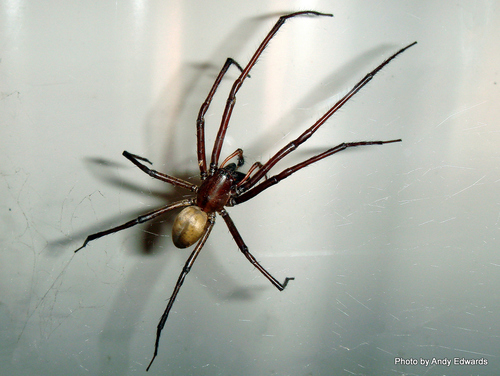
== Description == Cambridgea are medium to large arboreal spiders, with body lengths ranging from approximately 6-10mm in the case of Cambridgea reinga to about 20mm in the case of Cambridgea foliata. They have long legs and porrect chelicerae which are significantly longer in adult males compared to adult females. Male pedipalps are characterised by a cymbium that extends well beyond the bulb and species can be differentiated by the morphology of the male tibial apophyses and female epigyne.
Excerpted from Wikipedia’s “Cambridgea” article, available under the CC BY-SA 4.0 licence.
Available in 9 languages
via Wikidata sitelinks · CC0