Campynema · Kew POWO · Kew Plants of the World Online
Campynema
Sign in to saveCampynema is a genus in the family Campynemataceae first described in 1805. It contains only one known species (monotypic), Campynema lineare, endemic to the island of Tasmania in Australia. Its closest relative is Campynemanthe, endemic to New Caledonia, sole other genus of the family.
In the Vinony graph
Within Vinony's link graph, Campynema is referenced by 5 other articles, and connects out to Jacques Labillardière, Australia and plant.
It sits within the topics Endemic flora of Tasmania, Liliales and Monotypic Liliales genera.
Its subject is documented across 5 Wikipedia language editions.
Species
GENUS
- KingdomPlantae
- PhylumTracheophyta
- ClassLiliopsida
- OrderLiliales
- FamilyCampynemataceae
via GBIF · Kew POWO
Wikidata facts
- Instance of
- taxon
- Parent taxon
- Campynemataceae
- Image
- Novæ Hollandiæ plantarum specimen (Tab. 121) (8224180122).jpg
Show 4 more facts
- taxon name
- Campynema
- taxon rank
- genus
- Commons category
- Campynema lineare
Sources (1)
via Wikidata · CC0
~2 min read
Encyclopedic overview
5 sectionsContents
- ''Campynema lineare''
- Distribution
- Threats and Conservation
- References
- Bibliography
Campynema is a genus in the family Campynemataceae first described in 1805. It contains only one known species (monotypic), Campynema lineare, endemic to the island of Tasmania in Australia. Its closest relative is Campynemanthe, endemic to New Caledonia, sole other genus of the family.
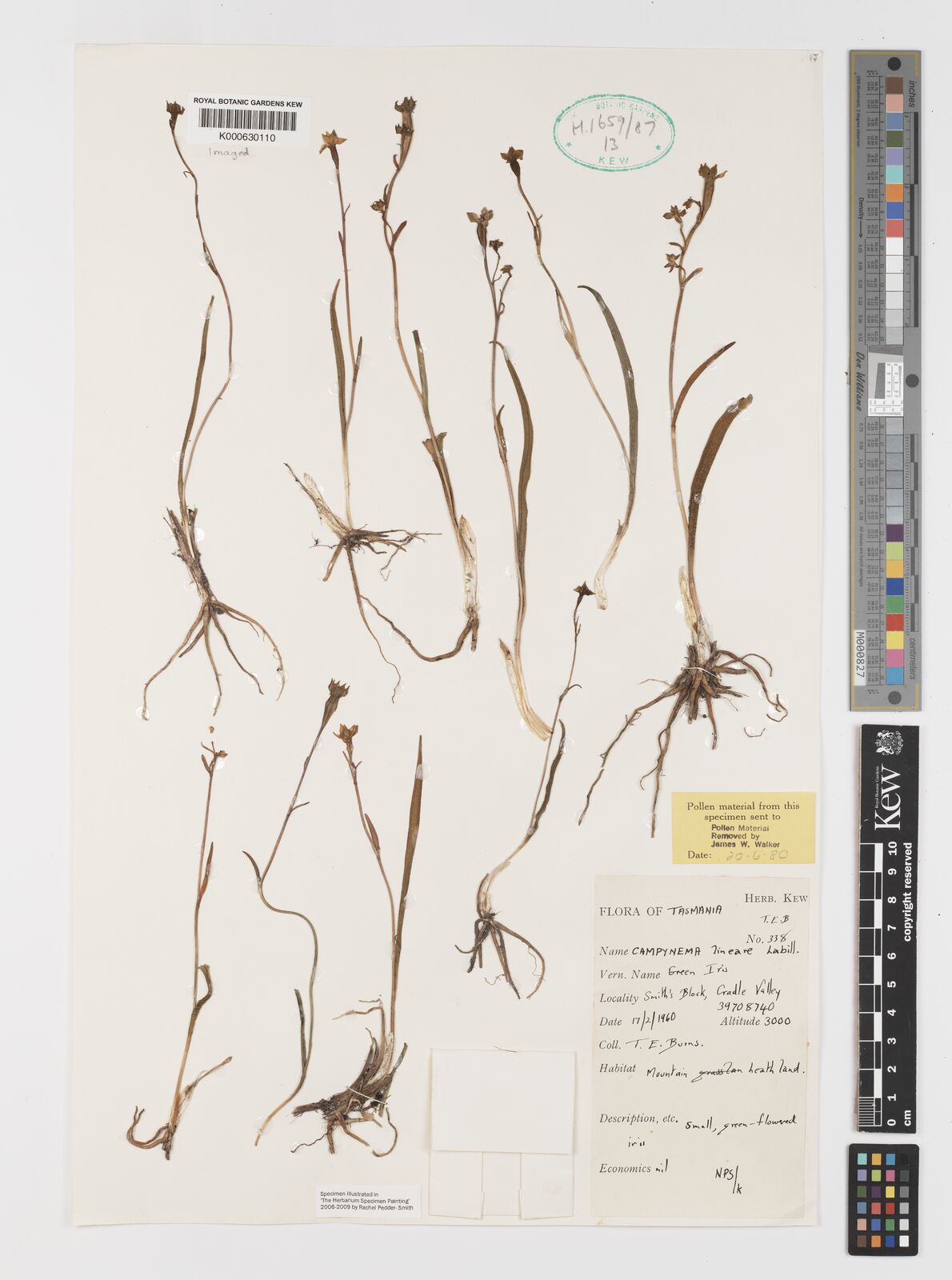
== Campynema lineare == C. lineare, also known as the green mountain lily, is a small inconspicuous erect herb that grows to 15–30 cm in height. Its leaves consist of a single, curved basal leaf, with smaller leaves ascending up the flower stem. It is most distinguishable by its striking green flower, which blooms in summer. The flower is usually solitary, with 6 green tepals, sometimes with a burgundy tinge and developing brown edges with age, lacking apparent nectaries. The anthers are dorsifixed, styluli are free but thickened and contiguous below. The seeds are numerous and are flattened, sometimes almost discoid, with a spongy outer coat. It is a geophyte, and its leaves are deciduous in winter.
Excerpted from Wikipedia’s “Campynema” article, available under the CC BY-SA 4.0 licence.