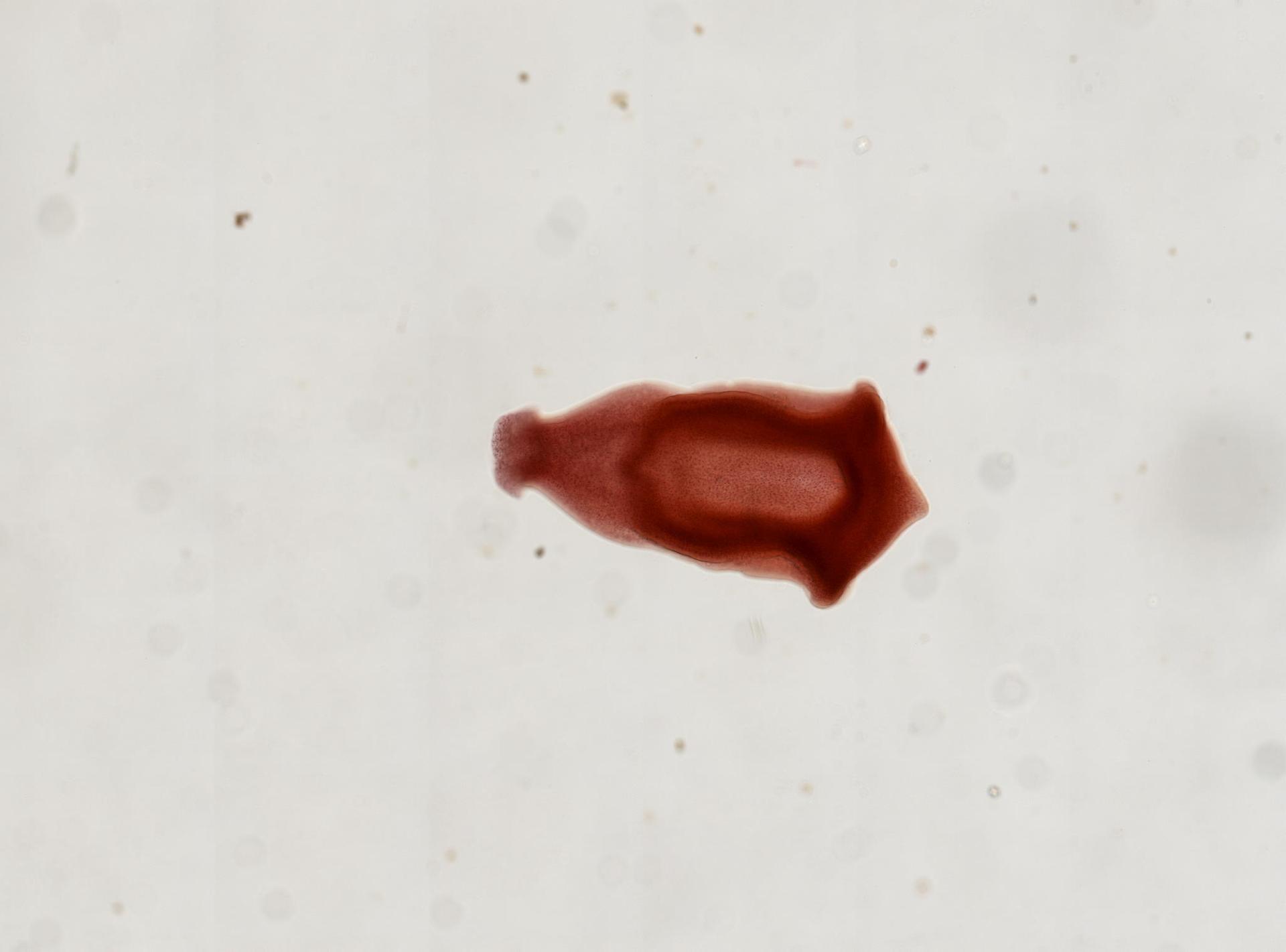
Specimen image via iDigBio · CC0
Caryophyllidea
Sign in to saveThe Caryophyllideans are a group of tapeworms that infect fish and annelids (segmented worms) with a simple scolex or "head." Worms in this order only have one proglottid, which is believed to be the primitive condition for tapeworms. They are generally less than 10 centimetres long. Caryophillideans represent a unique type of tapeworm, such that they possess a monzoic, unsegmented, body, with only a single set of reproductive organs.
In the Vinony graph
Within Vinony's link graph, Caryophyllidea is referenced by 11 other articles, and connects out to Cestoda, Eucestoda and Animalia.
It is catalogued under topics including Eucestoda, Flatworm orders and Parasitic worms of fish.
Its subject is documented across 7 Wikipedia language editions.
Species
果頭目
ORDER
- KingdomAnimalia
- PhylumPlatyhelminthes
- ClassCestoda
- OrderCaryophyllidea
via GBIF
Museum specimens
- Specimen records
- 11
- With media
- 1
- Collections
- USNM, YPM, NHMUK
- Recorded in
- Mexico, United States, Sweden, United Kingdom, Congo, The Democratic Republic Of The, Austria
Wikidata facts
Show 3 more facts
- taxon name
- Caryophyllidea
- taxon rank
- order
- Commons category
- Caryophyllidea
Sources (1)
via Wikidata · CC0
~1 min read
Encyclopedic overview
3 sectionsContents
- Classification
- References
- External links
The Caryophyllideans are a group of tapeworms that infect fish and annelids (segmented worms) with a simple scolex or "head." Worms in this order only have one proglottid, which is believed to be the primitive condition for tapeworms. They are generally less than 10 centimetres long. Caryophillideans represent a unique type of tapeworm, such that they possess a monzoic, unsegmented, body, with only a single set of reproductive organs.
In the Caryophyllidean life cycle, adults live in fish, who pass the tapeworm eggs in their feces. Annelids eat the eggs, where they hatch into oncosphere larvae that move through intestinal wall and become procercoid larvae in the body cavity. When the annelid is eaten by a fish, the tapeworm matures. Catfish, suckers, and minnows are among the fishes that can serve as definitive hosts.
Excerpted from Wikipedia’s “Caryophyllidea” article, available under the CC BY-SA 4.0 licence.