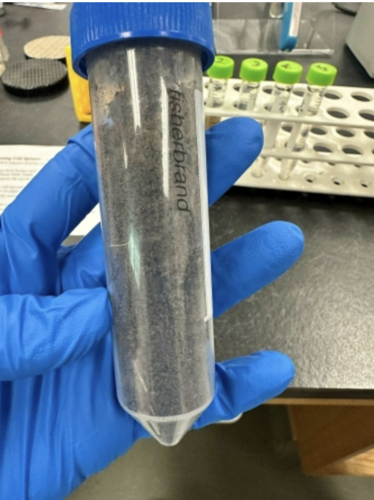
(c) Ethan Hall, all rights reserved, uploaded by Ethan Hall
Caulobacter
Sign in to saveCaulobacter is a genus of Gram-negative bacteria in the class Alphaproteobacteria. Its best-known member is Caulobacter crescentus, an organism ubiquitous in freshwater lakes and rivers; many members of the genus are specialized to oligotrophic environments.
Species
GENUS
- KingdomBacteria
- PhylumProteobacteria
- ClassAlphaproteobacteria
- OrderCaulobacterales
- FamilyCaulobacteraceae
via GBIF
Research
2,353 papers- RNA-controlled regulation in Caulobacter crescentus.Current opinion in microbiology · 2021
- Decoding Caulobacter development.FEMS microbiology reviews · 2012
- Cell division control in Caulobacter crescentus.Biochimica et biophysica acta. Gene regulatory mechanisms · 2019
- The genus Caulobacter and its role in plant microbiomes.World journal of microbiology & biotechnology · 2022
- Multilayered control of chromosome replication in Caulobacter crescentus.Biochemical Society transactions · 2019
via PubMed
Wikidata facts
- Instance of
- taxon
- Parent taxon
- Caulobacteraceae
- Image
- Caulobacter crescentus.jpg
Show 6 more facts
- taxon name
- Caulobacter
- taxon rank
- genus
- Gram staining
- gram-negative bacteria
- Commons category
- Caulobacter
- LPSN URL
- lpsn.dsmz.de/genus/caulobacter
- nomenclatural type of
- Caulobacteraceae
Sources (1)
via Wikidata · CC0
~1 min read
Encyclopedic overview
4 sectionsContents
- Interactions with other organisms
- Pathogenicity
- References
- External links
Caulobacter is a genus of Gram-negative bacteria in the class Alphaproteobacteria. Its best-known member is Caulobacter crescentus, an organism ubiquitous in freshwater lakes and rivers; many members of the genus are specialized to oligotrophic environments.
==Interactions with other organisms== ===Pathogenicity=== Although Caulobacter is not commonly appreciated as a cause of human diseases, Caulobacter isolates have been implicated in a number of cases of recurrent peritonitis in peritoneal dialysis patients. One study has identified the species C. crescentus and C. mirare as the cause of a disease of the moth Galleria mellonella; the absence of identified distinct virulence factors in C. mirare may suggest that other Caulobacter species have pathogenic potential.
Excerpted from Wikipedia’s “Caulobacter” article, available under the CC BY-SA 4.0 licence.