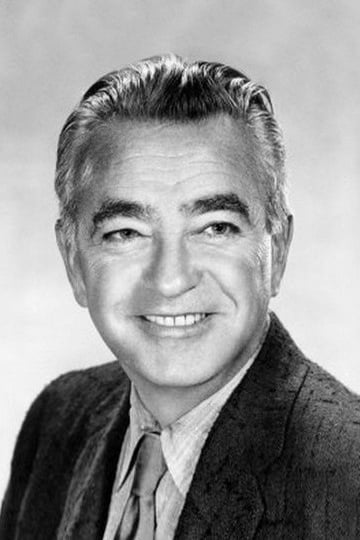
Profile via TMDB · Courtesy of TMDB
OverviewAI-generated
Charles Vidor, born Vidor Károly on 27 July 1900 in Budapest, was a film director who held citizenship of the United States, Hungary and Austria-Hungary. His working career ran from 1929 to 1959. He was married to Karen Morley and Evelyn Keyes, and Harry Warner was among his relatives. Vidor received a star on the Hollywood Walk of Fame. He died of a myocardial infarction on 4 June 1959 in Vienna.
Synthesized by Vinony from 25 facts across 3 sources: Wikidata, TMDb, Vinony collections. Generated from structured data (not the Wikipedia text) and checked against those facts — may still contain errors.
Film & TV
Budapest, Austria-Hungary [now Hungary]
Charles Vidor (July 27, 1900 – June 4, 1959) was a film director. Born Károly Vidor to a Jewish family in Budapest, Hungary, he served in the Hungarian Army during World War I. He first came to prominence during the final years of the silent film era. Among his film successes are The Bridge (1929), Cover Girl (1944), A Song to Remember (1945), Gilda (1946), The Loves of Carmen (1948), Love Me or…
Known for
- Reflets de Cannes — Self1954
via TMDB
Key facts
- Born
- Károly Vidor , ( 1899-07-27 ) 27 July 1899, Budapest , Austria-Hungary (now Hungary)
- Died
- 4 June 1959 (1959-06-04) (aged 59), Vienna , Austria
- Resting place
- Home of Peace Memorial Park
- Occupation
- Film director
- Years active
- 1929–1959
via Wikipedia infobox
Wikidata facts
- Instance of
- human
- Given name
- Károly
- Gender
- male
- Citizenship
- Hungary
- Place of birth
- Budapest
- Place of death
- Vienna
- Occupation
- film director
- Languages spoken
- English language
Show 11 more facts
- date of birth
- 1900-07-27
- date of death
- 1959-06-04
- cause of death
- myocardial infarction
- Commons category
- Charles Vidor
- manner of death
- natural causes
- related category
- Category:Films directed by Charles Vidor
- birth name
- Vidor Károly
- relative
- Harry Warner
- name in native language
- Charles Vidor
- start of work period
- 1929-00-00
- end of work period
- 1959-00-00
Sources (9)
via Wikidata · CC0
~8 min read
Encyclopedic overview
Charles Vidor (born Károly Vidor; July 27, 1899 – June 4, 1959) was a Hungarian film director. Among his film successes are The Bridge (1929), Double Door (1934), The Tuttles of Tahiti (1942), The Desperadoes (1943), Cover Girl (1944), Together Again (1944), A Song to Remember (1945), Over 21 (1945), Gilda (1946), The Loves of Carmen (1948), Rhapsody (1954), Love Me or Leave Me (1955), The Swan (1956), The Joker Is Wild (1957), and A Farewell to Arms (1957).
Life and career
Excerpted from Wikipedia’s “Charles Vidor” article, available under the CC BY-SA 4.0 licence.