Chernobyl disaster
Sign in to saveAlso known as Chernobyl nuclear reactor disaster, Chernobyl accident, Chernobyl incident, Chornobyl nuclear reactor disaster, Chornobyl disaster
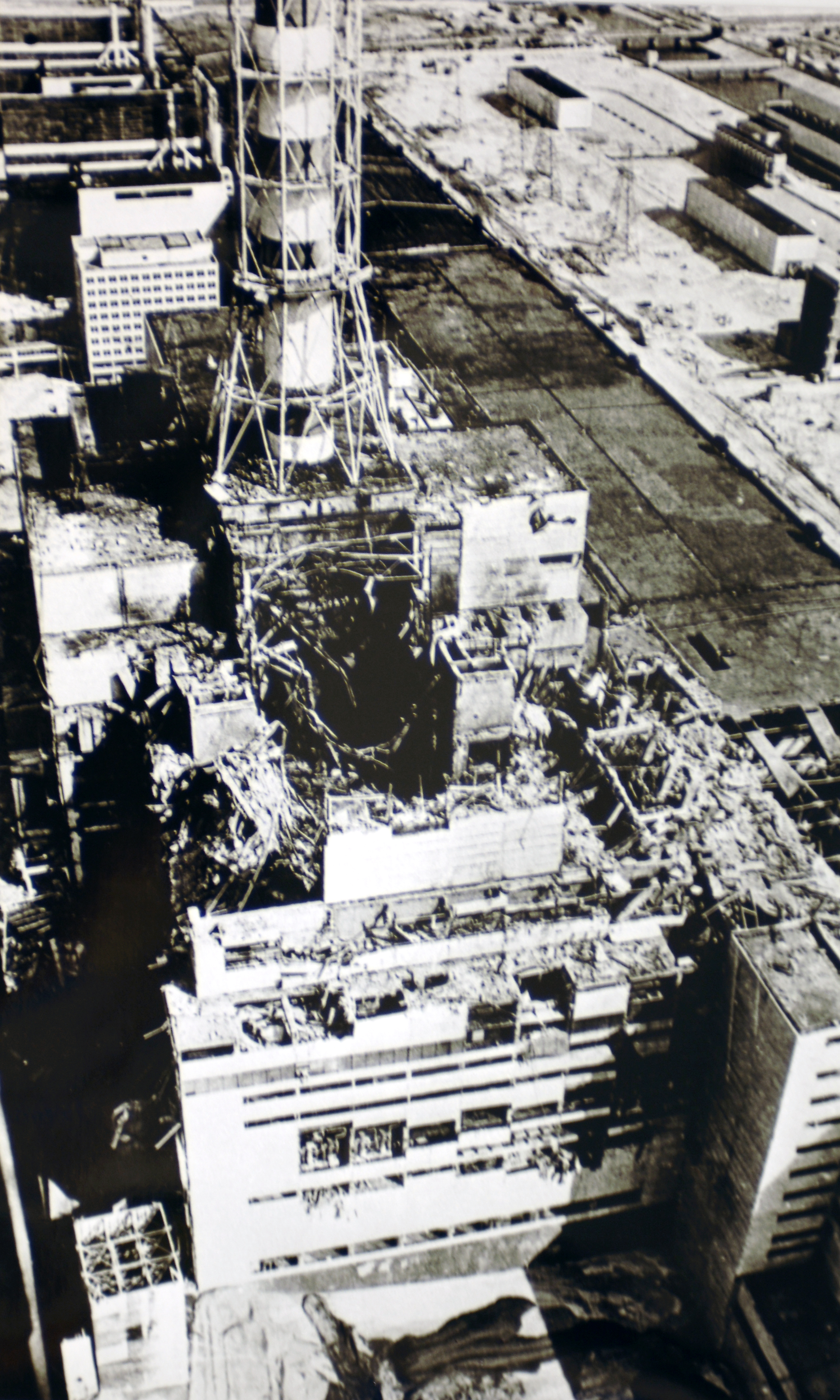
On 26 April 1986, reactor 4 of the Chernobyl Nuclear Power Plant, located near Pripyat, Ukrainian SSR, Soviet Union, exploded. With dozens of direct casualties and thousands of health complications stemming from the disaster, it is one of only two nuclear accidents rated at the maximum severity on the International Nuclear Event Scale, the other being the 2011 Fukushima nuclear accident. The response involved more than 500,000 personnel and cost an estimated 18 billion rubles. It remains the worst nuclear disaster and the most expensive disaster in history, with an estimated cost of US$700 billion.
On April 26, 1986, Reactor 4 at the Chernobyl Nuclear Power Plant in the Soviet Union exploded, killing dozens immediately and causing thousands of long-term health problems. It remains the worst nuclear disaster in history, requiring over 500,000 workers to respond and costing an estimated $700 billion, making it the most expensive disaster ever recorded.
AI-generated from the Wikipedia summary — may contain errors.
Wikipedia views (30d)
716,296 totalvia Wikimedia Pageviews API
Research
780 papers- Chernobyl: a survivable ecological disaster?ReviewReviews on environmental health · 1997Hilton JDOI: 10.1515/reveh.1997.12.4.215
- Chernobyl retrospective.ReviewSeminars in nuclear medicine · 1988Bonte FJDOI: 10.1016/s0001-2998(88)80016-3
- The Chernobyl disaster: cancer following the accident at the Chernobyl nuclear power plant.ReviewEpidemiologic reviews · 2005Hatch M, Ron E, Bouville A et al.DOI: 10.1093/epirev/mxi012
- Adaptation to ionizing radiation of higher plants: From environmental radioactivity to chernobyl disaster.ReviewJournal of environmental radioactivity · 2020Ludovici GM, Oliveira de Souza S, Chierici A et al.DOI: 10.1016/j.jenvrad.2020.106375
- [Chernobyl Awareness].Radiatsionnaia biologiia, radioecologiia · 2016Grodzinsky DM
- Psychological and perceived health effects of the Chernobyl disaster: a 20-year review.ReviewHealth physics · 2007Bromet EJ, Havenaar JMDOI: 10.1097/01.HP.0000279635.14108.02
- Implementation of Chernobyl disaster optimizer based feature selection approach to predict software defects.F1000Research · 2024Anand K, Jena AK, Das HDOI: 10.12688/f1000research.150927.2
- Chernobyl disaster 30 years on: lessons not learned.Lancet (London, England) · 2016McCall CDOI: 10.1016/S0140-6736(16)30304-X
via PubMed
Wikidata facts
- Instance of
- environmental disaster
- Country
- Soviet Union
- Located in
- Kyiv Oblast
- Location
- Chernobyl Nuclear Power Plant
- Image
- IAEA 02790015 (5613115146).jpg
- Number of deaths
- 31
Show 9 more facts
- Commons category
- Chernobyl disaster
- topic's main category
- Category:Chernobyl disaster
- point in time
- 1986-04-26
- number of casualties
- 134
- on focus list of Wikimedia project
- Wikipedia:Vital articles/Level/4
- social media followers
- 88172
- has cause
- electrification
- present in work
- Chernobyl: Abyss
- immediate cause of
- Declaration of State Sovereignty of Ukraine
Sources (7)
via Wikidata · CC0
~40 min read
Encyclopedic overview
On 26 April 1986, reactor 4 of the Chernobyl Nuclear Power Plant, located near Pripyat, Ukrainian SSR, Soviet Union (later Ukraine), exploded. With dozens of direct casualties and thousands of health complications stemming from the disaster, it is one of only two nuclear accidents rated at the maximum severity on the International Nuclear Event Scale, the other being the 2011 Fukushima nuclear accident. The response involved more than 500,000 personnel and cost an estimated 18 billion rubles (about US$84.5 billion in 2025). It remains the worst nuclear disaster and the most expensive disaster in history, with an estimated cost of US$700 billion.
The disaster occurred during a test to simulate cooling the reactor during a serious accident in blackout conditions. The operators carried out the test following an accidental drop in reactor power. Upon shutting down the reactor in those conditions, design flaws led to a dramatic power surge. The reactor components ruptured and lost coolant, and the resulting steam explosions and meltdown destroyed the reactor building. This was followed by a reactor core fire that spread radioactive contaminants across the Soviet Union and Europe. The Soviet government established a 10 km exclusion zone 36 hours after the accident, initially evacuating around 49,000 people. This was later expanded to 30 km, resulting in the evacuation of approximately 68,000 more people. The government did not publicly acknowledge the disaster until two days after the explosion, when elevated radiation levels were detected in Sweden.
Excerpted from Wikipedia’s “Chernobyl disaster” article, available under the CC BY-SA 4.0 licence.
Gallery (13)
On the map
Available in 111 languages
- Español
- Français
- Deutsch
- 中文
- 日本語
- Русский
- Português
- Italiano
- العربية
- हिन्दी
- Afrikaans
- Albanian
- Albanian
- Armenian
- Arpitan
- Assamese
- Asturian
- azb
Show 92 more
- Azerbaijani
- Bahasa Indonesia
- Bangla
- Basque
- be_x_old
- Belarusian
- Bosnian
- Bulgarian
- Burmese
- Catalan
- Central Kurdish
- Chechen
- Cornish
- Croatian
- Czech
- Danish
- Egyptian Arabic
- Esperanto
- Estonian
- Faroese
- Filipino
- Finnish
- Galician
- Georgian
- Gilaki
- Greek
- Hebrew
- Hungarian
- Icelandic
- Ido
- Interlingua
- Irish
- Kannada
- Kazakh
- Kurdish
- Kyrgyz
- Latin
- Latvian
- Lithuanian
- Luxembourgish
- Macedonian
- Malagasy
- Malay
- Malayalam
- Manipuri
- Marathi
- Mongolian
- Neapolitan
- Nederlands
- Northern Sami
- Norwegian
- Norwegian Nynorsk
- nrm
- Nyanja
- Occitan
- Pashto
- Picard
- Polski
- Punjabi
- Romanian
- Rusyn
- Sardinian
- Scots
- Scottish Gaelic
- Serbian
- Serbian (Latin)
- Sicilian
- simple
- Sindhi
- Slovak
- Slovenian
- Somali
- Svenska
- Swahili
- Tamil
- Tatar
- Tiếng Việt
- Türkçe
- Ukrainian
- Urdu
- Uzbek
- Welsh
- West Flemish
- Western Frisian
- Wu Chinese
- Yakut
- zh_classical
- zh_min_nan
- zh_yue
- فارسی
- ไทย
- 한국어
via Wikidata sitelinks · CC0