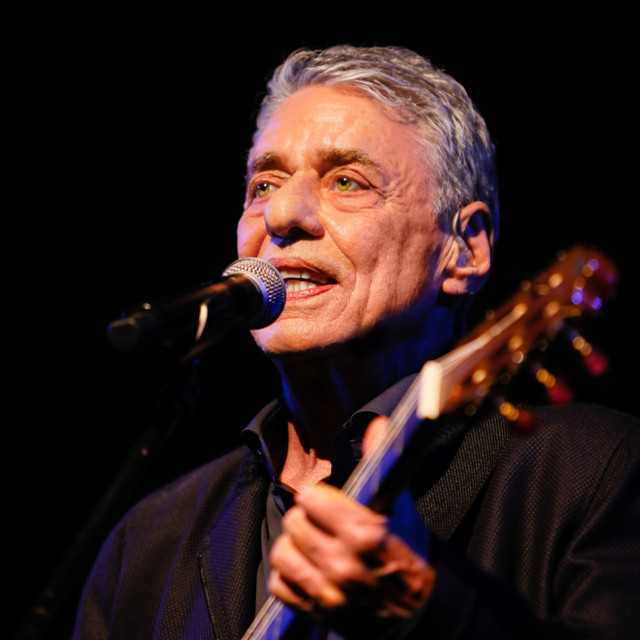
Chico Buarque · Spotify · Courtesy of Spotify
Key facts
- Born
- Francisco Buarque de Hollanda , ( 1944-06-19 ) 19 June 1944 (age 81) , Rio de Janeiro , Brazil
- Alma mater
- University of São Paulo
- Occupations
- Singer-songwriter writer poet playwright
- Years active
- 1962–present
- Notable work
- Construção " Cálice "
- Spouses
- Marieta Severo ( married</span>"}]]}'>m. 1966 ; divorced</span>"}]]}'>div. 1999 ) Carol Proner ( married</span>"}]]}'>m. 2021 )
- Children
- Sílvia Helena Luísa
- Genres
- MPB samba bossa nova choro
- Labels
- Polygram Ariola Records RCA Victor Universal Music Mercury Records Som Livre
- Website
- chicobuarque .com .br
via Wikipedia infobox
Wikidata facts
- Instance of
- human
- Given name
- Francisco
- Gender
- male
- Citizenship
- Brazil
- Place of birth
- Rio de Janeiro
- Spouse
- Marieta Severo
- Occupation
- recording artist
- Languages spoken
- Portuguese
- Native language
- Portuguese
- Genre
- choro
- Instrument
- voice
- Official website
- www.chicobuarque.com.br
- Image
- Chico Buarque in 2023.jpg
Show 6 more facts
- Commons category
- Chico Buarque
- date of birth
- 1944-06-19
- Commons gallery
- Chico Buarque
- start of work period
- 1962-00-00
- birth name
- Francisco Buarque de Hollanda
- name in native language
- Chico Buarque
Sources (8)
via Wikidata · CC0
~9 min read
Encyclopedic overview
Francisco Buarque de Hollanda (born 19 June 1944), popularly known as Chico Buarque ( Brazilian Portuguese pronunciation: [ˈʃikʊ buˈahki]), is a Brazilian singer-songwriter, guitarist, composer, playwright, writer, and poet. He is best known for his music, which often includes social, economic, and cultural reflections on Brazil.
The firstborn son of Sérgio Buarque de Hollanda, Buarque lived at several locations throughout his childhood, though mostly in Rio de Janeiro, São Paulo, and Rome. He wrote and studied literature as a child and found music through the bossa nova compositions of Tom Jobim and João Gilberto. He performed as a singer and guitarist in the 1960s as well as writing a play that was deemed dangerous by the Brazilian military dictatorship of the time. Buarque, along with several Tropicalist and MPB musicians, was threatened by the Brazilian military government and eventually left Brazil for Italy in 1969. However, he came back to Brazil in 1970 and continued to record, perform, and write, though much of his material was suppressed by government censors. He released several more albums in the 1980s and published three novels in the 1990s and 2000s.
Excerpted from Wikipedia’s “Chico Buarque” article, available under the CC BY-SA 4.0 licence.