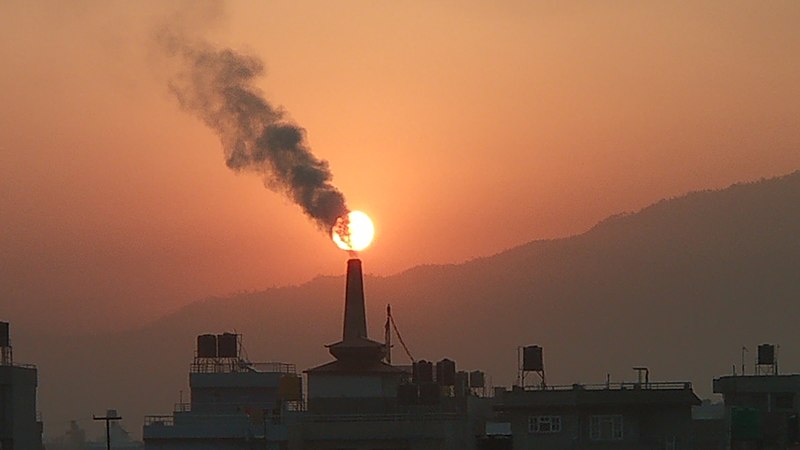
File:Air_pollution3.jpg · Wikimedia Commons · See Wikimedia Commons
chlorofluorocarbon
Sign in to saveAlso known as CFC, Chlorofluorocarbons, Freon
Chlorofluorocarbons (CFCs) and hydrochlorofluorocarbons (HCFCs) are fully or partly halogenated hydrocarbons that contain carbon (C), hydrogen (H), chlorine (Cl), and fluorine (F). They are produced as volatile derivatives of methane, ethane, and propane.
Chlorofluorocarbons (CFCs) are chemicals made from carbon, hydrogen, chlorine, and fluorine that are produced as volatile forms of simple hydrocarbons like methane and ethane. They were widely used in industrial applications, though their environmental impact has made them a subject of significant international regulation.
AI-generated from the Wikipedia summary — may contain errors.
Research
2,026 papersvia PubMed
Wikidata facts
- Subclass of
- halogenated hydrocarbon
- Has part
- carbon
- Significant event
- Montreal Protocol
- Has use
- refrigerant
Show 7 more facts
- subject has role
- pollutant
- Commons category
- Chlorofluorocarbons
- topic's main category
- Category:Chlorofluorocarbons
- time of discovery or invention
- 1890-00-00
- discoverer or inventor
- Frédéric Swarts
- on focus list of Wikimedia project
- Wikipedia:Vital articles/Level/4
- short name
- CFC
via Wikidata · CC0
~32 min read
Encyclopedic overview
19 sectionsContents
- Structure, properties and production
- Applications
- Classes of compounds and Numbering System
- Numbering system
- Reactions
- Impact as greenhouse gases
- History
- Commercial development and use in fire extinguishing
- Regulation
- Regulatory gap
- Regulation and DuPont
- Phasing-out of HFCs and HCFCs
- Properly collecting, controlling, and destroying CFCs and HCFCs
- Development of alternatives for CFCs
- Development of Hydrofluoroolefins as alternatives to CFCs and HCFCs
- Tracer of ocean circulation
- Safety
- References
- External links
Chlorofluorocarbons (CFCs) and hydrochlorofluorocarbons (HCFCs) are fully or partly halogenated hydrocarbons that contain carbon (C), hydrogen (H), chlorine (Cl), and fluorine (F). They are produced as volatile derivatives of methane, ethane, and propane.
The most common example of a CFC is dichlorodifluoromethane (R-12). R-12, also commonly called Freon, is used as a refrigerant. Many CFCs have been widely used as refrigerants, propellants (in aerosol applications), gaseous fire suppression systems, and solvents. As a result of CFCs contributing to ozone depletion in the upper atmosphere, the manufacture of such compounds has been phased out under the Montreal Protocol, and they are being replaced with other products such as hydrofluorocarbons (HFCs) and hydrofluoroolefins (HFOs) including R-410A, R-134a and R-1234yf.
Excerpted from Wikipedia’s “chlorofluorocarbon” article, available under the CC BY-SA 4.0 licence.