Boulard, M.
Cicadellidae
Sign in to saveAlso known as Leafhopper
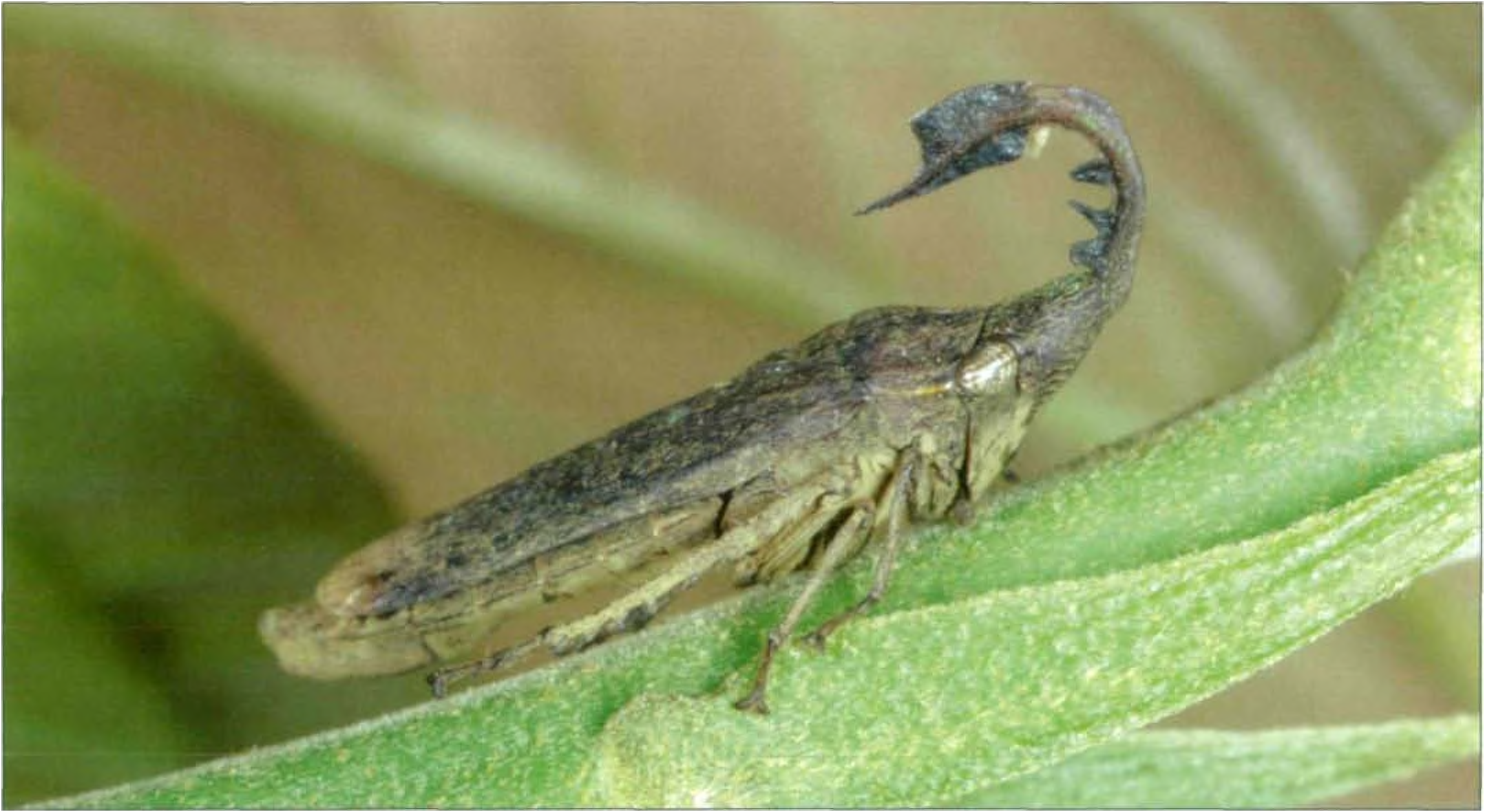
thumb|Candy-striped leafhopper (Graphocephala coccinea) Leafhopper is the common name for any species from the family Cicadellidae: based on the type genus Cicadella. These minute insects, colloquially known as hoppers, are plant feeders that suck plant sap from grass, shrubs, or trees. Their hind legs are modified for jumping, and are covered with hairs that facilitate the spreading of a secretion over their bodies that acts as a water repellent and carrier of pheromones. They undergo a partial metamorphosis, and have various host associations, varying from very generalized to very specific.
Species
leafhoppers
FAMILY
- KingdomAnimalia
- PhylumArthropoda
- ClassInsecta
- OrderHemiptera
- FamilyCicadellidae
via GBIF
Museum specimens
- Specimen records
- 35,757
- With media
- 1,129
- Family
- Cicadellidae
- Collections
- USNM, LACM
- Recorded in
- United States, Germany
Wikidata facts
- Instance of
- taxon
- Parent taxon
- Membracoidea
- Image
- Graphocephala coccinea 6.jpg
Show 5 more facts
- taxon rank
- family
- Commons category
- Cicadellidae
- taxon name
- Cicadellidae
- topic's main category
- Category:Cicadellidae
- taxon common name
- dwergcicaden
via Wikidata · CC0
~8 min read
Encyclopedic overview
7 sectionsContents
- Description and ecology
- Systematics
- Subfamilies
- See also
- References
- Further reading
- External links
thumb|Candy-striped leafhopper (Graphocephala coccinea) Leafhopper is the common name for any species from the family Cicadellidae: based on the type genus Cicadella. These minute insects, colloquially known as hoppers, are plant feeders that suck plant sap from grass, shrubs, or trees. Their hind legs are modified for jumping, and are covered with hairs that facilitate the spreading of a secretion over their bodies that acts as a water repellent and carrier of pheromones. They undergo a partial metamorphosis, and have various host associations, varying from very generalized to very specific. Some species have a cosmopolitan distribution, or occur throughout the temperate and tropical regions. Some are pests or vectors of plant viruses and phytoplasmas. The family is distributed all over the world, and constitutes the second-largest hemipteran family, with at least 20,000 described species.
They belong to a lineage traditionally treated as infraorder Cicadomorpha in the suborder Auchenorrhyncha. This has sometimes been placed in its own suborder (Clypeorrhyncha), but more recent research retains it within Auchenorrhyncha.
Excerpted from Wikipedia’s “Cicadellidae” article, available under the CC BY-SA 4.0 licence.