File:Blausen_0811_SkinPores.png · Wikimedia Commons · See Wikimedia Commons
comedo
Sign in to saveAlso known as whitehead, blackhead
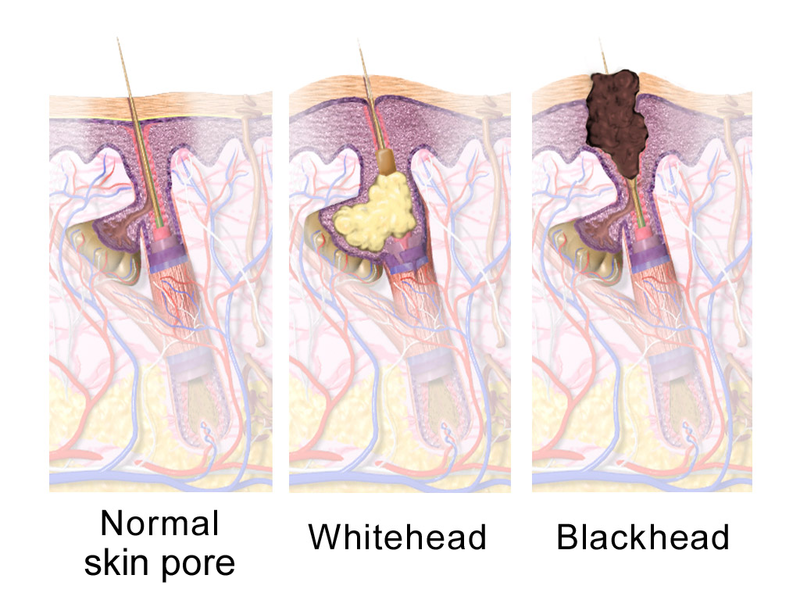
A comedo (plural comedones) is a clogged hair follicle (pore) in the skin. Keratin (skin debris) combines with oil to block the follicle. A comedo can be open (blackhead) or closed by skin (whitehead) and occur with or without acne. The word comedo comes from Latin comedere 'to eat up' and was historically used to describe parasitic worms; in modern medical terminology, it is used to suggest the worm-like appearance of the expressed material.
Key facts
- Medical condition (new).image
- Blausen 0811 SkinPores.png
- Medical condition (new).caption
- Illustration comparing a normal skin pore with a whitehead and a blackhead
- Medical condition (new).field
- Dermatology
- Medical condition (new).synonyms
- Plural: comedones
via Wikipedia infobox
Wikidata facts
Show 2 more facts
- Commons category
- Blackheads
- health specialty
- dermatology
via Wikidata · CC0
~6 min read
Encyclopedic overview
6 sectionsContents
- Causes
- Pathophysiology
- Management
- Rare conditions
- References
- External links
A comedo (plural comedones) is a clogged hair follicle (pore) in the skin. Keratin (skin debris) combines with oil to block the follicle. A comedo can be open (blackhead) or closed by skin (whitehead) and occur with or without acne. The word comedo comes from Latin comedere 'to eat up' and was historically used to describe parasitic worms; in modern medical terminology, it is used to suggest the worm-like appearance of the expressed material.
The chronic inflammatory condition that usually includes comedones, inflamed papules, and pustules (pimples) is called acne. Infection causes inflammation and the development of pus. Whether a skin condition classifies as acne depends on the number of comedones and infection. Comedones should not be confused with sebaceous filaments.
Excerpted from Wikipedia’s “comedo” article, available under the CC BY-SA 4.0 licence.