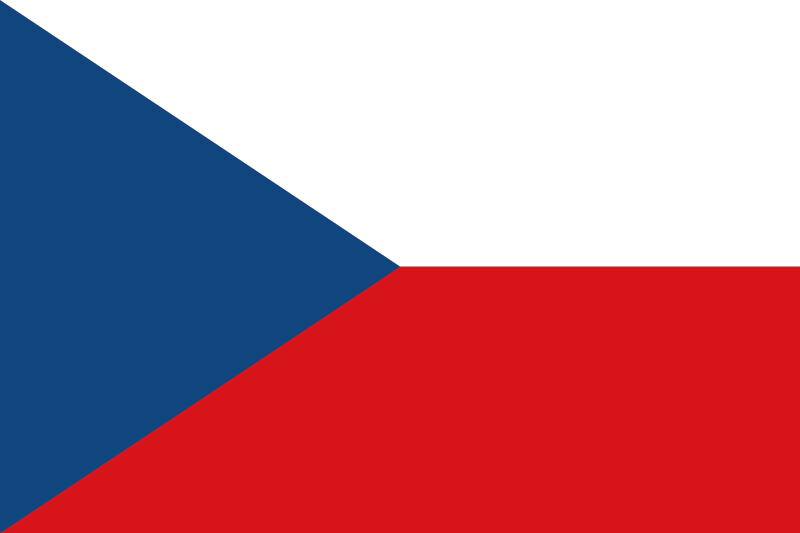
File:Flag_of_the_Czech_Republic.svg · Wikimedia Commons · See Wikimedia Commons
Czechoslovakia
Sign in to saveAlso known as Czecho-Slovakia, cs, TCH, Československo, Federation of Czechoslovakia, People's Republic of Czechoslovakia
Czechoslovakia ( ; Czech and , Česko-Slovensko) was a country in Central Europe created in 1918, as Czecho-Slovakia (until 1920), when it declared its independence from Austria-Hungary. In 1938, after the Munich Agreement, the Sudetenland became part of Nazi Germany. Between 1939 and 1945, the state ceased to exist, as Slovakia proclaimed its independence and Carpathian Ruthenia became part of Hungary, while the German Protectorate of Bohemia and Moravia was proclaimed in the remainder of the Czech Lands. In 1939, after the outbreak of World War II, former Czechoslovak president Edvard Beneš f
Czechoslovakia was a Central European country established in 1918 after breaking away from Austria-Hungary, which existed until World War II when it was dissolved between 1939 and 1945 as Slovakia became independent and the Czech lands fell under German control. It matters historically as an important example of the new nation-states created after World War I and as a casualty of Nazi expansion in the lead-up to and during World War II.
AI-generated from the Wikipedia summary — may contain errors.
Key facts
- Country.conventional_long_name
- Czechoslovakia
- Country.native_name
- Československo
- Country.image_flag
- Flag of the Czech Republic.svg
- Country.common_name
- Czechoslovakia
- Country.life_span
- 1918–1939(1939–1945: government-in-exile)1945–1992
- Country.p1
- Austria-Hungary
- Country.s1
- Czech Republic
- Country.s2
- Slovakia
- Country.image_coat
- Lesser coat of arms of Czechoslovakia.svg
- Country.image_map
- Czechoslovakia location map.svg
- Country.image_map_caption
- Czechoslovakia during the interwar period and the Cold War
- Country.anthems
- 'Kde domov můj' and 'Nad Tatrou sa blýska'
- Country.capital
- Prague
- Country.largest_city
- capital
- Country.official_languages
- Czechoslovak, after 1948 CzechSlovak
- Country.demonym
- Czechoslovak
- Country.title_leader
- President
- Country.leader1
- Tomáš G. Masaryk
via Wikipedia infobox
Research
21,931 papers- Czechoslovakia.Department of State publication. Background notes series · 1987
- Human parasitology in Czechoslovakia.Transactions of the Royal Society of Tropical Medicine and Hygiene · 1991
- Emigration of Scientists From Czechoslovakia During the Soviet Domination.Experimental and clinical transplantation : official journal of the Middle East Society for Organ Transplantation · 2023
- [Czechoslovakia, 1918-1988].Demografie · 1988
- PAEDIATRIC NEUROLOGY IN CZECHOSLOVAKIA.Developmental medicine and child neurology · 1965
via PubMed
Wikidata facts
- Official name
- Československá federativní republika
- Demonym
- tjeckoslovak
- Population
- 13607385
- Area
- 127900
- Image
- Czechoslovakia1920-38.jpg
- Calling code
- +42
- Licence plate code
- CS
Show 8 more facts
- Commons category
- Czechoslovakia
- inception
- 1918-10-28
- dissolved, abolished or demolished date
- 1992-12-31
- Commons gallery
- Československo / Česko-Slovensko
- native label
- Česko-Slovensko
- P8168
- Am I Blood
- P11012
- Lake Chaubunagungamaug
- P12749
- Anton Losinger
Sources (10)
via Wikidata · CC0
~37 min read
Article
35 sectionsContents
- Characteristics
- Names
- History
- Origins
- First Czechoslovak Republic
- Formation
- Ethnicity
- Interwar period
- Munich Agreement, the Second Republic, and the Two-Step German Occupation
- Third and Fourth Republics
- After 1989
- Government and politics
- Heads of state and government
- Foreign policy
- International agreements and membership
- International relations
- Administrative divisions
- Population and ethnic groups
- Economy
- Resource base
- Transport and communications
- Society
- Education
- Religion
- Health, social welfare and housing
- Mass media
- Sports
- Culture
- Postage stamps
- See also
- Notes
- References
- Sources
- Further reading
- External links
Czechoslovakia ( ; Czech and , Česko-Slovensko) was a country in Central Europe created in 1918, as Czecho-Slovakia (until 1920), when it declared its independence from Austria-Hungary. In 1938, after the Munich Agreement, the Sudetenland became part of Nazi Germany. Between 1939 and 1945, the state ceased to exist, as Slovakia proclaimed its independence and Carpathian Ruthenia became part of Hungary, while the German Protectorate of Bohemia and Moravia was proclaimed in the remainder of the Czech Lands. In 1939, after the outbreak of World War II, former Czechoslovak president Edvard Beneš formed a government-in-exile and sought recognition from the Allies.
After World War II, Czechoslovakia was re-established under its pre-1938 borders, with the exception of Carpathian Ruthenia, which became part of the Ukrainian SSR (a republic of the Soviet Union). The Communist Party seized power in a coup in 1948. From 1948 to 1989, Czechoslovakia was part of the Eastern Bloc with a planned economy. Its economic status was formalized in membership of Comecon from 1949 and its defense status in the Warsaw Pact of 1955. A period of political liberalization in 1968, the Prague Spring, ended when the Soviet Union, assisted by other Warsaw Pact countries, invaded Czechoslovakia. In 1989, as Marxist–Leninist governments and communism were ending all over Central and Eastern Europe, Czechoslovaks peacefully deposed their communist government during the Velvet Revolution, which began on 17 November 1989 and ended 11 days later on 28 November when all of the top Communist leaders and Communist party itself resigned. On 31 December 1992, Czechoslovakia split peacefully into the two sovereign states of the Czech Republic and Slovakia.
Gallery (454)
On the map
31 mapped locations
Available in 147 languages
- Español
- Français
- Deutsch
- 中文
- 日本語
- Русский
- Português
- Italiano
- العربية
- हिन्दी
- Afrikaans
- Albanian
- Albanian
- Amharic
- Aragonese
- Armenian
- Arpitan
- Asturian
Show 128 more
- azb
- Azerbaijani
- Bahasa Indonesia
- Bangla
- Bashkir
- Basque
- Bavarian
- be_x_old
- Belarusian
- Bikol
- Bosnian
- Breton
- Bulgarian
- Burmese
- Catalan
- Central Kurdish
- Chechen
- Chuvash
- Croatian
- Czech
- Danish
- Egyptian Arabic
- Esperanto
- Estonian
- Extremaduran
- Filipino
- Finnish
- fiu_vro
- Friulian
- Galician
- Georgian
- Greek
- Hebrew
- Hungarian
- Icelandic
- Ido
- Interlingua
- Interlingue
- Irish
- Javanese
- Kannada
- Karachay-Balkar
- Kazakh
- Komi
- Kurdish
- Kyrgyz
- Ladino
- Lao
- Latin
- Latvian
- Ligurian
- Limburgish
- Lithuanian
- Lombard
- Lower Sorbian
- Luxembourgish
- Macedonian
- Maithili
- Malagasy
- Malay
- Malayalam
- Manipuri
- Manx
- Marathi
- Mazanderani
- Mingrelian
- Mongolian
- Moroccan Arabic
- Nederlands
- Nepali
- Northern Frisian
- Norwegian
- Norwegian Nynorsk
- Occitan
- Old English
- Ossetic
- Pashto
- Picard
- Piedmontese
- Polski
- Punjabi
- Quechua
- Romanian
- Rusyn
- Sardinian
- Saterland Frisian
- Scots
- Scottish Gaelic
- Serbian
- Serbian (Latin)
- Sicilian
- simple
- Sindhi
- Sinhala
- Slovak
- Slovenian
- Svenska
- Swahili
- Tajik
- Talysh
- Tamil
- Tatar
- Telugu
- Tiếng Việt
- Toki Pona
- Tumbuka
- Türkçe
- Ukrainian
- Upper Sorbian
- Urdu
- Uzbek
- Venetian
- Veps
- Waray
- Welsh
- West Flemish
- Western Frisian
- Western Panjabi
- Wu Chinese
- Yiddish
- Yoruba
- Zaza
- zh_classical
- zh_min_nan
- zh_yue
- فارسی
- ไทย
- 한국어
via Wikidata sitelinks · CC0