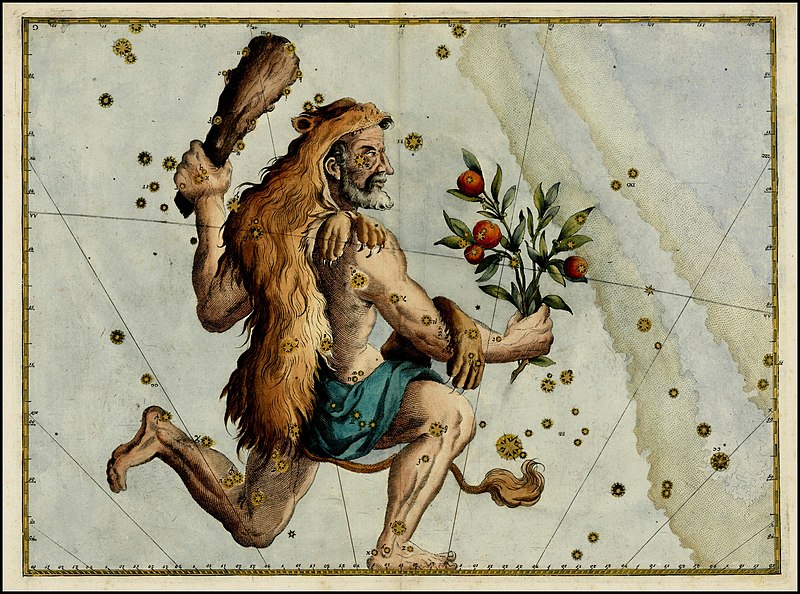
File:Johann_Bayer_-_Hercules.jpg · Wikimedia Commons · See Wikimedia Commons
demigod
Sign in to saveAlso known as demi-god
thumb|upright=1.25|"Cú Chulainn|Cuchulain Slays the [[Hound of Culain", illustration by Stephen Reid from Eleanor Hull's ''The Boys' Cuchulain'', 1904]]
Wikidata facts
- Subclass of
- mythical hybrid
- Image
- Antonio del Pollaiolo - Ercole e l'Idra e Ercole e Anteo - Google Art Project.jpg
Show 5 more facts
- topic's main category
- Category:Demigods
- different from
- demagogue
- Commons category
- Demigods
- described by source
- The Nuttall Encyclopædia
- P8168
- NGC 355
Sources (3)
via Wikidata · CC0
~8 min read
Encyclopedic overview
15 sectionsContents
- Etymology
- Classical
- Celtic
- Hinduism
- China
- Japan
- Anitism
- Polynesian
- Samoan
- Tongan
- Māori
- Hawaii
- See also
- References
- External links
thumb|upright=1.25|"Cú Chulainn|Cuchulain Slays the [[Hound of Culain", illustration by Stephen Reid from Eleanor Hull's ''The Boys' Cuchulain, 1904]]
In polytheistic religions and mythologies, a demigod or demigoddess is a being that is half-divine and half-human, born of a deity and a human, or a human or non-human creature that is accorded divine status after death, or someone who has attained the "divine spark" (divine illumination). An immortal demigod often has tutelary status and a religious cult following, while a mortal demigod is one who has fallen or died, but is popular as a legendary hero. Figuratively, the term is used to describe a person whose talents or abilities are so elevated that they appear to approach divinity.
Excerpted from Wikipedia’s “demigod” article, available under the CC BY-SA 4.0 licence.