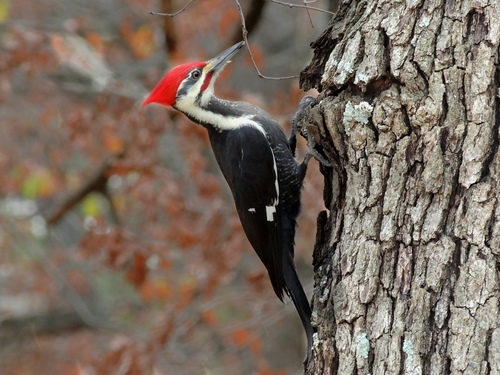
(c) Joshlaymon, some rights reserved (CC BY-SA) · cc-by-sa
Dryocopus
Sign in to saveDryocopus is a genus of large powerful woodpeckers, typically 35–45 cm in length. It has representatives in North and South America, Europe, and Asia; some South American species are endangered. It was believed to be closely related to the American genus Campephilus, but it is part of a different lineage of woodpeckers altogether (Benz et al., 2006)
In the Vinony graph
Within Vinony's link graph, Dryocopus is referenced by 173 other articles, and connects out to Picinae, trogon and Bucerotiformes.
It sits within the topics Bird genera, Dryocopus and Taxa named by Friedrich Boie.
Its subject is documented across 32 Wikipedia language editions.
Species
Pileated Woodpecker
GENUS
- KingdomAnimalia
- PhylumChordata
- ClassAves
- OrderPiciformes
- FamilyPicidae
via GBIF
Museum specimens
- Specimen records
- 46
- With media
- 8
- Family
- Picidae
- Collections
- CMNH, CUMV, UMMZ, ROM, UMZC, UNICAMP
- Recorded in
- United States, Brazil, Paraguay, Malawi, Argentina, Argentine, Guatemala
Wikidata facts
- Instance of
- taxon
- Image
- PileatedWoodpeckerOnLog1.jpg
Show 7 more facts
- taxon rank
- genus
- Commons category
- Dryocopus
- taxon name
- Dryocopus
- topic's main category
- Category:Dryocopus
- Commons gallery
- Dryocopus
- taxon common name
- Svartspetter
- taxon range
- Brazil
Sources (1)
via Wikidata · CC0
~2 min read
Encyclopedic overview
3 sectionsContents
- Taxonomy
- References
- Sources
Dryocopus is a genus of large powerful woodpeckers, typically 35–45 cm in length. It has representatives in North and South America, Europe, and Asia; some South American species are endangered. It was believed to be closely related to the American genus Campephilus, but it is part of a different lineage of woodpeckers altogether (Benz et al., 2006)
Their breeding habitat is forested areas with large trees, where they nest in a large cavity in a dead tree or a dead part of a tree. They may excavate a new hole each year, creating habitat for other large cavity nesting birds. They are non-migratory permanent residents.
Excerpted from Wikipedia’s “Dryocopus” article, available under the CC BY-SA 4.0 licence.