Encyclopedia of Life · EOL (see source)
Eunicida
Sign in to saveEunicida is an order of polychaete worms.
Species
イソメ目
ORDER
- KingdomAnimalia
- PhylumAnnelida
- ClassPolychaeta
- OrderEunicida
イソメ目 オニイソメ (Eunice aphroditois) 分類 界 : 動物界 Animalia 門 : 環形動物門 Annelida 綱 : 多毛綱 Polychaeta 目 : イソメ目 Eunicida[1] 科 本文参照 イソメ目(Eunicida)は、多毛類の目である。 特徴[編集] この目の動物は、細長く節で構成された体を持ち、通常、囲口節と口前葉は分離している。全てではないが多くが、粘液の鞘から頑丈な角製の鞘までの様々な管状の巣で生活している。口肢は球状や円筒状であり、0本から7本の触角を持つ。筋肉の発達した咽頭は、背面に1対の下顎、前面に歯の生えた上顎を備えている。いくつかの種では、触角毛を持ち、全ての種が分岐のない疣足を持つ。えらや剛毛を持つ種もある[2]。 科[編集] World Register of Marine Speciesは、この目に以下の7科を含めている[1]。 ノリコイソメ科 (Dorvilleidae) イソメ科 (Eunicidae) ハートマンイソメ科 (Hartmaniellidae) サカナヤドリゴカイ科 (Ichthyotomidae) ギボシイソメ科 (Lumbrineridae) セグロイソメ科 (Oenonidae) ナナテイソメ科 (Onuphidae) 出典[編集] ^ a b Read, Geoff (2010), G. Read & K. Fauchald, ed., “Eunicida”, World Polychaeta database (World Register of Marine Species(英語版)), http://www.marinespecies.org/aphia.php?p=taxdetails&id=895 ^ Eunicida Natural History Museum. Retrieved 2012-01-17. ウィキスピーシーズにイソメ目に関する情報があります。 「https://ja.wikipedia.org/w/index.php?title=イソメ目&oldid=51850258」から取得 カテゴリ: 環形動物
via GBIF
Museum specimens
- Specimen records
- 33
- With media
- 4
- Collections
- AUM, NMV, USNM, YPM, NRM, BPBM
- Recorded in
- United States, Australia, Sweden, Hawaiian Islands, Indonesia
Wikidata facts
Show 4 more facts
- taxon name
- Eunicida
- taxon rank
- order
- Commons category
- Eunicida
- topic's main category
- Category:Eunicida
Sources (1)
via Wikidata · CC0
~1 min read
Encyclopedic overview
4 sectionsContents
- Characteristics
- Fossil record
- Families
- References
Eunicida is an order of polychaete worms.
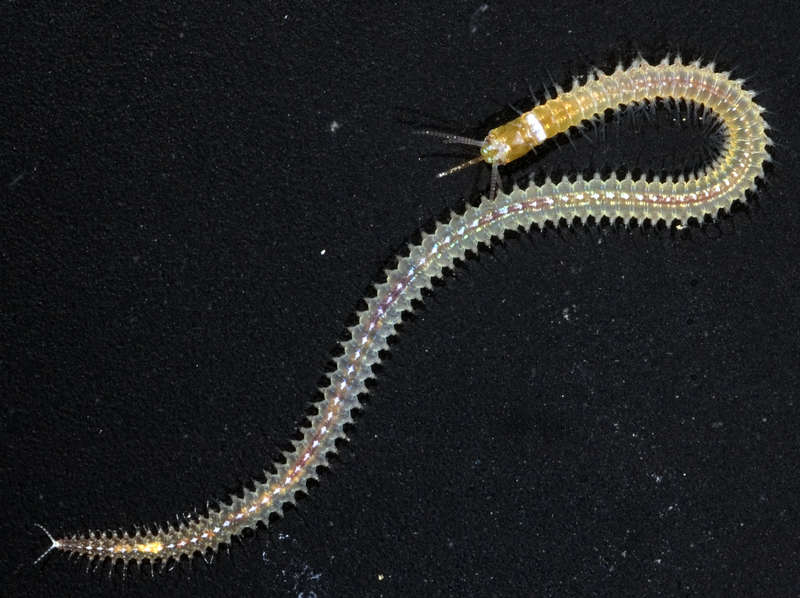
==Characteristics== Members of this order have an elongated, segmented body and a distinct head, normally with a separate peristomium and prostomium. Many, but not all, live in tubes which vary from a mucous sheath to a tough, horny casing. The palps vary from globular to cylindrical and there are from 0 to 7 antennae, usually smooth but occasionally jointed. There is a muscular pharynx with a dorsal pair of mandibles and a set of ventral, toothed, maxillary plates. Some species have tentacular cirri and all have unbranched parapodia. In some species, dorsal cirri, branchiae, ventral cirri and chaetae occur, but not in others.
Excerpted from Wikipedia’s “Eunicida” article, available under the CC BY-SA 4.0 licence.