File:Das_werdenSie_ja_nachher_schon_sehen.jpg · Wikimedia Commons · See Wikimedia Commons
flirting
Sign in to saveAlso known as coquetry, flirtation
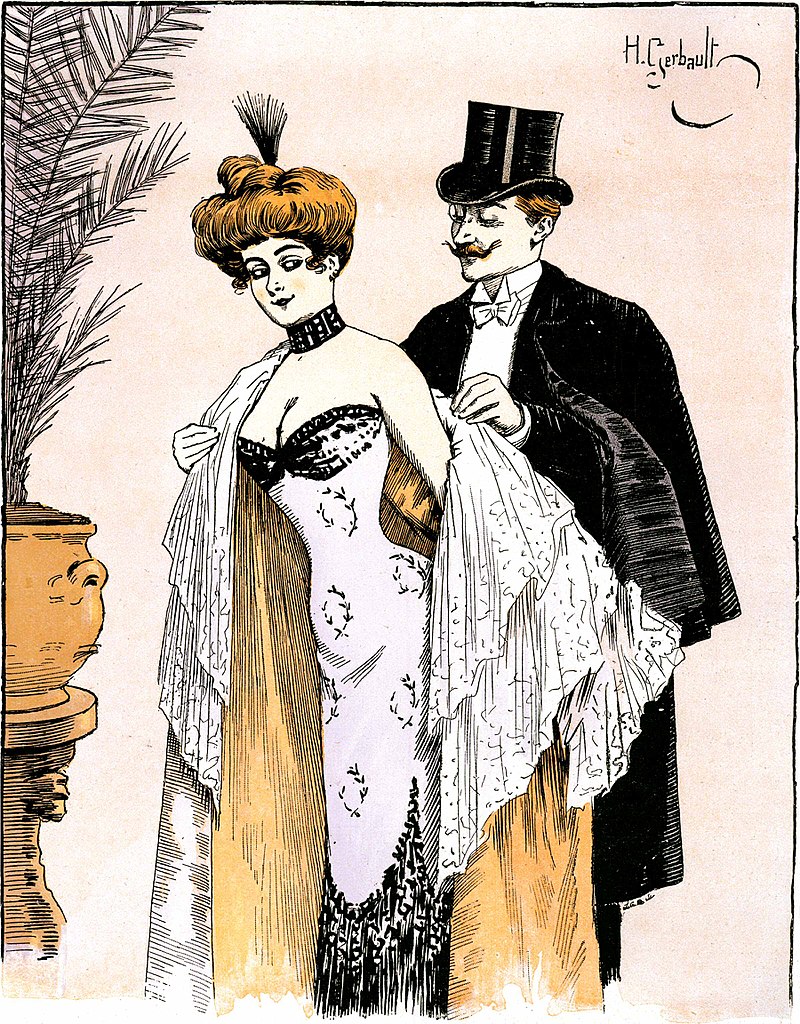
thumb| "Would you take offense if I had the gall to plant a kiss on this beautiful shoulder?" "You'll figure that out soon enough after the deed." (poster by Henri Gerbault)
Flirting is playful, lighthearted behavior that shows romantic or sexual interest in someone, often through teasing comments, suggestive remarks, or physical gestures as shown in the image. It matters because it's a common way people express attraction and explore potential romantic connections in a low-pressure, indirect manner.
AI-generated from the Wikipedia summary — may contain errors.
Wikidata facts
Show 2 more facts
- Commons category
- Flirting
- different from
- Flirt
Sources (3)
via Wikidata · CC0
~9 min read
Encyclopedic overview
11 sectionsContents
- Etymology
- Historical context
- Purpose
- Human mating strategy
- Covert and overt signaling
- Misinterpretation
- Cultural variations
- Gendered roles
- Gender egalitarian roles
- See also
- References
thumb| "Would you take offense if I had the gall to plant a kiss on this beautiful shoulder?" "You'll figure that out soon enough after the deed." (poster by Henri Gerbault)
Flirting, formally known as coquetry, is a form of social communication via body language, verbal expressions, or written language intended to evoke feelings of playful excitement and potential romantic or sexual interest. Flirting can change in intention as well as intensity, whether it is performed for short-term fun or employed with a longer-term intention of seeking a romantic or sexual relationship.
Excerpted from Wikipedia’s “flirting” article, available under the CC BY-SA 4.0 licence.