Encyclopedia of Life · EOL (see source)
Francisella
Sign in to saveFrancisella is a genus of Gram-negative bacteria. They are small coccobacillary or rod-shaped, nonmotile organisms, which are also facultative intracellular parasites of macrophages. Strict aerobes, Francisella colonies bear a morphological resemblance to those of the genus Brucella. Some Francisella species are pathogenic bacteria but some others are endosymbionts of ticks. Ticks do not use any other food source than vertebrate blood and therefore ingest high levels of protein, iron and salt, but few vitamins. To overcome these nutritional deficiencies, ticks have evolved obligate interaction
Species
GENUS
- KingdomBacteria
- PhylumProteobacteria
- ClassGammaproteobacteria
- OrderFrancisellales
- FamilyFrancisellaceae
Francisella es un género patógeno de proteobacterias cuya especie más representativa es F. tularensis, que se divide a su vez en las subespecies tularensis, holarctica, mediasiatica y novicida. La importancia de esta especie radica en que es el agente etiológico de la tularemia o fiebre de los conejos. Además, F. t. novicida y F. philomiragia se asocian a septicemia. Se trata de bacilos pequeños o cocobacilos, Gram negativos e inmóviles. Además, las subespecies F. t. tularensis y F. t. holarctica son capsuladas estando esta cualidad relacionada con su mayor virulencia. Son parásitos facultativos intracelulares de los macrófagos, aerobios estrictos. Las colonias de Francisella tienen un gran parecido morfológico con las del género Brucella. Son muy resistentes al frío e incluso a la congelación, y notablemente resistente a la lejía, pero sensible a los desinfectantes comunes. Es una bacteria muy infecciosa, es decir, se necesita muy poca cantidad de bacterias o bien baja carga bacteriana para que surja la infección. El nombre del género hace honor a su descubridor, el bacteriólogo Edward Francis, quien aisló por primera vez la "Bacterium tularensis" en 1922 en enfermos de tularemia
via GBIF
Research
4,818 papers- Pathogenicity and virulence of Francisella tularensis.Virulence · 2023
- The Francisella Type VI Secretion System.Frontiers in cellular and infection microbiology · 2018
- Two-Component Systems in Francisella Species.Frontiers in cellular and infection microbiology · 2019
- Francisella Inflammasomes: Integrated Responses to a Cytosolic Stealth Bacterium.Current topics in microbiology and immunology · 2016
- Francisella tularensis genomics and proteomics.Annals of the New York Academy of Sciences · 2007
via PubMed
Wikidata facts
- Instance of
- taxon
- Image
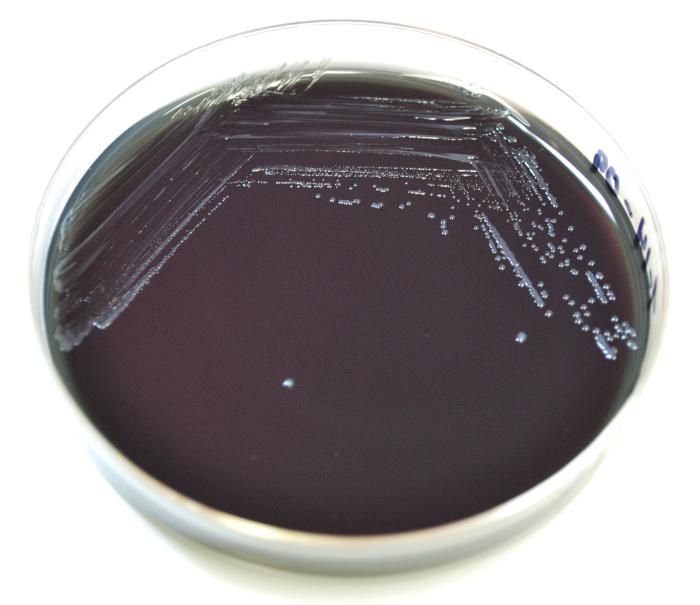
- Francisella tularensis 01.jpg
Show 6 more facts
- taxon name
- Francisella
- taxon rank
- genus
- Gram staining
- gram-negative bacteria
- Commons category
- Francisella
- LPSN URL
- lpsn.dsmz.de/genus/francisella
- taxonomic type
- Francisella tularensis
Sources (3)
via Wikidata · CC0
~3 min read
Encyclopedic overview
5 sectionsContents
- Pathogenesis
- Taxonomy
- Laboratory characteristics
- References
- External links
Francisella is a genus of Gram-negative bacteria. They are small coccobacillary or rod-shaped, nonmotile organisms, which are also facultative intracellular parasites of macrophages. Strict aerobes, Francisella colonies bear a morphological resemblance to those of the genus Brucella. Some Francisella species are pathogenic bacteria but some others are endosymbionts of ticks. Ticks do not use any other food source than vertebrate blood and therefore ingest high levels of protein, iron and salt, but few vitamins. To overcome these nutritional deficiencies, ticks have evolved obligate interactions with nutritional endosymbionts, including Francisella endosymbionts. Their experimental elimination typically results in decreased tick survival, molting, fecundity and egg viability, as well as in physical abnormalities, which all are fully restored with an oral supplement of B vitamins. The genome sequencing of Francisella endosymbionts confirmed that they consistently produce three B vitamin types, biotin (vitamin B7), riboflavin (B2) and folate (B9). Francisella endosymbionts are often misidentified as Francisella tularensis; however, Francisella endosymbionts lack virulence genes and cannot infect humans.
The genus was named in honor of American bacteriologist Edward Francis, who, in 1922, first recognized F. tularensis (then named Bacterium tularensis) as the causative agent of tularemia.
Excerpted from Wikipedia’s “Francisella” article, available under the CC BY-SA 4.0 licence.