File:Friction_Animation_2_Blocks.gif · Wikimedia Commons · See Wikimedia Commons
friction
Sign in to saveAlso known as frictional force, friction force
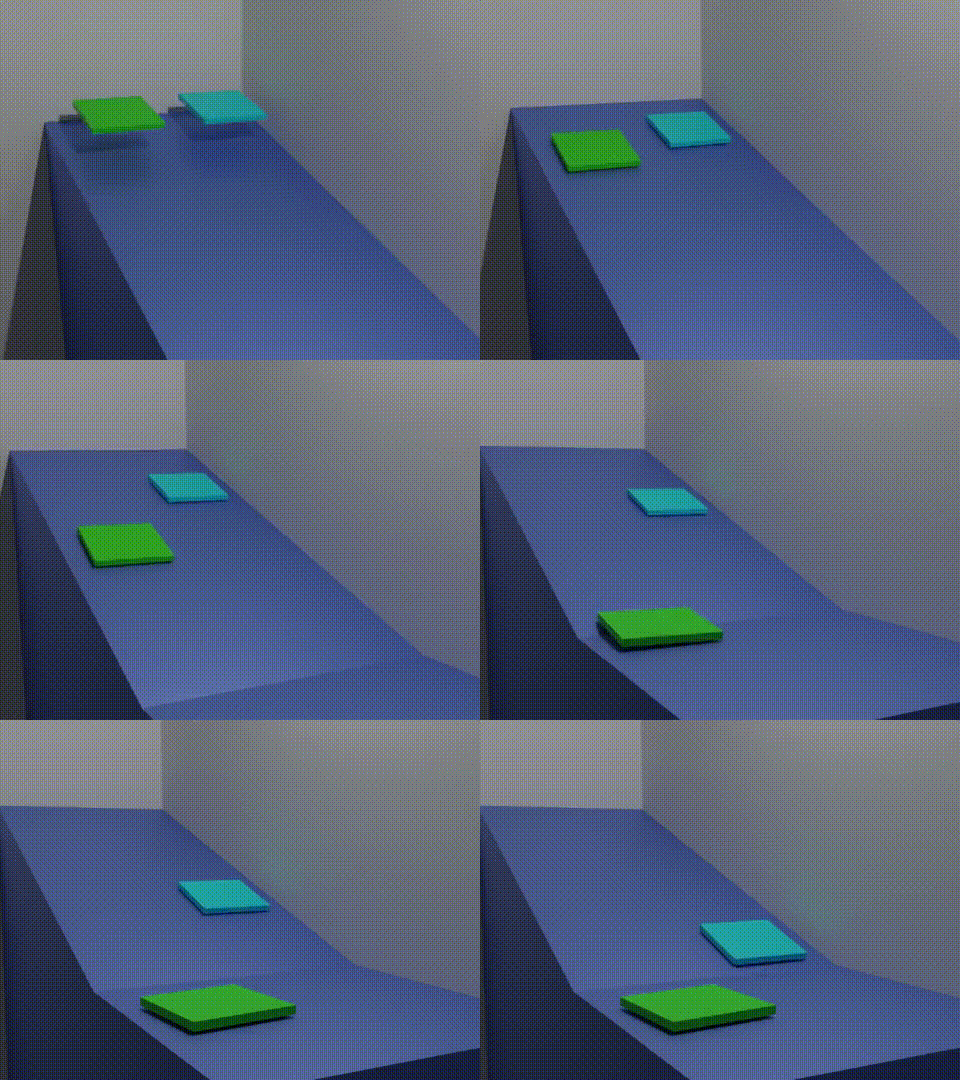
thumb|360px|The blue plate has more friction on the sloped surface than the green one, so slides down slower.
Friction is a force that resists movement between two surfaces in contact with each other, causing objects to slow down or stop sliding. It matters because it affects how quickly things move—for example, a surface with more friction will cause an object to slide down more slowly than a surface with less friction.
AI-generated from the Wikipedia summary — may contain errors.
Research
32,143 papersvia PubMed
Wikidata facts
- Image
- MCA friction net.gif
Show 10 more facts
- has effect
- dissipation
- Commons category
- Friction
- topic's main category
- Category:Friction
- has characteristic
- coefficient of friction
- studied by
- tribology
- described by source
- Encyclopædia Britannica 11th edition
- Stack Exchange tag
- physics.stackexchange.com/tags/friction
- on focus list of Wikimedia project
- Wikipedia:Vital articles/Level/4
- maintained by WikiProject
- WikiProject Mathematics
- has cause
- strain rate tensor
via Wikidata · CC0
~38 min read
Encyclopedic overview
32 sectionsContents
- Types
- History
- Dry friction
- Kinetic friction
- Role of the normal force
- Role of angle
- Coefficient of friction
- Approximate coefficients of friction
- Sources of friction
- Breakdown of the Coulomb model
- Dry friction and instabilities
- Friction at the nanoscale
- Fluid friction{{anchor|Fluid}}
- Lubricated friction
- Skin friction
- Internal friction
- Radiation friction
- Other types of friction
- Rolling resistance
- Braking friction
- Triboelectric effect
- Belt friction
- Friction reduction
- Devices
- Lubricants
- Applications
- Transportation
- Measurement
- Household usage
- See also
- References
- External links
thumb|360px|The blue plate has more friction on the sloped surface than the green one, so slides down slower.
300x150px|thumb|Simulated blocks with fractal rough surfaces, exhibiting static frictional interactions
Excerpted from Wikipedia’s “friction” article, available under the CC BY-SA 4.0 licence.
Gallery (20)
Available in 87 languages
- Español
- Français
- Deutsch
- 中文
- 日本語
- Русский
- Português
- Italiano
- العربية
- हिन्दी
- Afrikaans
- Albanian
- Armenian
- Asturian
- Azerbaijani
- Bahasa Indonesia
- Bangla
- Basque
Show 68 more
- be_x_old
- Belarusian
- Bosnian
- Bulgarian
- Catalan
- Central Kurdish
- Chuvash
- Croatian
- Czech
- Danish
- Erzya
- Esperanto
- Estonian
- Filipino
- Finnish
- Galician
- Georgian
- Greek
- Haitian Creole
- Hebrew
- Hungarian
- Icelandic
- Irish
- Kannada
- Kazakh
- Lao
- Latvian
- Ligurian
- Lithuanian
- Malay
- Malayalam
- Minangkabau
- Moksha
- Nederlands
- Nepali
- Norwegian
- Norwegian Nynorsk
- Odia
- Polski
- Punjabi
- Quechua
- Romanian
- Scots
- Serbian
- Serbian (Latin)
- Shona
- Sicilian
- simple
- Slovak
- Slovenian
- Svenska
- Swahili
- Tamil
- Telugu
- Tiếng Việt
- Türkçe
- Ukrainian
- Urdu
- Uzbek
- Welsh
- Western Frisian
- Wu Chinese
- zh_classical
- zh_min_nan
- zh_yue
- فارسی
- ไทย
- 한국어
via Wikidata sitelinks · CC0