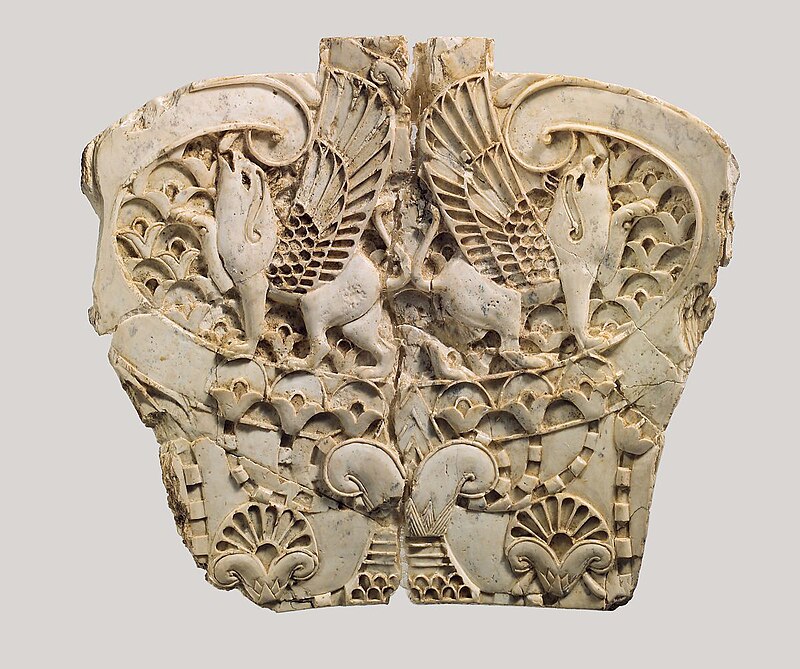
File:8th_Century_BCE_Assyrian_Plaque_from_Fort_Shalmaneser._in_Nimrud.jpg · Wikimedia Commons · See Wikimedia Commons
furniture
Sign in to saveFurniture refers to objects intended to support various human activities such as seating (e.g., stools, chairs, and sofas), eating (tables), storing items, working, and sleeping (e.g., beds and hammocks). Furniture is also used to hold objects at a convenient height for work (as horizontal surfaces above the ground, such as tables and desks), or to store things (e.g., cupboards, shelves, and drawers). Furniture can be a product of design and can be considered a form of decorative art. In addition to furniture's functional role, it can serve a symbolic or religious purpose. It can be made from
Furniture refers to objects designed to support everyday human activities like seating, eating, sleeping, working, and storing items. Beyond its practical function, furniture can also serve as decorative art and hold symbolic or religious significance in our lives and spaces.
AI-generated from the Wikipedia summary — may contain errors.
Wikidata facts
- Has part
- plank
- Image
- Płock, Muzeum Mazowieckie (28).jpg
Show 6 more facts
- Commons category
- Furniture
- on focus list of Wikimedia project
- Wikipedia:Vital articles/Level/4
- topic's main category
- Category:Furniture
- Commons gallery
- Furniture
- topic has template
- Template:Infobox furniture
- P8168
- Finger of God
Sources (6)
via Wikidata · CC0
~46 min read
Encyclopedic overview
30 sectionsContents
- Etymology
- History
- Prehistory
- Antiquity
- Ancient Egypt
- Ancient Greece
- Ancient Rome
- Middle Ages
- Renaissance
- 17th and 18th centuries
- 19th century
- Early North American
- Mid-Century Modern
- Contemporary
- Ecodesign
- Postmodernism
- Asian history
- Far Eastern
- Types
- For sitting
- Types of wood used
- Cherry
- Birch
- Rubberwood
- Restoration of furniture
- Standards for design, functionality and safety
- See also
- Notes
- References
- External links
Furniture refers to objects intended to support various human activities such as seating (e.g., stools, chairs, and sofas), eating (tables), storing items, working, and sleeping (e.g., beds and hammocks). Furniture is also used to hold objects at a convenient height for work (as horizontal surfaces above the ground, such as tables and desks), or to store things (e.g., cupboards, shelves, and drawers). Furniture can be a product of design and can be considered a form of decorative art. In addition to furniture's functional role, it can serve a symbolic or religious purpose. It can be made from a vast multitude of materials, including metal, plastic, and wood. Furniture can be made using a variety of woodworking joints which often reflects the local culture.
People have been using natural objects, such as tree stumps, rocks and moss, as furniture since the beginning of human civilization and continues today in some households/campsites. Archaeological research shows that from around 30,000 years ago, people started to construct and carve their own furniture, using wood, stone, and animal bones. Early furniture from this period is known from artwork such as a Venus figurine found in Russia, depicting the goddess on a throne. The first surviving extant furniture is in the homes of Skara Brae in Scotland, and includes cupboards, dressers and beds all constructed from stone. Complex construction techniques such as joinery began in the early dynastic period of ancient Egypt. This era saw constructed wooden pieces, including stools and tables, sometimes decorated with valuable metals or ivory. The evolution of furniture design continued in ancient Greece and ancient Rome, with thrones being commonplace as well as the klinai, multipurpose couches used for relaxing, eating, and sleeping. The furniture of the Middle Ages was usually heavy, oak, and ornamented. Furniture design expanded during the Italian Renaissance of the fourteenth and fifteenth century. The seventeenth century, in both Southern and Northern Europe, was characterized by opulent, often gilded Baroque designs. The nineteenth century is usually defined by revival styles. The first three-quarters of the twentieth century are often seen as the march towards Modernism. One unique outgrowth of post-modern furniture design is a return to natural shapes and textures.
Excerpted from Wikipedia’s “furniture” article, available under the CC BY-SA 4.0 licence.
Gallery (28)
Available in 101 languages
- Español
- Français
- Deutsch
- 中文
- 日本語
- Русский
- Português
- Italiano
- العربية
- हिन्दी
- Afrikaans
- Albanian
- Aramaic
- Armenian
- Asturian
- Bahasa Indonesia
- Bangla
- Basque
Show 82 more
- be_x_old
- Belarusian
- Bhojpuri
- Bosnian
- Breton
- Bulgarian
- Catalan
- cdo
- Chuvash
- Croatian
- Czech
- Danish
- Dzongkha
- Egyptian Arabic
- Esperanto
- Estonian
- Faroese
- Filipino
- Finnish
- Galician
- Gan Chinese
- gcr
- Georgian
- Greek
- Haitian Creole
- Hebrew
- Hungarian
- Icelandic
- Ido
- Interlingua
- Javanese
- Kabyle
- Kikuyu
- Kurdish
- Kyrgyz
- Latin
- Latvian
- Limburgish
- Lithuanian
- Lombard
- Luxembourgish
- Macedonian
- Malay
- Malayalam
- Mirandese
- Nederlands
- Newari
- Northern Frisian
- Norwegian
- Norwegian Nynorsk
- olo
- Polski
- Punjabi
- Quechua
- Romanian
- Scots
- Scottish Gaelic
- Serbian
- Serbian (Latin)
- simple
- Slovak
- Slovenian
- Somali
- Svenska
- Swahili
- Tamil
- Tiếng Việt
- Türkçe
- Ukrainian
- Urdu
- Uzbek
- Walloon
- Waray
- Welsh
- Western Panjabi
- Wu Chinese
- zh_min_nan
- zh_yue
- Zhuang
- فارسی
- ไทย
- 한국어
via Wikidata sitelinks · CC0