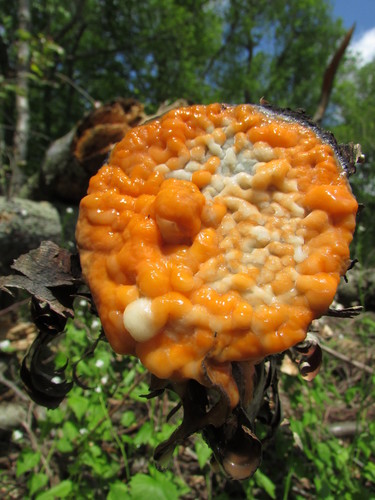
(c) maricel patino, some rights reserved (CC BY-NC), uploaded by maricel patino · cc-by-nc
Fusarium
Sign in to saveFusarium (; ) is a large genus of filamentous fungi, part of a group often referred to as hyphomycetes, widely distributed in soil and associated with plants. The name of Fusarium comes from Latin fusus, meaning a spindle. Most species in Genus Fusarium are harmless saprobes found in relative abundance in the soil microbial community, and some exist as commensal members of the skin microbiome.
Species
deer vomit
GENUS
- KingdomFungi
- PhylumAscomycota
- ClassSordariomycetes
- OrderHypocreales
- FamilyNectriaceae
via GBIF
Museum specimens
- Specimen records
- 1,568
- With media
- 449
- Family
- Nectriaceae
- Collections
- CIIDIR-IPN, FESI-UNAM
- Recorded in
- Mexico
Research
29,047 papers- Fusarium pathogenomics.Annual review of microbiology · 2013
- Fungicolous Fusarium Species: Ecology, Diversity, Isolation, and Identification.Current microbiology · 2021
- Fusarium Species and Their Associated Mycotoxins.Methods in molecular biology (Clifton, N.J.) · 2017
- Fusarium as a promising fungal genus with potential application in bioremediation for pollutants mitigation: A review.Biotechnology advances · 2024
- Entomogenous Fusarium species.Mycopathologia · 1983
via PubMed
Wikidata facts
- Instance of
- taxon
- Parent taxon
- Nectriaceae
- Image
- Fusarium verticillioides 01.jpg
Show 6 more facts
- taxon name
- Fusarium
- Commons category
- Fusarium
- taxon rank
- genus
- topic's main category
- Category:Fusarium
- taxon author citation
- Link
- taxon common name
- 镰刀菌属
via Wikidata · CC0
~9 min read
Encyclopedic overview
14 sectionsContents
- Taxonomy
- Subdivision
- Species
- Pathogen
- In humans
- In animals
- Research
- Use as human food
- Biological warfare
- Pest
- Microbiota
- References
- Bibliography
- External links
Fusarium (; ) is a large genus of filamentous fungi, part of a group often referred to as hyphomycetes, widely distributed in soil and associated with plants. The name of Fusarium comes from Latin fusus, meaning a spindle. Most species in Genus Fusarium are harmless saprobes found in relative abundance in the soil microbial community, and some exist as commensal members of the skin microbiome.
Some species produce mycotoxins in cereal crops that can affect human and animal health if they enter the food chain; the main toxins produced by Fusarium species are the fumonisin and trichothecene families, and zearalenone. Despite most species being harmless, some Fusarium species and subspecific groups are among the most important fungal pathogens of plants and animals.
Excerpted from Wikipedia’s “Fusarium” article, available under the CC BY-SA 4.0 licence.