(c) michaelroiland, all rights reserved, uploaded by michaelroiland
geoduck
Sign in to saveAlso known as Panopea generosa, Pacific geoduck
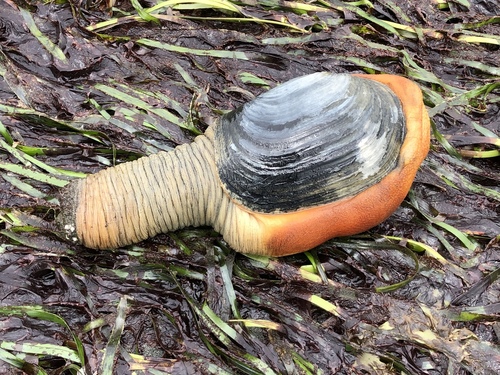
The Pacific geoduck ( ; Panopea generosa) is a species of very large saltwater clam in the family Hiatellidae. The common name is derived from the Lushootseed name, .
Species
geoduck
Species
- PhylumMollusca
- ClassBivalvia
- OrderAdapedonta
- FamilyHiatellidae
Panope du Pacifique, Palourde royale Panopea generosa, communément appelé le Panope du Pacifique, Panopée ou Palourde royale, est une espèce de mollusques bivalves marins de grande taille de la famille des Hiatellidae. Cette espèce, qui vit enfouie dans le sable, est considérée comme l'un des plus gros bivalves au monde. Dotée d'une remarquable longévité, elle présente depuis quelques années[Quand ?] un intérêt économique non négligeable. Le nom scientifique de ce bivalve a été confondu entre 1983 et 2010 avec celui d'une espèce disparue, Panopea abrupta (Conrad, 1849).
via
Wikidata facts
Show 7 more facts
- Commons category
- Panopea generosa
- taxon rank
- species
- taxon name
- Panopea generosa
- Commons gallery
- Panopea generosa
- taxon common name
- Pacific Geoduck
- IPA transcription
- /ˈɡuːiˌdʌk/
- short name
- P. generosa
Sources (1)
via Wikidata · CC0
~9 min read
Encyclopedic overview
8 sectionsContents
- Etymology
- Biology
- Industry
- Environmental impact
- Culinary uses
- In popular culture
- References
- External links
The Pacific geoduck ( ; Panopea generosa) is a species of very large saltwater clam in the family Hiatellidae. The common name is derived from the Lushootseed name, .
The geoduck is native to the coastal waters of the eastern North Pacific Ocean from Alaska to Baja California. The shell of the clam ranges from to over in length, but the extremely long siphons make the clam itself much longer than this: the "shaft" or siphons alone can be in length. The geoduck is the largest burrowing clam in the world. It is also one of the longest-living animals of any type, with a typical lifespan of 140 years; the oldest has been recorded at 179 years old. The precise longevity of geoducks can be determined from annual rings deposited in the shell which can be assigned to calendar years of formation through crossdating. These annual rings also serve as an archive of past marine variability. thumb|Geoduck growth increments
Excerpted from Wikipedia’s “geoduck” article, available under the CC BY-SA 4.0 licence.