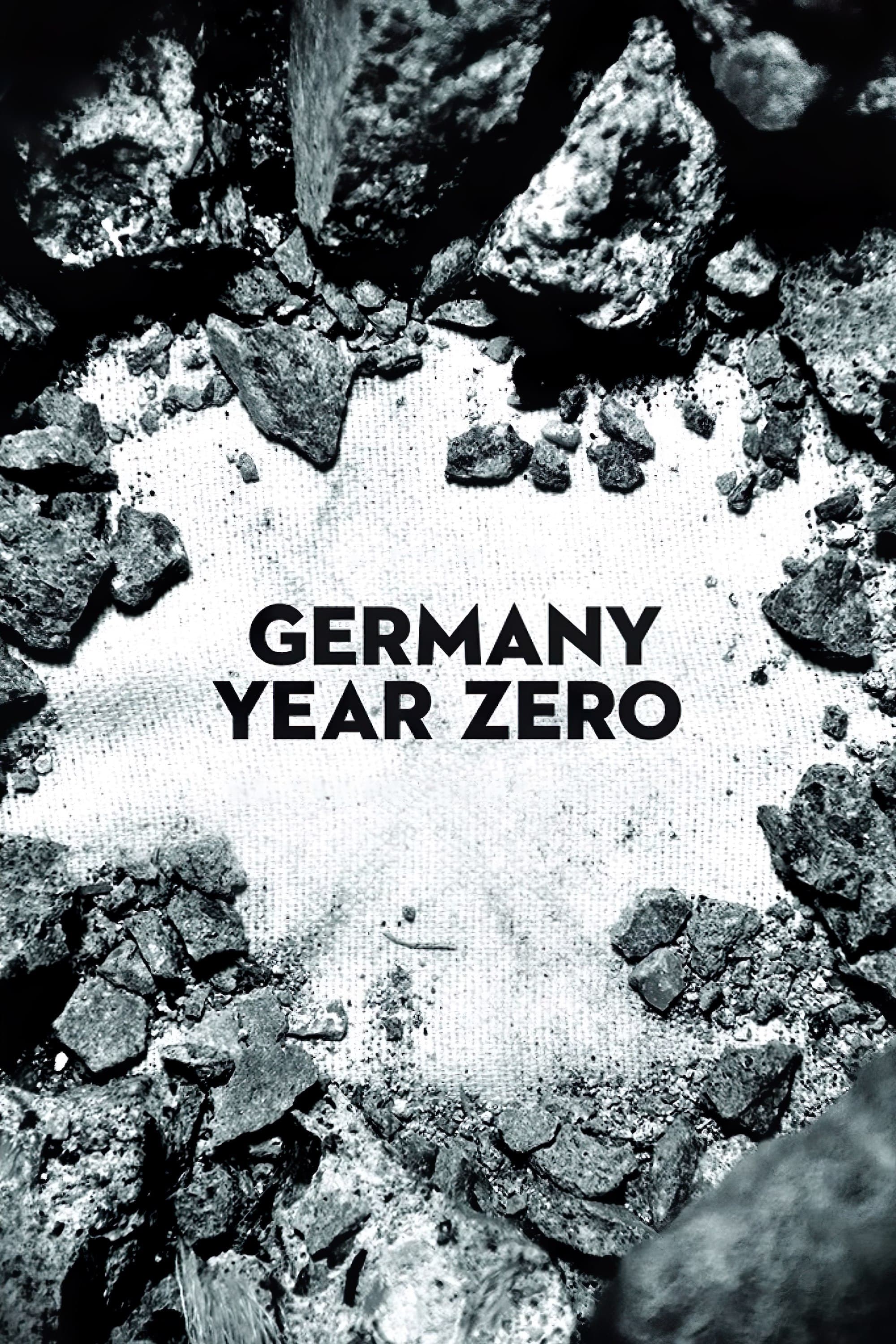
Poster from TMDB
OverviewAI-generated
Germany, Year Zero is a 1948 film directed, written, and produced by Roberto Rossellini, with additional screenwriting by Carlo Lizzani, Sergio Amidei, and Max Colpet. Its cast includes Ernst Pittschau, Franz-Otto Krüger, and Jo Herbst, and the film was shot in black-and-white in Berlin, Germany, with a score by Renzo Rossellini and editing by Eraldo Da Roma. A co-production of Italy, Germany, and France under executive producer Alfredo Guarini, it received the Golden Leopard and the National Board of Review: Top Ten Films award, along with 3 wins total. It carried a budget of $115,000, runs 74 minutes, and is not rated.
Synthesized by Vinony from 41 facts across 4 sources: Wikidata, TMDb, IMDb, OMDb. Generated from structured data (not the Wikipedia text) and checked against those facts — may still contain errors.
Film · TMDB
7.6In the ruins of post-WWII Berlin, a twelve-year-old boy is left to his own devices in order to help provide for his family.
Cast
- Edmund Moeschke as Edmund
- Ernst Pittschau as Father
- Ingetraud Hinze as Eva
- Franz-Otto Krüger as Karl-Heinz
- Erich Gühne as Teacher
- Heidi Blänkner as Frau Rademaker (uncredited)
Themes
- berlin, germany
- nazi
- world war ii
- post war
- kids
- neo realism
- italian neo realism
This product uses the TMDB API but is not endorsed or certified by TMDB.
Ratings
IMDb
7.8/10
14,870 votes
Rotten Tomatoes
96%
- Year
- 1948
- Runtime
- 78 min
- Genres
- Drama
- Rated
- Not Rated
- Awards
- 3 wins total
via OMDb · IMDb
Key facts
- Italian
- Germania anno zero
- Directed by
- Roberto Rossellini
- Written by
- Roberto Rossellini (screenplay and dialogue) , Max Colpet (dialogue) , Carlo Lizzani (dialogue)
- Produced by
- Salvo D'Angelo , Roberto Rossellini
- Starring
- Edmund Moeschke, Ernst Pittschau , Ingetraud Hinze, Franz-Otto Krüger , Erich Gühne
- Cinematography
- Robert Juillard
- Edited by
- Eraldo Da Roma
- Music by
- Renzo Rossellini
- Production companies
- Produzione Salvo D'Angelo and Tevere Film
- Distributed by
- G.D.B. Film
- Release date
- 1 December 1948 ( 1948-12-01 )
- Running time
- 78 minutes
- Countries
- Italy France Germany
- Languages
- German , English , French
- Budget
- $115,000
via Wikipedia infobox
Wikidata facts
- Instance of
- film
- Genre
- art film
- Country of origin
- France
- Original language
- Italian
- Director
- Roberto Rossellini
- Screenwriter
- Max Colpet
- Cast member
- Jo Herbst
- Composer
- Renzo Rossellini
- Producer
- Roberto Rossellini
- Production company
- UGC
- Narrative location
- Berlin
- Filming location
- Germany
- Duration
- 78
- FilmAffinity ID
- 446592
- Image
- Recueil. "Allemagne, année zéro" film de Roberto Rossellini - btv1b10525952r (31 of 52).jpg
Show 7 more facts
- publication date
- 1952-08-20
- film editor
- Eraldo Da Roma
- title
- Germania anno zero
- executive producer
- Alfredo Guarini
- color
- black-and-white
- aspect ratio (W:H)
- 4:3
- review score
- 96%
Sources (9)
via Wikidata · CC0
~9 min read
Encyclopedic overview
Germany, Year Zero (Italian: Germania anno zero) is a 1948 film directed by Roberto Rossellini. It follows the life of a twelve-year-old boy in post World War II Germany. It won the Golden Leopard and the Best Director awards at the Locarno International Film Festival in 1948.
As in many neorealist films, Rossellini used mainly local, non-professional actors. He filmed on locations in Berlin and intended to convey the reality in Germany the year after its near total destruction in World War II. It contains dramatic images of bombed out Berlin and of the human struggle for survival following the destruction of Nazi Germany. When explaining his ideas about realism in an interview, he said, "realism is nothing other than the artistic form of truth."
Excerpted from Wikipedia’s “Germany, Year Zero” article, available under the CC BY-SA 4.0 licence.