ghost forest
Sign in to savegrove of snags (dead standing trees)
Described at
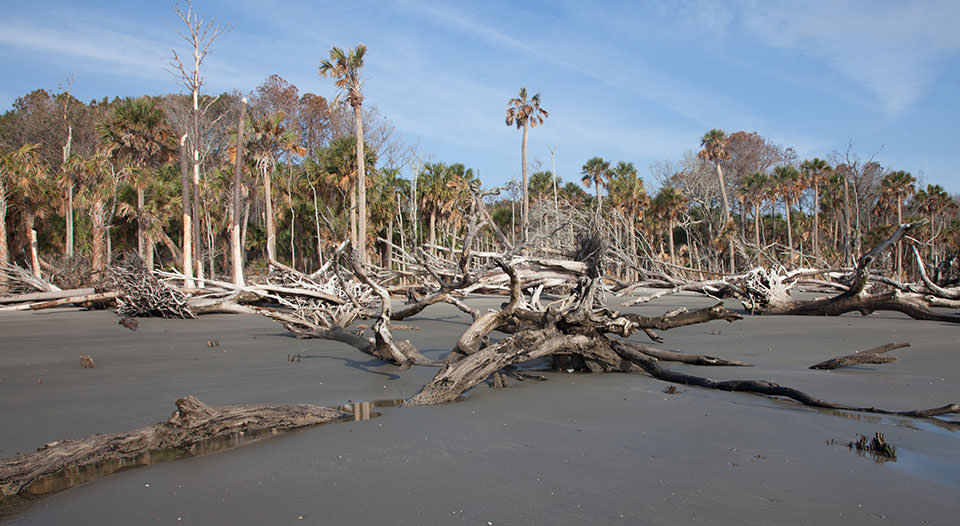
What is a ghost forest?
As sea level rises, more and more saltwater encroaches on the land. Along the world’s coasts and estuaries, invading seawater advances and overtakes the fresh water that deciduous trees rely upon for sustenance. The salty water slowly poisons living trees, leaving a haunted ghost forest of dead and dying timber. Still standing in or near brackish water, the decaying trees of a ghost forest resemble giant graying pillars that protrude into the air.
oceanservice.noaa.gov →As sea level rises, more and more saltwater encroaches on the land. Along the world’s coasts and estuaries, invading seawater advances and overtakes the fresh water that deciduous trees rely upon for sustenance. The salty water slowly poisons living trees, leaving a haunted ghost forest of dead and dying timber. Still standing in or near brackish water, the decaying trees of a ghost forest resemble giant graying pillars that protrude into the air. The Mississippi Delta region of Louisiana is undergoing changes due to rising waters, the sinking of Earth's crust , and sediments compacting along the Mississippi River. With land and water constantly shifting, woodlands die and are buried in open water. This is apparent along North Carolina’s maritime forests , where only a glimpse of once peaceful and verdant groves, now ghost forests, remain.
Excerpt from a page describing this subject · 2,429 chars · not written by Vinony
Wikidata facts
- Subclass of
- forest
- Image
- Ghost forest from the 1964 Alaska quake (3767515757).jpg
- Has parts of class
- dead wood
Show 3 more facts
- Commons category
- Ghost forests
- on focus list of Wikimedia project
- WikiProject Climate change
- described at URL
- oceanservice.noaa.gov/facts/ghost-forest.html
via Wikidata · CC0