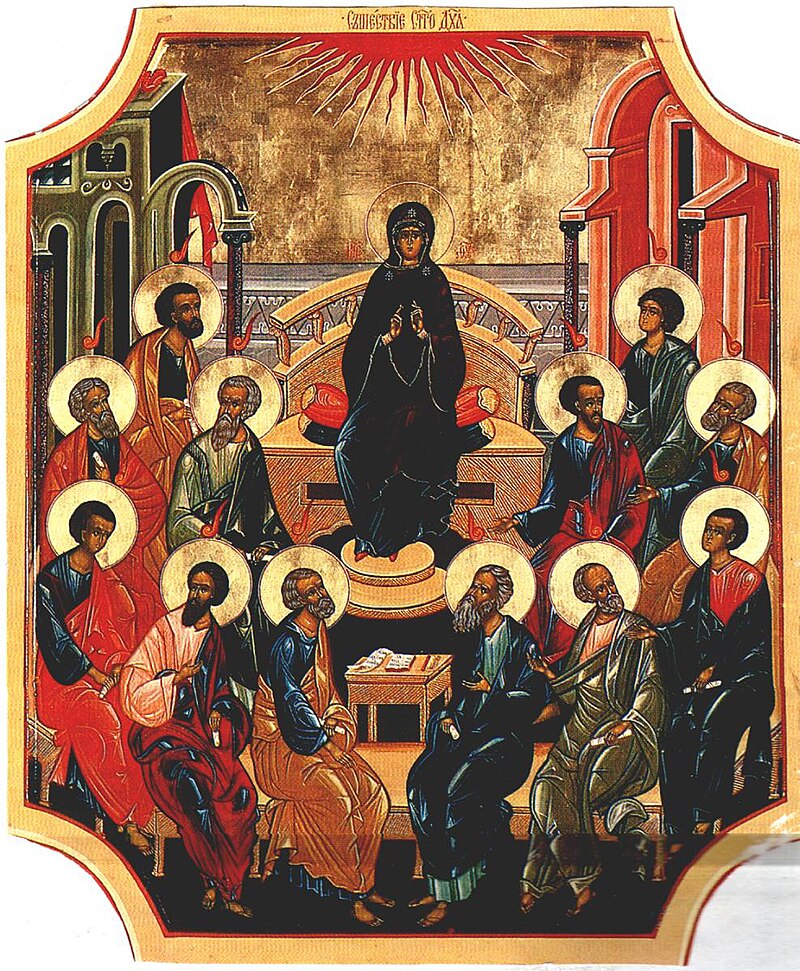
File:Pentecost_icon.jpg · Wikimedia Commons · See Wikimedia Commons
glossolalia
Sign in to saveAlso known as speaking in tongues, babbling gibberish, tongues, ecstatic utterances, gift of tongues, speaking with tongues
phenomenon in which people speak in languages unknown to them
Wikidata facts
Show 3 more facts
- described by source
- Wikitólica
- depicted by
- First Epistle to the Corinthians
- facet of
- Pentecostalism
via Wikidata · CC0
~37 min read
Encyclopedic overview
An icon depicting the Theotokos with the apostles filled with the Holy Spirit, indicated by "cloven tongues like as of fire" (Acts 2:3) above their heads People speaking in tongues and in Portuguese during an Evangelical event in Brazil Speaking in tongues, also known as glossolalia, is a phenomenon or practice in which people utter words or speech-like sounds, often thought by believers to be languages unknown to the speaker. One definition used by linguists is the fluid vocalizing of speech-like syllables that lack any readily comprehensible meaning. In some cases, as part of religious practice, some believe it to be a divine language unknown to the speaker. Glossolalia is practiced in Pentecostal and charismatic Christianity, as well as in other religions.
Sometimes a distinction is made between "glossolalia" and "xenolalia", or "xenoglossy", which specifically relates to the belief that the language being spoken is a natural language previously unknown to the speaker.
Excerpted from Wikipedia’s “glossolalia” article, available under the CC BY-SA 4.0 licence.