Ota, Yuzo
Gnathiidae
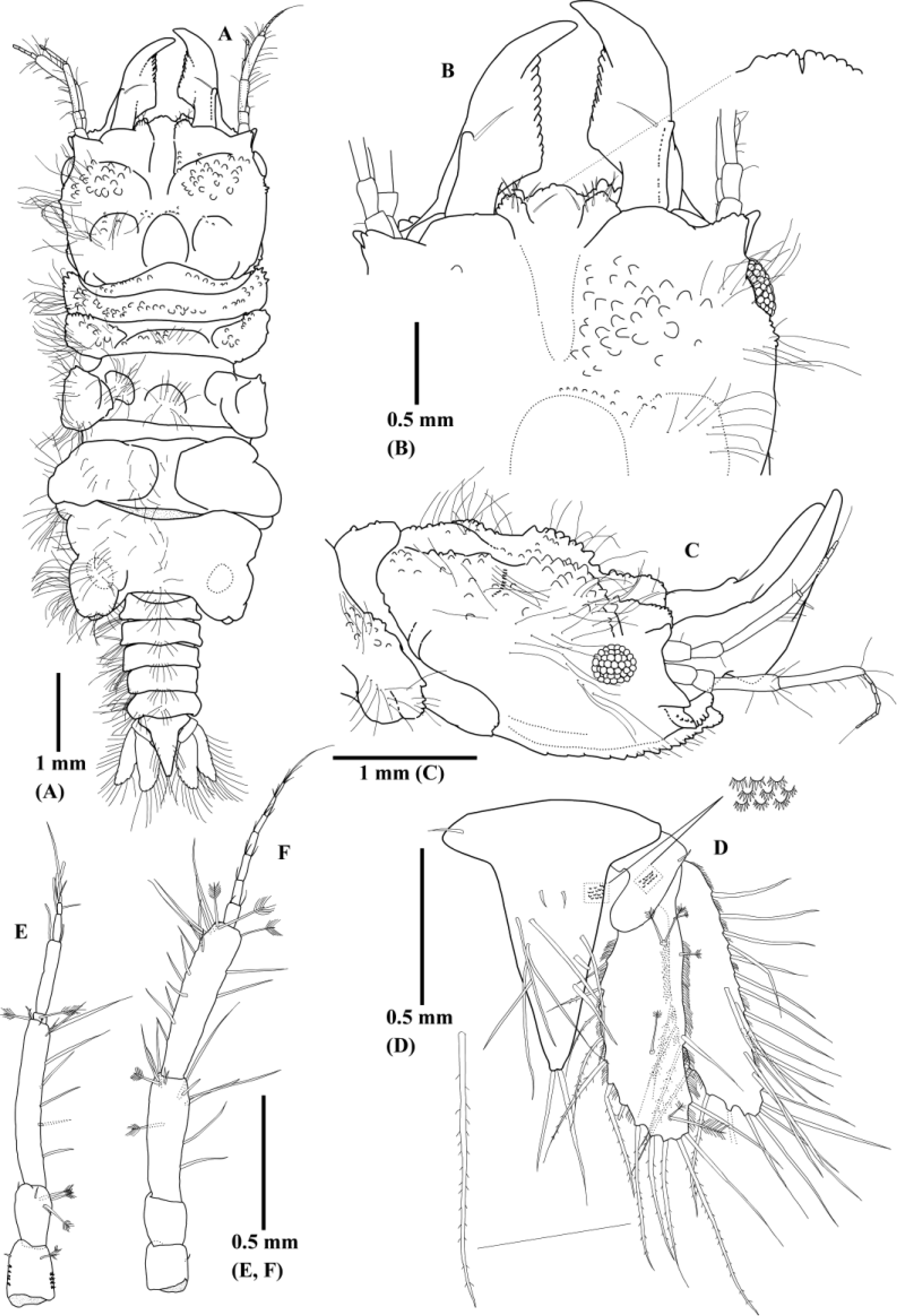
Sign in to saveThe Gnathiidae are a family of isopod crustaceans. They occur in a wide range of depths, from the littoral zone to the deep sea. Gnathiidae have only five pairs of walking legs. The adults are associated with sponges and may not feed. The juvenile form is known as a 'praniza', and it is a temporary parasite of marine fish. These forms are not larvae; Gnathiidae instead become parasitic during the manca stage. Mancae of the Gnathiidae closely resemble the adult form, however they lack the final pair of pereiopods.
In the Vinony graph
Within Vinony's link graph, Gnathiidae is referenced by 28 other articles, and connects out to Animalia, arthropod and Wikidata.
It is catalogued under topics including Cymothooidea, Isopod families and Parasitic crustaceans.
Its subject is documented across 16 Wikipedia language editions.
Species
ウミクワガタ科
FAMILY
- KingdomAnimalia
- PhylumArthropoda
- ClassMalacostraca
- OrderIsopoda
- FamilyGnathiidae
via GBIF
Museum specimens
- Specimen records
- 607
- With media
- 100
- Family
- Gnathiidae
- Collections
- USNM, NMV, CAS, SIO, YPM, MUSEU NACIONAL/UFRJ
- Recorded in
- French Polynesia, Australia, United States, Thailand, Costa Rica, Philippines, British Virgin Islands, Japan
Wikidata facts
- Instance of
- taxon
- Image
- Hesse Mémoire sur les pranizes et les ancées Plate 3.png
Show 4 more facts
- Commons category
- Gnathiidae
- taxon rank
- family
- taxon name
- Gnathiidae
- topic's main category
- Category:Gnathiidae
Sources (1)
via Wikidata · CC0
~2 min read
Encyclopedic overview
2 sectionsContents
- References
- External links
The Gnathiidae are a family of isopod crustaceans. They occur in a wide range of depths, from the littoral zone to the deep sea. Gnathiidae have only five pairs of walking legs. The adults are associated with sponges and may not feed. The juvenile form is known as a 'praniza', and it is a temporary parasite of marine fish. These forms are not larvae; Gnathiidae instead become parasitic during the manca stage. Mancae of the Gnathiidae closely resemble the adult form, however they lack the final pair of pereiopods.
thumb|left|Drawings of Gnathiidae by Hesse (1864)
Excerpted from Wikipedia’s “Gnathiidae” article, available under the CC BY-SA 4.0 licence.