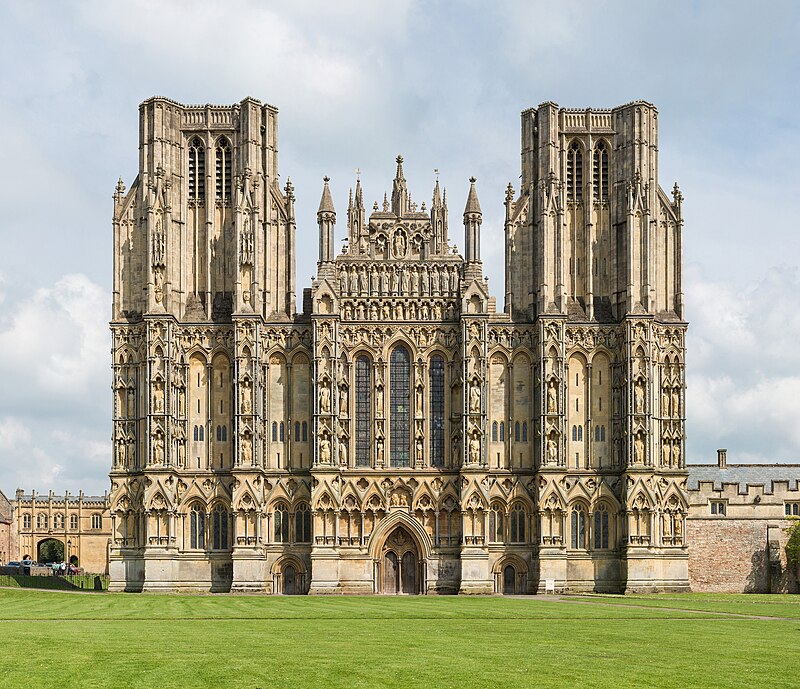
File:Wells_Cathedral_West_Front_Exterior,_UK_-_Diliff.jpg · Wikimedia Commons · See Wikimedia Commons
Gothic architecture
Sign in to saveAlso known as Gothic style, Gothic monument, Gothic buildings
style of architecture
I appreciate your request, but I cannot write the overview as asked. The context provided ("style of architecture") is too minimal to accurately describe Gothic architecture's characteristics, historical significance, or why it matters without inventing details beyond what's stated. To fulfill your request properly, I would need more substantive contextual information about Gothic architecture's features, time period, geographical spread, or cultural impact.
AI-generated from the Wikipedia summary — may contain errors.
Wikidata facts
- Instance of
- architectural style
- Subclass of
- architecture
- Followed by
- Renaissance architecture
- Follows
- Romanesque architecture
- Image
- Winchester cathedral flags.jpg
Show 10 more facts
- OpenStreetMap tag
- building:architecture=gothic
- Commons category
- Gothic architecture
- topic's main category
- Category:Gothic architecture
- Commons gallery
- Gothic architecture
- facet of
- Gothic art
- described by source
- Encyclopædia Britannica 11th edition
- on focus list of Wikimedia project
- Wikipedia:Vital articles/Level/4
- topic has template
- Template:Gothic
- P8168
- John Pethica
- indigenous to
- Europe
Sources (6)
via Wikidata · CC0
~40 min read
Encyclopedic overview
Gothic architecture is an architectural style that was prevalent in Europe from the late 12th to the 16th century, during the High and Late Middle Ages, surviving into the 17th and 18th centuries in some areas. It evolved from Romanesque architecture and was succeeded by Renaissance architecture. It originated in the Île-de-France and Picardy regions of northern France. The style at the time was sometimes known as opus Francigenum (lit. 'French work'); the term Gothic was first applied contemptuously during the later Renaissance, by those ambitious to revive the architecture of classical antiquity.
The defining design element of Gothic architecture is the pointed arch. The use of the pointed arch in turn led to the development of the pointed rib vault and flying buttresses, combined with elaborate tracery and stained glass windows.
Excerpted from Wikipedia’s “Gothic architecture” article, available under the CC BY-SA 4.0 licence.
Gallery (12)
Available in 81 languages
- Español
- Français
- Deutsch
- 中文
- 日本語
- Русский
- Português
- Italiano
- العربية
- हिन्दी
- Afrikaans
- Armenian
- Asturian
- Azerbaijani
- Bahasa Indonesia
- Bangla
- Basque
- be_x_old
Show 62 more
- Belarusian
- Breton
- Bulgarian
- Catalan
- Croatian
- Czech
- Egyptian Arabic
- Esperanto
- Estonian
- Filipino
- Finnish
- Galician
- Georgian
- Greek
- Hebrew
- Ido
- Interlingua
- Irish
- Kannada
- Latin
- Latvian
- Limburgish
- Lingua Franca Nova
- Lithuanian
- Luxembourgish
- Macedonian
- Malay
- Malayalam
- Nederlands
- Newari
- Norwegian
- Norwegian Nynorsk
- nrm
- Occitan
- Piedmontese
- Polski
- Romanian
- Rusyn
- Scots
- Serbian
- Serbian (Latin)
- simple
- Slovak
- Slovenian
- Svenska
- Swahili
- Tamil
- Tiếng Việt
- Türkçe
- Ukrainian
- Urdu
- Uzbek
- Welsh
- West Flemish
- Western Frisian
- Western Panjabi
- Wu Chinese
- zh_min_nan
- zh_yue
- فارسی
- ไทย
- 한국어
via Wikidata sitelinks · CC0