Encyclopedia of Life · EOL (see source)
Gyrinocheilus
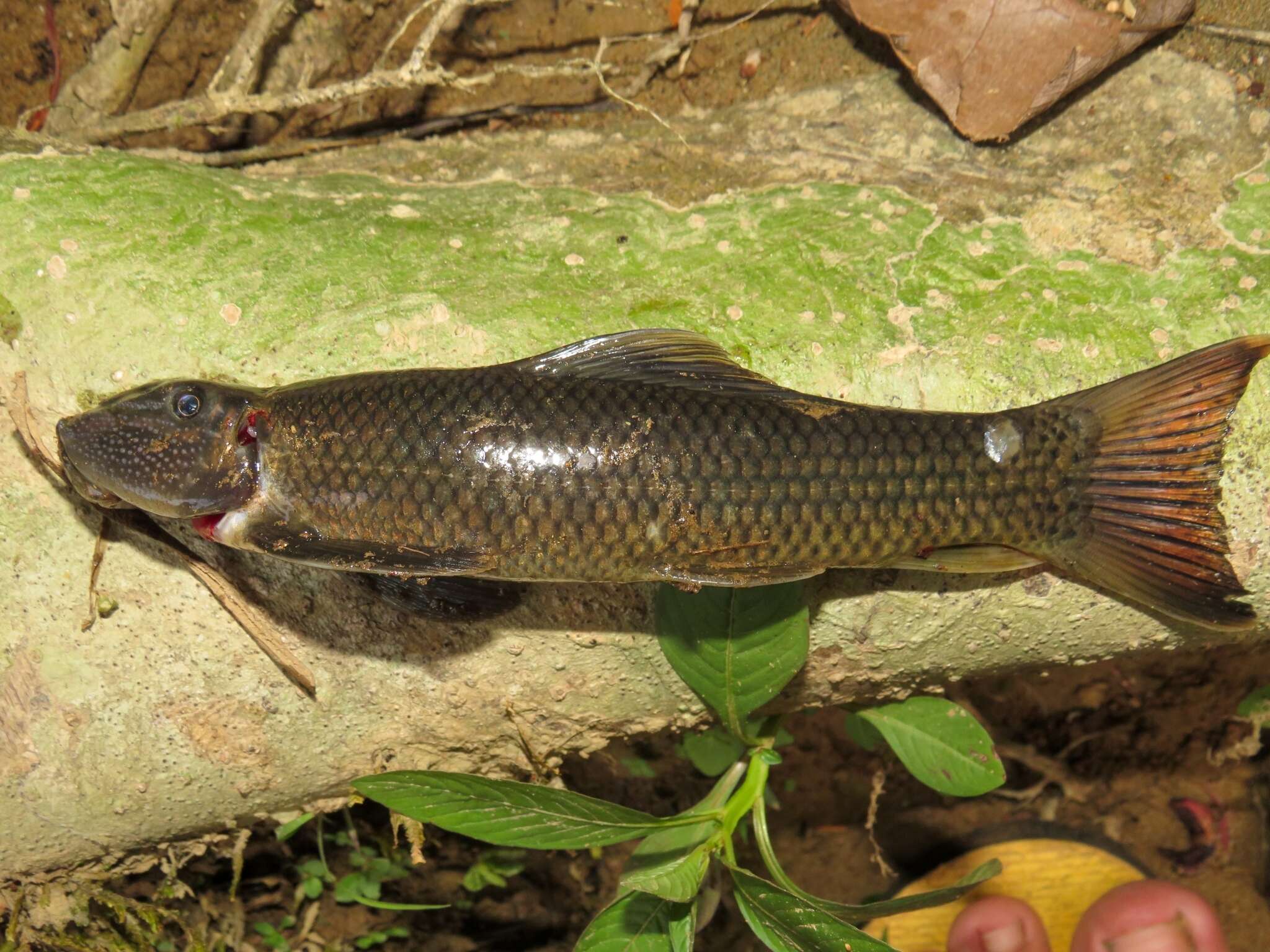
Sign in to saveGyrinocheilus is the single genus in the family Gyrinocheilidae, a family of small Southeast Asian cypriniform fishes that live in fast-flowing freshwater mountain streams. The species in this genus are commonly called algae eaters. They hold on to fixed objects using a sucker-like mouth, and, despite the name, feed on a wide range of detritus, rather than simply on algae. A "golden" variety of G. aymonieri, the Chinese algae eater or "sucking loach", can be found in many pet shops and fish farms.
Species
GENUS
- KingdomAnimalia
- PhylumChordata
- ClassTeleostei
- OrderCypriniformes
- FamilyGyrinocheilidae
Saugschmerlen (Gyrinocheilus) ist eine Fischgattung und Familie aus der Ordnung der Karpfenartigen, deren Verbreitungsgebiet in Südostasien liegt. Der wissenschaftliche Name Gyrinocheilus besteht aus den griechischen Worten gyrinos („Taumler“, Kaulquappe) und cheile (Lippe) und spielt auf das zum Saugnapf umgebildete Maul der Arten dieser Familie an. Zwei der drei beschriebenen Arten kommen in sauerstoffreichen Fließgewässern im Stromgebiet des Mekong vor, Gyrinocheilus pustulosus lebt in den Flusssystemen des Kapuas, Mahakam und Kayan auf Kalimantan. Inhaltsverzeichnis 1 Merkmale 2 Arten 3 Nutzung 4 Literatur 5 Weblinks Merkmale Saugschmerlen werden 28 bis 35 Zentimeter lang. Ihr Maul ist unterständig und zu einem Saugmaul umgebildet mit dem die Fische in der Lage sind, sich an festen Untergründen anzusaugen. Barteln und Schlundzähne (einzigartig unter den Cypriniformes) fehlen. Die Anzahl der Kiemenreusenstrahlen liegt etwa bei 140. Die Schuppenzahl in der Seitenlinienreihe (SL) beträgt 39 bis 43. Die Rückenflosse wird von zehn oder elf Flossenstrahlen gestützt. Da das Maul, an Steinen angesaugt, nicht zur Aufnahme von Atemwasser zur Verfügung steht, wird dieses durch eine kleine
via GBIF
Museum specimens
- Specimen records
- 19
- Family
- Gyrinocheilidae
- Collections
- UMMZ, USNM, CAS, ODU, CUMV, NHMUK
- Recorded in
- Cambodia, Laos, Thailand, Indonesia
Wikidata facts
- Instance of
- taxon
- Parent taxon
- Gyrinocheilidae
- Image
- Chinese algae eater.jpg
Show 4 more facts
- taxon name
- Gyrinocheilus
- taxon rank
- genus
- Commons category
- Gyrinocheilus
- topic's main category
- Category:Gyrinocheilus
Sources (1)
via Wikidata · CC0
~2 min read
Encyclopedic overview
4 sectionsContents
- Sucker
- Species
- Similar fish
- References
Gyrinocheilus is the single genus in the family Gyrinocheilidae, a family of small Southeast Asian cypriniform fishes that live in fast-flowing freshwater mountain streams. The species in this genus are commonly called algae eaters. They hold on to fixed objects using a sucker-like mouth, and, despite the name, feed on a wide range of detritus, rather than simply on algae. A "golden" variety of G. aymonieri, the Chinese algae eater or "sucking loach", can be found in many pet shops and fish farms.
== Sucker == The mouths of these fish have developed into a suckermouth, which allows the fish to cling onto objects in the fast-moving water of their habitat. They therefore stay close to the bottom, where their primary food, algae, is more readily available. Uniquely among fish, members of this family have gill slits with two openings each. Water enters through one opening, and leaves through the other. This allows the fish to breathe without having to take water in through the mouth, which is in use to cling to surfaces.
Excerpted from Wikipedia’s “Gyrinocheilus” article, available under the CC BY-SA 4.0 licence.