Gibbs, Jason
Halictidae
Sign in to saveHalictidae is the second-largest family of bees (clade Anthophila) with nearly 4,500 species. They are commonly called sweat bees (especially the smaller species), as they are often attracted to perspiration. Halictid species are an extremely diverse group that can vary greatly in appearance. These bees occur all over the world and are found on every continent except Antarctica. Usually dark-colored (frequently brown or black) and often metallic, halictids are found in various sizes, colors and patterns. Several species are all or partly green and a few are red, purple, or blue. A number of th
Species
FAMILY
- KingdomAnimalia
- PhylumArthropoda
- ClassInsecta
- OrderHymenoptera
- FamilyHalictidae
via GBIF
Museum specimens
- Specimen records
- 19,132
- With media
- 2,566
- Family
- Halictidae
- Collections
- ECOSUR
- Recorded in
- Mexico
Wikidata facts
Show 6 more facts
- is pollinator of
- Aetheorhiza bulbosa
- taxon rank
- family
- Commons category
- Halictidae
- topic's main category
- Category:Halictidae
- taxon name
- Halictidae
- taxon common name
- Sweat Bees
Sources (3)
via Wikidata · CC0
~8 min read
Encyclopedic overview
10 sectionsContents
- Ecology
- Eusociality
- Kleptoparasitism
- "Nocturnal" species
- Economic importance
- Stinging
- Phylogeny
- Classification
- References
- External links
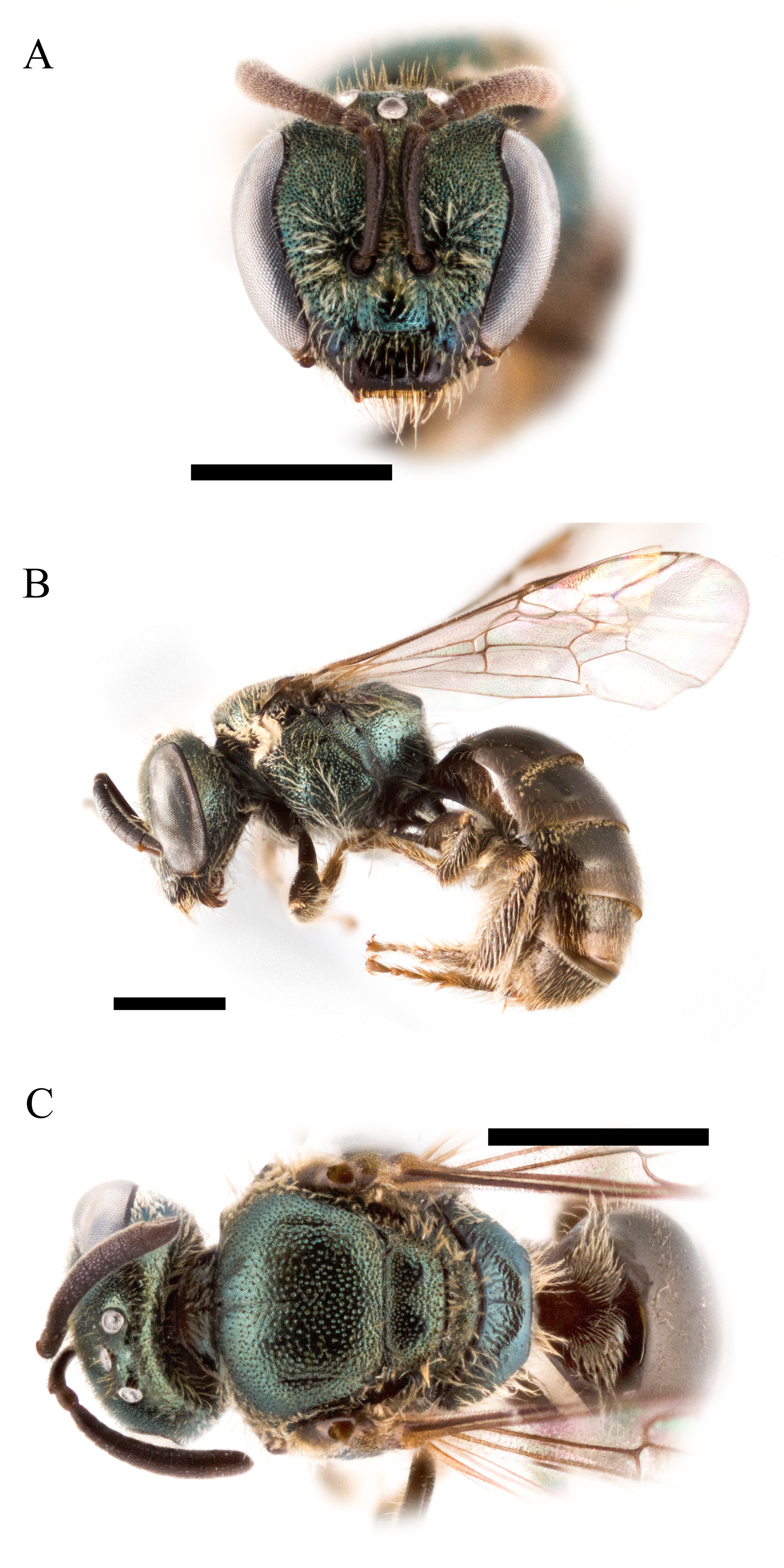
Halictidae is the second-largest family of bees (clade Anthophila) with nearly 4,500 species. They are commonly called sweat bees (especially the smaller species), as they are often attracted to perspiration. Halictid species are an extremely diverse group that can vary greatly in appearance. These bees occur all over the world and are found on every continent except Antarctica. Usually dark-colored (frequently brown or black) and often metallic, halictids are found in various sizes, colors and patterns. Several species are all or partly green and a few are red, purple, or blue. A number of them have yellow markings, especially the males, which commonly have yellow faces, a pattern widespread among the various families of bees. The family is one of many with short tongues and is best distinguished by the arcuate (strongly curved) basal vein found on the wing. Females in this family tend to be larger than the males. They are the group for which the term eusocial was coined by entomologist Suzanne Batra.
==Ecology==
Excerpted from Wikipedia’s “Halictidae” article, available under the CC BY-SA 4.0 licence.