
Profile via TMDB · Courtesy of TMDB
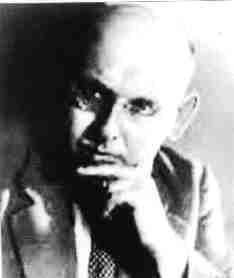
Hanns Eisler
Sign in to saveAustrian and German composer (1898–1962)
OverviewAI-generated
Hanns Eisler was a composer, screenwriter, university teacher, and film score composer born in Leipzig in 1898. He studied under Arnold Schoenberg and was a member of the Second Viennese School. His notable works include the symphony *Auferstanden aus Ruinen*. He worked in New York City, Vienna, Berlin, and Los Angeles, and spoke German and English.
Eisler served in the Austro-Hungarian Army during World War I. He held citizenship in Austria–Hungary, the Weimar Republic, the United States, and the German Democratic Republic. He received the National Prize of East Germany and was a member of the Academy of Arts of the GDR. He died of a myocardial infarction in East Berlin in 1962 and is buried at Dorotheenstadt Cemetery.
Synthesized by Vinony from 34 facts across 5 sources: Wikidata, MusicBrainz, Last.fm, TMDb, Europeana Sparql. Generated from structured data (not the Wikipedia text) and checked against those facts — may still contain errors.
Film & TV
Leipzig, Germany
Hanns Eisler (1898–1962) was a German-Austrian composer. He is best known for composing the national anthem of East Germany, for his long artistic association with Bertolt Brecht, and for the scores he wrote for films. Because of his Jewish background and his communist convictions, Eisler was in exile during the 1930s and 1940s.
Known for
- Chaplin Today: Monsieur Verdoux — Self (archive footage)2003
via TMDB
Listeners · Last.fm
- Listeners
- 21,682
- Total plays
- 289,786
Tags
Hanns Eisler (July 6, 1898 - September 6, 1962) was a German and Austrian composer, a committed socialist, a lifelong collaborator with Bertolt Brecht, and the greatest lieder composer of the 20th century. He was born in Leipzig where his Jewish father, Rudolf Eisler, was a professor of philosophy. In Vienna he studied under Arnold Schoenberg, and was the first of Schoenberg's disciples to compose using the twelve-tone or serial technique. In 1925 Eisler moved to Berlin—then a hothouse of expe
Key facts
- Born
- ( 1898-07-06 ) 6 July 1898, Leipzig , Saxony, German Empire
- Died
- 6 September 1962 (1962-09-06) (aged 64), East Berlin , East Germany
- Occupation
- Composer
via Wikipedia infobox
Wikidata facts
- Instance of
- human
- Gender
- male
- Citizenship
- German Democratic Republic
- Place of birth
- Leipzig
- Place of death
- East Berlin
- Child
- Georg Eisler
- Father
- Rudolf Eisler
- Sibling
- Ruth Fischer
- Occupation
- musician
- Employer
- Hanns Eisler Music School Berlin
- Languages spoken
- English language
- Native language
- German
- Notable work
- symphony
- Student of
- Arnold Schoenberg
- Conflict
- World War I
- Military branch
- Austro-Hungarian Army
- Image
- Eisler1940.jpg
- Work location
- Berlin
Show 10 more facts
- Commons category
- Hanns Eisler
- date of birth
- 1898-06-06
- date of death
- 1962-09-06
- cause of death
- myocardial infarction
- member of
- Second Viennese School
- manner of death
- natural causes
- name in native language
- Hanns Eisler
- place of burial
- Dorotheenstadt Cemetery
- P8168
- LR
- P12674
- Almè
Sources (5)
via Wikidata · CC0
Works in European collections
14 objects attributed to Hanns Eisler, held across European museums, libraries & archives · via Europeana
~20 min read
Encyclopedic overview
Hanns Eisler (6 July 1898 – 6 September 1962) was a German-Austrian composer. He is best known for composing the national anthem of East Germany, for his long artistic association with Bertolt Brecht, and for the scores he wrote for films. The Hochschule für Musik Hanns Eisler Berlin is named after him.
Family background
Excerpted from Wikipedia’s “Hanns Eisler” article, available under the CC BY-SA 4.0 licence.