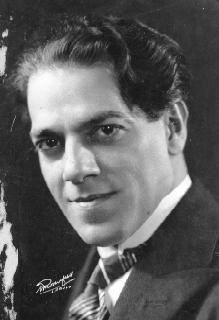
File:Heitor_Vila-Lobos_(c._1922)part.jpg · Wikimedia Commons · See Wikimedia Commons
Heitor Villa-Lobos
Sign in to saveBrazilian composer (1887–1959)
OverviewAI-generated
Heitor Villa-Lobos was a Brazilian composer, choreographer, conductor, and musicologist. Born in Rio de Janeiro in 1887, he worked primarily in the fields of music, classical music, and guitar. His notable works include the *Bachianas Brasileiras*, and he composed in the genres of opera and symphony. He began his work period in 1915 and continued until 1958.
Villa-Lobos spoke Portuguese and received the award of Commander of the Legion of Honour. He died in Rio de Janeiro in 1959 and is buried at the Cemitério de São João Batista.
Synthesized by Vinony from 33 facts across 5 sources: Wikidata, MusicBrainz, Last.fm, TMDb, Europeana Sparql. Generated from structured data (not the Wikipedia text) and checked against those facts — may still contain errors.
Film & TV
Heitor Villa-Lobos (Rio de Janeiro, March 5, 1887 – Rio de Janeiro, November 17, 1959) was a Brazilian composer, conductor, cellist, pianist and guitarist, described as "the most significant creative figure in 20th century in Brazilian classical music", and becoming the best-known South American composer of all time.
Known for
- Memórias do Grupo Opinião — Self (archive footage)2019
- Coisa Mais Linda - Histórias e Casos da Bossa Nova — Self (archive footage)2005
- Villa-Lobos - O Índio de Casaca — Self (archive footage)1987
- Retrato de Villa-Lobos — Ele mesmo (arquivo)1964
- Dois artistas nacionais - Portinari e Villa Lobos — Self1943
- South of the Border with Disney — Self1942
via TMDB
Listeners · Last.fm
- Listeners
- 172,258
- Total plays
- 1,804,487
Tags
Heitor Villa-Lobos (March 5, 1887 — November 17, 1959) was a pioneering Brazilian modernist composer. He penned twelve symphonies, four operas, five ballets, and one of the most important string quartet cycles of the twentieth century. His music is noted for its exotic sound palette and formal inventiveness, influenced both by Brazilian folk music and stylistic elements from the European classical tradition. Villa-Lobos was born in Rio de Janeiro. <a href="https://www.last.fm/music/Heitor+Vill
Key facts
- Born
- Heitor Villa-Lobos , ( 1887-03-05 ) March 5, 1887, Rio de Janeiro, Empire of Brazil
- Died
- November 17, 1959 (1959-11-17) (aged 72), Rio de Janeiro, Brazil
- Occupation
- Composer
via Wikipedia infobox
Wikidata facts
- Instance of
- human
- Given name
- Heitor
- Gender
- male
- Citizenship
- Brazil
- Place of birth
- Rio de Janeiro
- Place of death
- Rio de Janeiro
- Occupation
- guitarist
- Languages spoken
- Portuguese
- Notable work
- Bachianas Brasileiras
- Field of work
- guitar
- Genre
- symphony
- Instrument
- guitar
- Image
- Heitor Villa-Lobos (c. 1922).jpg
Show 11 more facts
- Commons category
- Heitor Villa-Lobos
- date of birth
- 1887-03-05
- date of death
- 1959-11-17
- list of works
- list of compositions by Heitor Villa-Lobos
- Commons Creator page
- Heitor Villa-Lobos
- start of work period
- 1915-00-00
- related category
- Category:Compositions by Heitor Villa-Lobos
- P8168
- Țopa
- end of work period
- 1958-00-00
- birth name
- Heitor Villa-Lobos
- place of burial
- Cemitério de São João Batista
via Wikidata · CC0
Works in European collections
1 object attributed to Heitor Villa-Lobos, held across European museums, libraries & archives · via Europeana
~29 min read
Encyclopedic overview
Heitor Villa-Lobos (March 5, 1887 – November 17, 1959) was a Brazilian composer, conductor, cellist, and classical guitarist described as "the single most significant creative figure in 20th-century Brazilian art music". Villa-Lobos has globally become one of the most recognizable South American composers in music history. A prolific composer, he wrote many orchestral, chamber, instrumental and vocal works, totaling over 2,000 works by his death in 1959. His music was influenced by both Brazilian folk music and stylistic elements from the European classical tradition, as exemplified by his Bachianas Brasileiras (Brazilian Bach-pieces) and his Chôros. His Etudes for classical guitar (1929), dedicated to Andrés Segovia, and his 5 Preludes (1940), dedicated to his spouse Arminda Neves d'Almeida, a.k.a. "Mindinha", are important works in the classical guitar repertory.
Biography
Excerpted from Wikipedia’s “Heitor Villa-Lobos” article, available under the CC BY-SA 4.0 licence.
Gallery (9)
Available in 50 languages
- Español
- Français
- Deutsch
- 中文
- 日本語
- Русский
- Português
- Italiano
- العربية
- Armenian
- Azerbaijani
- Bahasa Indonesia
- Basque
- Belarusian
- Bulgarian
- Catalan
- Central Kurdish
- Croatian
Show 31 more
via Wikidata sitelinks · CC0