
File:Henryk_Sienkiewicz_ca_1885_(45871548)_(cropped).jpg · Wikimedia Commons · See Wikimedia Commons
Henryk Sienkiewicz
Sign in to savePolish writer, novelist, journalist, philanthropist and Nobel Prize laureate (1846–1916)
OverviewAI-generated
Henryk Sienkiewicz was a writer whose professional career began in 1869 and concluded with his death in 1916. He was born on May 5, 1846, and died on November 15, 1916.
He received one Nobel Prize and is recognized in the Nobel Literature collection. His body of work consists of eight items.
Synthesized by Vinony from 8 facts across 4 sources: Wikidata, Europeana Sparql, Nobel Prize, Vinony collections. Generated from structured data (not the Wikipedia text) and checked against those facts — may still contain errors.
Film & TV
Wola Okrzejska, Poland, Russian Empire [now Wola Okrzejska, Lubelskie, Poland]
Henryk Sienkiewicz (May 5, 1846 – November 15, 1916) also known by the pseudonym Litwos, was a Polish epic writer. He is remembered for his historical novels, such as the Trilogy series (With Fire and Sword, The Deluge and Colonel Wolodyjowski) and especially for his internationally known best-seller Quo Vadis (1895–1896). In 1905 he received the most prestigious award in the world of…
via TMDB
Nobel Prize
- The Nobel Prize in Literature1905
“because of his outstanding merits as an epic writer”
Wikidata facts
- Instance of
- human
- Given name
- Pius
- Gender
- male
- Citizenship
- Poland
- Place of birth
- Wola Okrzejska
- Place of death
- Vevey
- Occupation
- short story writer
- Educated at
- University of Warsaw
- Languages spoken
- Polish
- Native language
- Polish
- Religion
- Catholicism
- Notable work
- In Desert and Wilderness
- Field of work
- fiction
- Genre
- feuilleton
- Movement
- Positivism in Poland
- Conflict
- World War I
- Image
- Henryk Sienkiewicz ca 1885 (45871548) (cropped).jpg
Show 21 more facts
- topic's main category
- Category:Henryk Sienkiewicz
- place of burial
- St. John's Archcathedral
- Commons category
- Henryk Sienkiewicz
- date of birth
- 1846-05-05
- date of death
- 1916-11-15
- member of
- Academy of Learning
- Commons Creator page
- Henryk Sienkiewicz
- Commons gallery
- Henryk Sienkiewicz
- nominated for
- Nobel Prize in Literature
- start of work period
- 1869-00-00
- ethnic group
- Poles
- name in native language
- Henryk Sienkiewicz
- cause of death
- aortic aneurysm
- birth name
- Henryk Adam Aleksander Pius Sienkiewicz
- writing language
- Polish
- P6482
- Henryk Sienkiewicz
- P8168
- Grosrouvre
- influenced by
- Henryk Rzewuski
- on focus list of Wikimedia project
- Wikipedia:Vital articles/Level/4
- manner of death
- natural causes
- end of work period
- 1916-00-00
Sources (8)
via Wikidata · CC0
Works in European collections
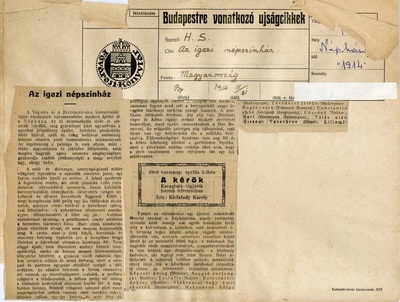
8 objects attributed to Henryk Sienkiewicz, held across European museums, libraries & archives · via Europeana


~32 min read
Encyclopedic overview
Henryk Adam Aleksander Pius Sienkiewicz ( US: /ʃɛnˈkjeɪvɪtʃ, -jɛv-/ shen-KYAY-vitch, -KYEV-itch; Polish: [ˈxɛnrɨk ˈadam alɛkˈsandɛr ˈpjus ɕɛnˈkʲɛvit͡ʂ]; 5 May 1846 – 15 November 1916), also known by the pseudonym Litwos (Polish: [ˈlitfɔs]), was a Polish epic writer. He is remembered for his historical novels, such as the Trilogy series and especially for his internationally known best-seller Quo Vadis (1895–1896).
Born into an impoverished Polish noble family in the Kingdom of Poland, at the time part of the Russian Empire, he began publishing journalistic and literary pieces in the late 1860s. In the late 1870s he traveled to the United States, sending back travel essays that won him popularity with Polish readers. In the 1880s he began serializing novels that further increased his popularity. He soon became one of the most popular Polish writers of the turn of the 19th and 20th centuries, and numerous translations gained him international renown, culminating in his receipt of the 1905 Nobel Prize in Literature for his "outstanding merits as an epic writer".
Excerpted from Wikipedia’s “Henryk Sienkiewicz” article, available under the CC BY-SA 4.0 licence.
Gallery (13)
Available in 101 languages
- Español
- Français
- Deutsch
- 中文
- 日本語
- Русский
- Português
- Italiano
- العربية
- हिन्दी
- Afrikaans
- Albanian
- Aragonese
- Armenian
- Asturian
- azb
- Azerbaijani
- Bahasa Indonesia
Show 82 more
- Bangla
- Bashkir
- Basque
- be_x_old
- Belarusian
- Bosnian
- Breton
- Bulgarian
- Catalan
- Crimean Tatar
- Croatian
- Czech
- Danish
- Egyptian Arabic
- Esperanto
- Estonian
- Fiji Hindi
- Finnish
- Galician
- Georgian
- Greek
- Hakka Chinese
- Hebrew
- Hungarian
- Icelandic
- Ido
- Iloko
- Interlingue
- Irish
- Kannada
- Kazakh
- Kotava
- Kurdish
- Latin
- Latvian
- Lingua Franca Nova
- Lithuanian
- Lower Sorbian
- Macedonian
- Malagasy
- Malay
- Malayalam
- Mazanderani
- Mingrelian
- Mongolian
- Nederlands
- Norwegian
- Norwegian Nynorsk
- Occitan
- Pashto
- Piedmontese
- Polski
- Punjabi
- Quechua
- Romanian
- Rusyn
- Scottish Gaelic
- Serbian
- Serbian (Latin)
- Silesian
- simple
- Slovak
- Slovenian
- Svenska
- Swahili
- Tatar
- Tiếng Việt
- Türkçe
- Ukrainian
- Upper Sorbian
- Urdu
- Uzbek
- Waray
- Welsh
- Western Panjabi
- Wu Chinese
- Yoruba
- zh_min_nan
- zh_yue
- فارسی
- ไทย
- 한국어
via Wikidata sitelinks · CC0