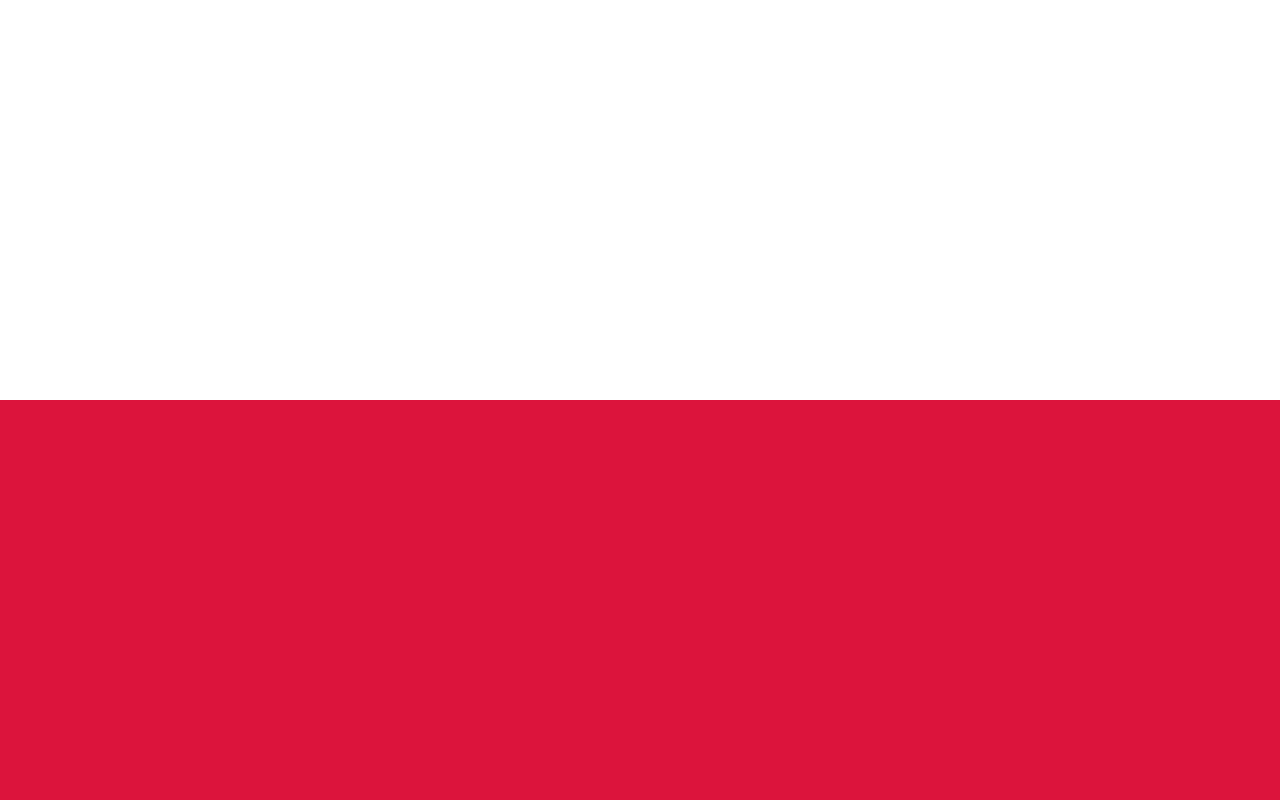
Poland
Sign in to saveAlso known as Republic of Poland
Poland, officially the Republic of Poland, is a country in Central Europe. It extends from the Baltic Sea in the north to the Sudetes and Carpathian Mountains in the south. Poland borders Kaliningrad Oblast and Lithuania to the north; Belarus and Ukraine to the east; Slovakia and the Czech Republic to the south; and Germany to the west. The territory has a varied landscape, diverse ecosystems, and a temperate climate. Poland is composed of sixteen voivodeships and is the fifth most populous member state of the European Union (EU), with over 38 million people, and the fifth largest EU country b
OverviewAI-generated
Poland, officially the Republic of Poland, is a country located in Central Europe. Its capital is Warsaw, and it is situated near the Baltic Sea, the Oder, the Lusatian Nysa, and the Jizera. The nation operates as a unitary state with a parliamentary and semi-presidential system. Its native labels include Rzeczpospolita Polska and Polska. The official currency is the złoty, and the Polish marka was also used. The country’s license plate code is PL.
The population figures vary across sources, listing 38,667,000, 37,392,000, and 36,559,233. Ethnic groups include Poles, Silesians, Germans, and Ukrainians in Poland. Poland maintains diplomatic relations with Canada, Italy, Brazil, and Germany. Its patron saints are Adalbert of Prague, Blessed Virgin Mary, Queen of Poland, Stanislaus of Szczepanów, and Stanislaus Kostka. The highest judicial authority is the Supreme Court of Poland. Public holidays include National Independence Day, New Year, Epiphany, and Easter Monday. The emergency phone number is 999.
Synthesized by Vinony from 72 facts across 9 sources: Wikidata, REST Countries, Open Meteo, Openweathermap, World Bank, OpenStreetMap, PubMed, Vinony graph, Geo. Generated from structured data (not the Wikipedia text) and checked against those facts — may still contain errors.
Weather now
cached 131h ago7-day forecast
via Open-Meteo
Country


- Capital
- Warsaw
- Population
- 37,392,000
- Region
- Europe · Central Europe
- Demonym
- Polish
- Currencies
- PLN (zł)
- Languages
- Polish
- Calling code
- +48
- Drives on
- Right
- Gini
- 30.2 (2018)
- FIFA code
- POL
- TLD
- .pl
- Timezones
- UTC+01:00
- Borders
- BLR, CZE, DEU, LTU, RUS, SVK, UKR
via REST Countries
Indicators · World Bank
- GDP
- $917.8B(2024)
- Population
- 36,559,233(2024)
- Life expectancy
- 78.4 yrs(2024)
- Unemployment
- 3 %(2025)
- Urban population
- 60 %(2024)
- Internet users
- 88.6 %(2024)
- Forest area
- 31.1 %(2023)
- Renewable energy
- 15.2 %(2021)
via World Bank Open Data · CC BY 4.0
Wikipedia views (30d)
256,587 totalvia Wikimedia Pageviews API
Key facts
- Country.HDI_rank
- 35th
- Country.currency
- Złoty
- Country.conventional_long_name
- Republic of Poland
- Country.common_name
- Poland
- Country.image_flag
- Flag of Poland.svg
- Country.flag_border
- Flag of Poland (normative).svgize
- Country.image_coat
- Herb Polski.svg
- Country.national_anthem
- Poland Is Not Yet Lost
- Country.capital
- Warsaw
- Country.largest_city
- capital
- Country.languages_type
- Official language
- Country.languages
- Polish
- Country.population_census
- 37,893,970
- Country.population_census_year
- 2026
- Country.population_census_rank
- 38th
- Country.population_density_km2
- 126
- Country.population_density_sq_mi
- 315.9
- Country.population_density_rank
- 98th
via Wikipedia infobox
Research
581,239 papers- Rheumatology in Poland.ReviewRheumatology international · 2019Maślińska M, Dobrzyński T, Kwiatkowska BDOI: 10.1007/s00296-019-04287-8
- Tetanus in Poland in 2018-2019.ReviewPrzeglad epidemiologiczny · 2021Bogusz J, Augustynowicz E, Paradowska-Stankiewicz IDOI: 10.32394/pe.75.33
- Infectious diseases in Poland in 2020.ReviewPrzeglad epidemiologiczny · 2022Rosińska M, Czarkowski MP, Sadkowska-Todys MDOI: 10.32394/pe.76.47
- Challenges of a GIS-based physical-geographical regionalization of Poland.Environmental monitoring and assessment · 2023Piniarski WDOI: 10.1007/s10661-023-11734-4
- Global Rounds: Poland.Circulation · 2024Sokolska JM, Ponikowski PDOI: 10.1161/CIRCULATIONAHA.123.063673
- Aging in Poland.The Gerontologist · 2015Leszko M, Zając-Lamparska L, Trempala JDOI: 10.1093/geront/gnu171
- Air Pollution in Poland: A 2022 Narrative Review with Focus on Respiratory Diseases.ReviewInternational journal of environmental research and public health · 2022Nazar W, Niedoszytko MDOI: 10.3390/ijerph19020895
- The bioeconomy in Poland within the context of the European Union.ReviewNew biotechnology · 2018Woźniak E, Twardowski TDOI: 10.1016/j.nbt.2017.06.003
via PubMed
Travel guide
Understand
Poland is located at the very centre of Europe with an area of 322,575 km².
Poland's western regions, including large parts of Lower Silesia, Lubuskie and Zachodniopomorskie, were parts of neighbouring Germany at different periods of time. The natural border of mountain ridges separating Poland from its southern neighbours, the Czech Republic and Slovakia, did not stop the cultural influence (and periodic warring). In the Middle Ages, Poland was part of a powerful Commonwealth with Lithuania that governed much of today's Belarus and Ukraine. The cultural evidence of it can be found closer to the present-day borders. Lastly, the entire eastern half of Poland used to be controlled by the Russian Empire, and there was a strong Soviet influence during the communist era, leaving behind many traces in both culture and built heritage.
Poland has a very homogeneous society in terms of ethnicity, language and religion. The historical Republics of Poland, whose boundaries were very different from those of today, were very multi-cultural, and, for a period, Poland was known as Europe's most religiously tolerant. Poland held Europe's largest Jewish population, which was all but wiped out by the Holocaust of World War II. After the war the survivors were persecuted by the anti-Semitic communist government into leaving the country.
Despite losing a third of its population during World War II, including a disproportionally large part of its elites, and suffering many economic setbacks as…
Get around
Polish road infrastructure is extensive but generally poorly maintained, and high speed motorways in place are insufficient. However, public transport is quite plentiful and inexpensive: buses and trams in cities, and charter buses and trains for long-distance travel.
See
Ever since Poland joined the European Union, international travellers have rapidly rediscovered the country's rich cultural heritage, stunning historic sites and just gorgeous array of landscapes. Whether you're looking for architecture, urban vibes or a taste of the past: Poland's bustling cities and towns offer something for everyone. If you'd rather get away from the crowds and enjoy nature, the country's vast natural areas provide anything from dense forests, high peaks and lush hills to beaches and lake reserves.
Do
Travel one of the European Cultural Routes that cross Poland: for example Cisterian Route Watch football: Ekstraklasa is the top tier of soccer in Poland, with 16 teams representing all the major cities. The playing season is July to April with a long winter break. The national team usually play home games at Stadion Narodowy (National Stadium) in Warsaw. Cycling: you can bike through Poland, there are five EuroVelo trails going through nearly every part of country. However, infrastructure may be a bit lacking outside major cities.
Eat
Poles take their meals following the standard continental schedule: a light breakfast in the morning (usually some sandwiches with tea/coffee), then a larger lunch (or traditionally a "dinner") at around 13:00-14:00, then a supper at around 19:00.
It is not difficult to avoid meat, with many restaurants offering at least one vegetarian dish. Most major cities have some exclusively vegetarian restaurants, especially near the city centre. Vegan options remain extremely limited, however.
thumbnail|right|Pierogi
Drink
thumbnail|right|Polish people drink more beer than any other alcoholic beverage
Poland is on the border of European "vodka" and "beer culture". Poles enjoy alcoholic drinks but they drink less than the European average. You can buy beer, vodka and wine. Although Poland is known as the birthplace of vodka, local beer seems to have much more appeal to many Poles. Another traditional alcoholic beverage is mead. Polish liqueurs and nalewka (alcoholic tincture) are a must.
You must be over 18 years old and be able to prove it with a valid ID to buy alcohol, and this is strictly enforced.
Sleep
Poland is catching up with Western Europe when it comes to availability and standards of lodging. Many smaller towns and locations less frequented by tourists still offer very little choice of accommodation and the existing providers make use of it rather by offering low standards than charging extortionate prices. In large cities, both in hotels and hostels, you can expect staff to have reasonable command of English, and often other foreign languages. In less frequented locations, the language barrier may be a problem.
Stay safe
The European unified emergency number 112 is being deployed in Poland. By now, it certainly works for all mobile-phone calls and most land-line calls.
There are also three "old" emergency numbers that are still in use for land-lines. These are: Ambulance (Pogotowie): 999, Firefighters (Straż Pożarna): 998, and Police (Policja): 997.
Municipal Guards (Straż Miejska), dial 986, is a kind of auxiliary Police force found only in large cities. They are not armed and their role is primarily to cope with parking offences and minor cases of antisocial behaviour.
thumbnail|right|When in trouble, report immediately to the police (Policja)
Stay healthy
Tap water is safe to drink in entire Poland. If you stay in any larger settlement, there is no reason to worry about water quality. The only complaint may be excessive chlorine treatment and the resulting unpleasant smell. However in some rural locations residents may prefer to source water from wells, which usually will be contaminated with iron and unsafe to drink. Poland relies heavily on coal and wood for home heating, and thus has a serious smog problem, which is particularly pronounced in winter and in the southern regions, especially in mountain valleys.
Go next
The land border can be crossed to Germany, Czechia, Slovakia, Ukraine, and Lithuania. Traffic to Belarus and the Kaliningrad Oblast is severely restricted as of 2025.
Travel guide from Wikivoyage (CC BY-SA 4.0)
~40 min read
Encyclopedic overview
48 sectionsContents
- Etymology
- History
- Prehistory and protohistory
- Kingdom of Poland
- The Golden Age
- Polish–Lithuanian Commonwealth
- Partitions
- Era of insurrections
- Second Polish Republic
- World War II
- Post-war communism
- Third Polish Republic
- Geography
- Climate
- Biodiversity
- Government and politics
- Administrative divisions
- Polish Regions
- Law
- Foreign relations
- Military
- Security, law enforcement and emergency services
- Economy
- Tourism
- Transport
- Energy
- Science and technology
- Demographics
- Languages
- Religion
- Health
- Education
- Culture
- Holidays and traditions
- Music
- Art
- Architecture
- Literature
- Cuisine
- Fashion and design
- Cinema
- Media
- Sports
- See also
- Notes
- References
- Works cited
- External links
Poland , officially the Republic of Poland, is a country in Central Europe. It extends from the Baltic Sea in the north to the Sudetes and Carpathian Mountains in the south, and borders Lithuania and Russia to the northeast; Belarus and Ukraine to the east; Slovakia and the Czech Republic to the south; and Germany to the west. The territory has a varied landscape, diverse ecosystems, and a temperate climate. Poland is composed of sixteen voivodeships and is the fifth most populous member state of the European Union (EU), with over 38 million people, and the fifth largest EU country by land area, covering 312,696 km (120,733 sq mi). The capital and largest city is Warsaw; other major cities include Kraków, Wrocław, Łódź, Poznań, and Gdańsk.
Prehistoric human activity on Polish soil dates to the Lower Paleolithic, with continuous settlement since the end of the Last Glacial Period. Culturally diverse throughout late antiquity, in the early medieval period the region became inhabited by the West Slavic tribal Polans, who gave Poland its name. The process of establishing statehood coincided with the conversion of a pagan ruler of the Polans to Christianity in 966 under the auspices of the Roman Catholic Church. The Kingdom of Poland emerged in 1025, and in 1569 cemented its long-standing association with Lithuania, thus forming the Polish–Lithuanian Commonwealth. At the time, the Commonwealth was one of the great powers of Europe, with an elective monarchy and a uniquely liberal political system, which adopted Europe's first modern constitution in 1791.
Excerpted from Wikipedia’s “Poland” article, available under the CC BY-SA 4.0 licence.
Gallery (59)
On the map
6 mapped locations
Available in 307 languages
- Español
- Français
- Deutsch
- 中文
- 日本語
- Русский
- Português
- Italiano
- العربية
- हिन्दी
- Abkhazian
- abstract
- Acehnese
- Adyghe
- Afrikaans
- Akan
- Albanian
- Albanian
Show 288 more
- Amharic
- ami
- Angika
- Aragonese
- Aramaic
- Armenian
- Arpitan
- Assamese
- Asturian
- Avaric
- Aymara
- azb
- Azerbaijani
- Bahasa Indonesia
- Balinese
- Bangla
- Banjar
- Bashkir
- Basque
- bat_smg
- Bavarian
- bdr
- be_x_old
- Belarusian
- Betawi
- Bhojpuri
- Bikol
- Bishnupriya
- Bislama
- blk
- Bosnian
- Breton
- btm
- Buginese
- Bulgarian
- Buriat
- Burmese
- Catalan
- cbk_zam
- cdo
- Cebuano
- Central Dusun
- Central Kurdish
- Chamorro
- Chechen
- Cherokee
- Cheyenne
- Church Slavic
- Chuvash
- Colognian
- Cornish
- Corsican
- Crimean Tatar
- Croatian
- Czech
- Danish
- Divehi
- dty
- Egyptian Arabic
- eml
- Erzya
- Esperanto
- Estonian
- Ewe
- Extremaduran
- Faroese
- Fiji Hindi
- Fijian
- Filipino
- Finnish
- fiu_vro
- Friulian
- Fula
- Gagauz
- Galician
- Gan Chinese
- Ganda
- gcr
- Georgian
- Gilaki
- Gothic
- Greek
- Guarani
- Gujarati
- Haitian Creole
- Hakka Chinese
- Hausa
- Hawaiian
- Hebrew
- Hungarian
- hyw
- Iban
- Icelandic
- Ido
- Igbo
- Iloko
- Inari Sami
- Ingush
- Interlingua
- Interlingue
- Inuktitut
- Inupiaq
- Irish
- Jamaican Creole English
- Javanese
- Kabardian
- Kabyle
- Kannada
- Kanuri
- Kara-Kalpak
- Karachay-Balkar
- Kashmiri
- Kashubian
- Kazakh
- kbp
- kge
- Khmer
- Kikuyu
- Kinyarwanda
- Komi
- Komi-Permyak
- Kongo
- Konkani
- Kotava
- Kurdish
- Kyrgyz
- Ladino
- Lao
- Latgalian
- Latin
- Latvian
- lbe
- Lezghian
- Ligurian
- Limburgish
- Lingala
- Lingua Franca Nova
- Lithuanian
- lld
- Lojban
- Lombard
- Low German
- Lower Sorbian
- Luxembourgish
- Macedonian
- Madurese
- Maithili
- Malagasy
- Malay
- Malayalam
- Maltese
- Manipuri
- Manx
- Māori
- map_bms
- Marathi
- Mari
- Mazanderani
- Minangkabau
- Mingrelian
- Mirandese
- Moksha
- Mongolian
- Moroccan Arabic
- N’Ko
- Navajo
- nds_nl
- Neapolitan
- Nederlands
- Nepali
- Newari
- Northern Frisian
- Northern Sami
- Northern Sotho
- Norwegian
- Norwegian Nynorsk
- Novial
- nrm
- Nyanja
- Occitan
- Old English
- olo
- Oromo
- Ossetic
- Palatine German
- Pampanga
- Pangasinan
- Papiamento
- Pashto
- Pennsylvania German
- Picard
- Piedmontese
- Polski
- Pontic
- Punjabi
- Quechua
- roa_rup
- roa_tara
- Romanian
- Romansh
- Romany
- rsk
- Rundi
- Rusyn
- Samoan
- Sango
- Sanskrit
- Santali
- Sardinian
- Saterland Frisian
- Scots
- Scottish Gaelic
- Serbian
- Serbian (Latin)
- Shan
- Shona
- Sicilian
- Silesian
- simple
- Sindhi
- Sinhala
- skr
- Slovak
- Slovenian
- Somali
- Southern Sotho
- Sranan Tongo
- Standard Moroccan Tamazight
- Sundanese
- Svenska
- Swahili
- Swati
- szy
- Tachelhit
- Tahitian
- Tajik
- Talysh
- Tamil
- Taroko
- Tatar
- tay
- Telugu
- Tetum
- Tibetan
- Tiếng Việt
- Tigrinya
- Tok Pisin
- Toki Pona
- Tongan
- Tsonga
- Tumbuka
- Türkçe
- Turkmen
- Tuvinian
- Tyap
- Udmurt
- Ukrainian
- Upper Sorbian
- Urdu
- Uyghur
- Uzbek
- Venda
- Venetian
- Veps
- Volapük
- Walloon
- Waray
- Welsh
- West Flemish
- Western Frisian
- Western Mari
- Western Panjabi
- Wolof
- Wu Chinese
- Xhosa
- Yakut
- Yiddish
- Yoruba
- Zaza
- Zeelandic
- zh_classical
- zh_min_nan
- zh_yue
- Zhuang
- Zulu
- فارسی
- ไทย
- 한국어
via Wikidata sitelinks · CC0