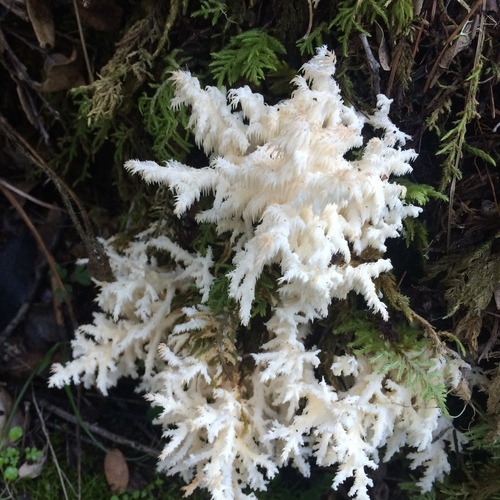
(c) raquel crites, some rights reserved (CC BY-NC), uploaded by raquel crites · cc-by-nc
Hydnum
Sign in to saveAlso known as Dentinum
Hydnum is a genus of fungi in the family Hydnaceae. They are notable for their unusual spore-bearing structures of teeth rather than gills. The best known are the edible species Hydnum repandum and H. rufescens. There are no known toxic varieties of Hydnum. Widely regarded as important maintainers of forest ecosystems, the Hydnum genus is known to have ectomycorrhizal relationships with multiple plant families. Hydnum has many brittle, white teeth from which the spores drop. Some species have teeth which hang from ascending branches, while other species have teeth which project downwards from
Species
Coral tooth fungus
GENUS
- KingdomFungi
- PhylumBasidiomycota
- ClassAgaricomycetes
- OrderCantharellales
- FamilyHydnaceae
Царство: Грибы Подцарство: Высшие грибы Отдел: Базидиомицеты Подотдел: Agaricomycotina Класс: Агарикомицеты Порядок: Кантарелловые Семейство: Ежовиковые Род: Гиднум Международное научное название Hydnum L., 1753, nom. cons. Типовой вид Hydnum repandum L., 1753, typ. cons. Систематикана ВикивидахИзображенияна Викискладе NCBI 57133EOL 19142MB 17797 Ги́днум (лат. Hydnum), или ежо́вик, иногда колчак[1] — род грибов, входящий в семейство Ежовиковые (Hydnaceae). Ранее в этот род включались все грибы с шиповатым гименофором. Название образовано от др.-греч. ύδνον — «трюфель», «съедобный гриб». Содержание 1 Биологическое описание 2 Таксономия 2.1 Синонимы 2.2 Виды 3 Примечания 4 Литература Биологическое описание Плодовые тела с выраженными шляпкой и ножкой. Шляпка с матовой, бархатистой поверхностью, не чешуйчатая, окрашена в беловатые, желтоватые или рыжеватые тона. Ножка также бархатистая, с возрастом становится гладкой, окрашена так же, как шляпка, или более светлая. Гименофор располагается на нижней поверхности шляпки, состоит из беловатых или красно-рыжеватых шипиков. Мякоть мясистая, однородная. Гифальная система мономитическая, на разветвлённых вздутых гифах имеются пряжки и септы.
via GBIF
Museum specimens
- Specimen records
- 2,175
- With media
- 1,107
- Family
- Hydnaceae
- Collections
- FC-UNAM, ENCB-IPN, CICB-UATX, IBUNAM, FESI-UNAM, ECOSUR
- Recorded in
- Mexico
Wikidata facts
Show 7 more facts
- taxon name
- Hydnum
- Commons category
- Hydnum
- taxon rank
- genus
- topic's main category
- Category:Hydnum
- taxonomic type
- wood hedgehog
- taxon common name
- lošák
- taxon author citation
- L.
via Wikidata · CC0
~7 min read
Encyclopedic overview
4 sectionsContents
- Taxonomy and diversity
- Species
- References
- External links
Hydnum is a genus of fungi in the family Hydnaceae. They are notable for their unusual spore-bearing structures of teeth rather than gills. The best known are the edible species Hydnum repandum and H. rufescens. There are no known toxic varieties of Hydnum. Widely regarded as important maintainers of forest ecosystems, the Hydnum genus is known to have ectomycorrhizal relationships with multiple plant families. Hydnum has many brittle, white teeth from which the spores drop. Some species have teeth which hang from ascending branches, while other species have teeth which project downwards from the undersurfaces of dead wood. Most Hydnum species are safe to eat, and contain many fatty acids and antioxidants.
==Taxonomy and diversity== Hydnum species are found on every continent that is habitable for plant life, with some preferring deep forest regions. Most of the common species, such as H. repandum and H. rufescens can be located in Europe, East Asia, and Australia.
Excerpted from Wikipedia’s “Hydnum” article, available under the CC BY-SA 4.0 licence.