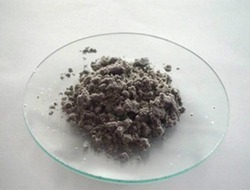
File:NaH.jpg · Wikimedia Commons · See Wikimedia Commons
hydride
Sign in to saveIn chemistry, a hydride is formally the anion of hydrogen (H−), a hydrogen ion with two electrons. In modern usage, this is typically only used for ionic bonds, but it is sometimes (and has been more frequently in the past) applied to all compounds containing covalently bound H atoms. In this broad and potentially archaic sense, water (H2O) is a hydride of oxygen, ammonia is a hydride of nitrogen, etc. In covalent compounds, it implies hydrogen is attached to a less electronegative element. In such cases, the H centre has nucleophilic character, which contrasts with the protic character
Wikidata facts
- Subclass of
- hydrogen compound
- Has part
- hydrogen
- Image
- NaH.jpg
Show 3 more facts
- topic's main category
- Category:Hydrides
- Commons category
- Hydrides
- topic has template
- Template:Hydrides by group
via Wikidata · CC0
~14 min read
Encyclopedic overview
16 sectionsContents
- Bonds
- Applications
- Hydride ion
- Types of hydrides
- Ionic hydrides
- Covalent hydrides
- Interstitial hydrides or metallic hydrides
- Transition metal hydride complexes
- Isotopes
- Mixed anion compounds
- Appendix on nomenclature
- Precedence convention
- See also
- References
- Bibliography
- External links
In chemistry, a hydride is formally the anion of hydrogen (H−), a hydrogen ion with two electrons. In modern usage, this is typically only used for ionic bonds, but it is sometimes (and has been more frequently in the past) applied to all compounds containing covalently bound H atoms. In this broad and potentially archaic sense, water (H2O) is a hydride of oxygen, ammonia is a hydride of nitrogen, etc. In covalent compounds, it implies hydrogen is attached to a less electronegative element. In such cases, the H centre has nucleophilic character, which contrasts with the protic character of acids. The hydride anion is very rarely observed.
thumb|Sodium hydride as an example of hydride salt
Excerpted from Wikipedia’s “hydride” article, available under the CC BY-SA 4.0 licence.