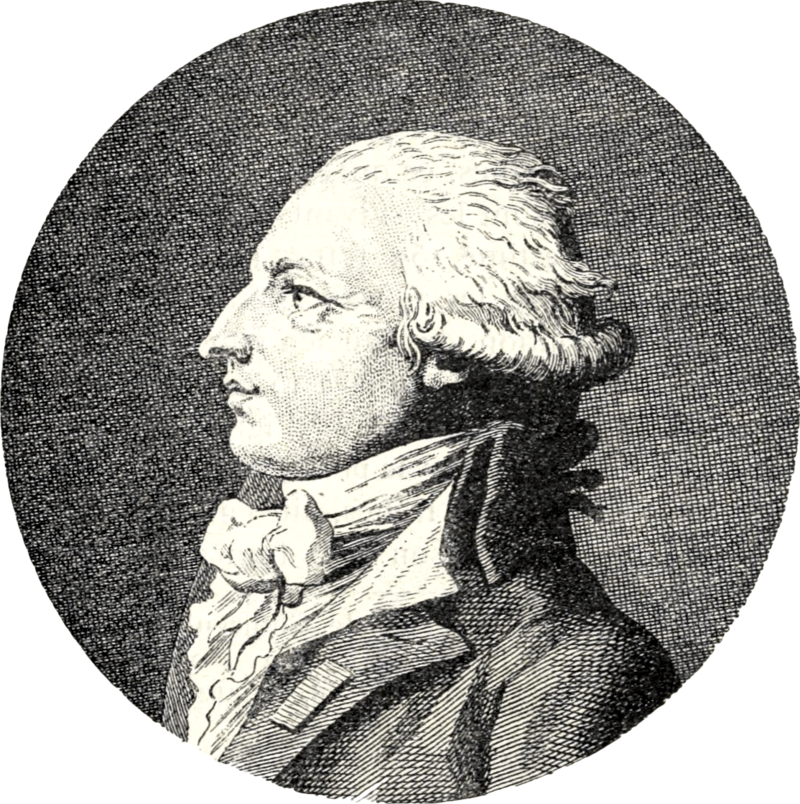
File:Antoine-Louis-Claude_Destutt_de_Tracy.png · Wikimedia Commons · See Wikimedia Commons
ideology
Sign in to saveAn ideology is a set of beliefs or values attributed to a person or group of persons, especially those held for reasons that are not purely about belief in certain knowledge, in which "practical elements are as prominent as theoretical ones". Formerly applied primarily to economic, political, or religious theories and policies, in a tradition going back to Karl Marx and Friedrich Engels, more recent use treats the term as mainly condemnatory.
An ideology is a set of beliefs and values held by a person or group, often shaped as much by practical interests as by what people actually know to be true. The term originally described economic, political, or religious systems, but today is frequently used negatively to suggest that someone's views are driven by bias rather than objective fact.
AI-generated from the Wikipedia summary — may contain errors.
Wikidata facts
- Subclass of
- world view
- Part of
- culture
- Image
- War2.png
Show 6 more facts
- topic's main category
- Category:Ideologies
- equivalent class
- dbpedia.org/ontology/Ideology
- Commons category
- Ideologies
- on focus list of Wikimedia project
- Wikipedia:Vital articles/Level/4
- category for eponymous categories
- Category:Wikipedia categories named after ideologies
- P8168
- Cucullia argentina
via Wikidata · CC0
~26 min read
Encyclopedic overview
19 sectionsContents
- Etymology
- History
- Definitions and analysis
- Marxist interpretation
- Ideology and the commodity (Debord)
- Unifying agents (Hoffer)
- Ronald Inglehart
- Political ideologies
- Ideology and state
- Epistemological ideologies
- Psychological explanations of ideology
- Ideology and the social sciences
- Semiotic theory
- Sociology
- Quotations
- See also
- References
- Bibliography
- External links
An ideology is a set of beliefs or values attributed to a person or group of persons, especially those held for reasons that are not purely about belief in certain knowledge, in which "practical elements are as prominent as theoretical ones". Formerly applied primarily to economic, political, or religious theories and policies, in a tradition going back to Karl Marx and Friedrich Engels, more recent use treats the term as mainly condemnatory.
The term was coined by Antoine Destutt de Tracy, a French Enlightenment aristocrat and philosopher, who conceived it in 1796 as the "science of ideas" to develop a rational system of ideas to oppose the irrational impulses of the mob. In political science, the term is used in a descriptive sense to refer to political belief systems.
Excerpted from Wikipedia’s “ideology” article, available under the CC BY-SA 4.0 licence.
Gallery (6)
Available in 131 languages
- Español
- Français
- Deutsch
- 中文
- 日本語
- Русский
- Português
- Italiano
- العربية
- हिन्दी
- Afrikaans
- Albanian
- Albanian
- Amharic
- Aragonese
- Armenian
- Assamese
- Asturian
Show 112 more
- Avaric
- azb
- Azerbaijani
- Bahasa Indonesia
- Bangla
- Bashkir
- Basque
- bat_smg
- be_x_old
- Belarusian
- Bosnian
- Breton
- btm
- Bulgarian
- Buriat
- Burmese
- Catalan
- Central Kurdish
- Chechen
- Cornish
- Croatian
- Czech
- Danish
- Egyptian Arabic
- Esperanto
- Estonian
- Faroese
- Fiji Hindi
- Filipino
- Finnish
- Galician
- Georgian
- Greek
- Hebrew
- Hungarian
- hyw
- Iban
- Icelandic
- Ido
- Iloko
- Irish
- Javanese
- Kara-Kalpak
- Karachay-Balkar
- Kazakh
- Khmer
- Kurdish
- Kyrgyz
- Lao
- Latin
- Latvian
- Limburgish
- Lithuanian
- Lombard
- Low German
- Macedonian
- Malay
- Malayalam
- Maltese
- Mazanderani
- Mingrelian
- Moksha
- Mongolian
- Nederlands
- Nepali
- Newari
- Norwegian
- Norwegian Nynorsk
- Occitan
- Oromo
- Pashto
- Piedmontese
- Polski
- Punjabi
- Quechua
- Romanian
- Rusyn
- Scots
- Serbian
- Serbian (Latin)
- simple
- Sindhi
- Sinhala
- Slovak
- Slovenian
- Somali
- Svenska
- Swahili
- Tajik
- Tamil
- Tatar
- Tiếng Việt
- Türkçe
- Ukrainian
- Urdu
- Uyghur
- Uzbek
- Venetian
- Waray
- Welsh
- Western Frisian
- Western Panjabi
- Wu Chinese
- Yakut
- Yiddish
- Zaza
- zh_classical
- zh_min_nan
- zh_yue
- فارسی
- ไทย
- 한국어
via Wikidata sitelinks · CC0