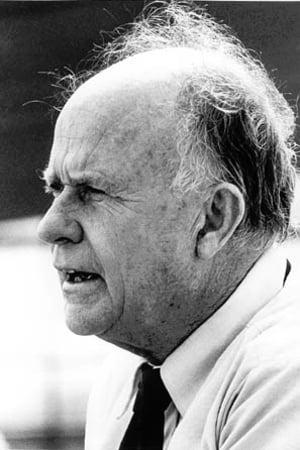
Profile via TMDB · Courtesy of TMDB
OverviewAI-generated
Jean Rouch was born on 31 May 1917 in Paris and died on 18 February 2004 in Birni-N'Konni as a result of a traffic collision. A French citizen, he worked as an anthropologist, film director, screenwriter, and photographer, active in film direction, documentary film, reportage, and ethnography from 1947 to 2003. He was educated at the École Nationale des Ponts et Chaussées and was later employed by Paris Nanterre University, where his doctoral students included Férid Boughedir, Mariama Hima, and Rose Lowder. He was buried in Niamey.
His written works include Jean Rouch talks about his films to John Marshall and John W. Adams, Eguéréou, Chants du Dahomey & du Niger, Dionysos, and Les Songhay.
Synthesized by Vinony from 30 facts across 4 sources: Wikidata, Open Library, TMDb, Crossref. Generated from structured data (not the Wikipedia text) and checked against those facts — may still contain errors.
Person · Open Library
- Works
- 12
Top works
- Jean Rouch talks about his films to John Marshall and John W. Adams
- Eguéréou
- Chants du Dahomey & du Niger
- Dionysos
- Les Songhay
via Open Library + Wikidata
Film & TV
Paris, France
Jean Rouch (French: [ʁuʃ]; 31 May 1917, Paris – 18 February 2004, Niger) was a French filmmaker and anthropologist. He is considered to be one of the founders of cinéma-vérité in France, which shared the aesthetics of the direct cinema. Rouch's practice as a filmmaker for over sixty years in Africa, was characterized by the idea of shared anthropology. Influenced by his discovery of surrealism…
Known for
- Outlaw — Self2025
- L’Enigma di Jean Rouch a Torino - Cronaca di un film raté2017
- My Conversations on Film — Himself2013
- Maya Deren, Take Zero — Himself2012
- Freddy Buache, le cinéma — Self (archive footage)2012
- Jean Epstein, Young Oceans of Cinema — Self (archive footage)2011
- The Dreamed Films — Self2010
- Jean Rouch, des mensonges plus vrais que la réalité — Lui-même2004
- Portrait de Jean Rouch — Self2004
- Encountering Jean Rouch2003
via TMDB
Key facts
- Born
- ( 1917-05-31 ) 31 May 1917, Paris , France
- Died
- 18 February 2004 (2004-02-18) (aged 86), Birni-N'Konni , Niger
- Occupations
- Filmmaker, anthropologist
- Years active
- 1947–2002
- Notable work
- Moi, un noir (I, a Black), Chronique d'un été (Chronicle of a Summer), La Chasse au lion à l'arc [ fr ] (Hunting the Lion with Bow and Arrow), Petit à petit [ fr ] (Little by Little)
- Relatives
- Geneviève Rouch (sister)
via Wikipedia infobox
Wikidata facts
- Instance of
- human
- Given name
- Jean
- Gender
- male
- Citizenship
- France
- Place of birth
- Paris
- Place of death
- Birni-N'Konni
- Occupation
- director
- Employer
- Paris Nanterre University
- Languages spoken
- French
- Native language
- French
- Notable work
- Les maîtres fous
- Field of work
- ethnography
- Movement
- cinéma vérité
- Image
- Jean Rouch.jpg
Show 10 more facts
- date of birth
- 1917-05-31
- date of death
- 2004-02-18
- Commons category
- Jean Rouch
- manner of death
- accidental death
- name in native language
- Jean Rouch
- described by source
- African Film Festival, Inc.
- cause of death
- traffic collision
- start of work period
- 1947-00-00
- end of work period
- 2003-00-00
- place of burial
- Niamey
via Wikidata · CC0
~12 min read
Encyclopedic overview
The French anthropologists Germaine Dieterlen (1903–1999) and Jean Rouch (1917–2004) with three of their local male informants, Sangha, Mali, 1980. Jean Rouch ( French: [ʁuʃ]; 31 May 1917 – 18 February 2004) was a French filmmaker and anthropologist.
He is considered one of the founders of cinéma vérité in France. Rouch's practice as a filmmaker, for over 60 years in Africa, was characterized by the idea of shared anthropology. Influenced by his discovery of surrealism in his early twenties, many of his films blur the line between fiction and documentary, creating a new style: ethnofiction. The French New Wave filmmakers hailed Rouch as one of their own.
Excerpted from Wikipedia’s “Jean Rouch” article, available under the CC BY-SA 4.0 licence.