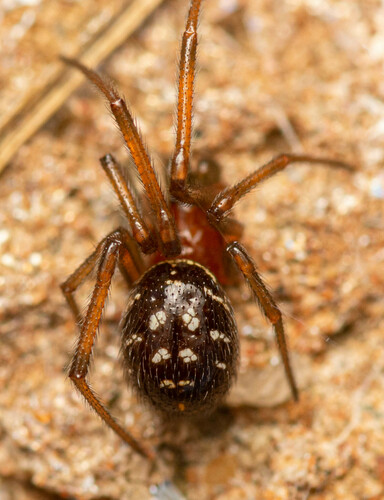
(c) Rudolph Steenkamp, some rights reserved (CC BY-SA), uploaded by Rudolph Steenkamp · cc-by-sa
katipo
Sign in to saveAlso known as Latrodectus katipo, katipo spider, katipō
Katipō (pronounced or ; Latrodectus katipo) is a species of cobweb spider found only in New Zealand. It is one of many species in the genus Latrodectus and is most closely related to the Australian redback (L. hasseltii). It is venomous to humans, its bite being capable of producing the toxic syndrome latrodectism; symptoms include extreme pain and, potentially, hypertension or seizure. Bites are rare and antivenom is available in some hospitals. The female is in length; the male is . In the South Island and the lower half of the North Island the female has a distinct red stripe bordered in wh
Species
Black Cobweb Spider
species
via
Wikidata facts
- Instance of
- taxon
- Parent taxon
- Latrodectus
- Image
- Latrodectus katipo.jpg
Show 6 more facts
- taxon common name
- Katipō
- taxon rank
- species
- taxon name
- Latrodectus katipo
- Commons category
- Latrodectus katipo
- Commons gallery
- Latrodectus katipo
- endemic to
- New Zealand
via Wikidata · CC0
~23 min read
Encyclopedic overview
20 sectionsContents
- Taxonomy
- Etymology
- Phylogeny
- Description
- Males and juveniles
- Distribution and habitat
- Habitat
- Life history
- Reproduction
- Population demographics
- Behaviour and ecology
- Prey capture
- Web structure
- Predators
- Conservation status
- Toxicology
- Symptoms
- Treatment
- References
- External links
Katipō (pronounced or ; Latrodectus katipo) is a species of cobweb spider found only in New Zealand. It is one of many species in the genus Latrodectus and is most closely related to the Australian redback (L. hasseltii). It is venomous to humans, its bite being capable of producing the toxic syndrome latrodectism; symptoms include extreme pain and, potentially, hypertension or seizure. Bites are rare and antivenom is available in some hospitals. The female is in length; the male is . In the South Island and the lower half of the North Island the female has a distinct red stripe bordered in white on its abdomen; in more northern populations this stripe is absent, pale, yellow, or replaced with cream-coloured blotches. These two forms were previously thought to be separate species. The male is white with black stripes and red hourglass-shaped markings.
The katipō is mainly found living in sand dunes close to the seashore. It is found throughout most of coastal New Zealand except the far south and the West Coast. It feeds mainly on ground-dwelling insects, caught in an irregular tangled web spun among dune plants or other debris. After mating, the female katipō produces five or six egg sacs in November or December. The juveniles hatch after 20–25 days and during January and February they disperse into surrounding plants. The common name is from Māori for "night stinger", which is derived from the words (to sting) and (the night). Due to habitat loss, colonisation of their natural habitat by invasive spiders and hybridisation with L. hasseltii, the katipō is listed as "in serious decline" by the New Zealand Threat Classification System.
Excerpted from Wikipedia’s “katipo” article, available under the CC BY-SA 4.0 licence.
Gallery (17)
Available in 15 languages
- Español
- Français
- Deutsch
- 中文
- Русский
- Português
- Bangla
- Cebuano
- Egyptian Arabic
- Nederlands
- Polski
- Svenska
- Tiếng Việt
- Waray
via Wikidata sitelinks · CC0