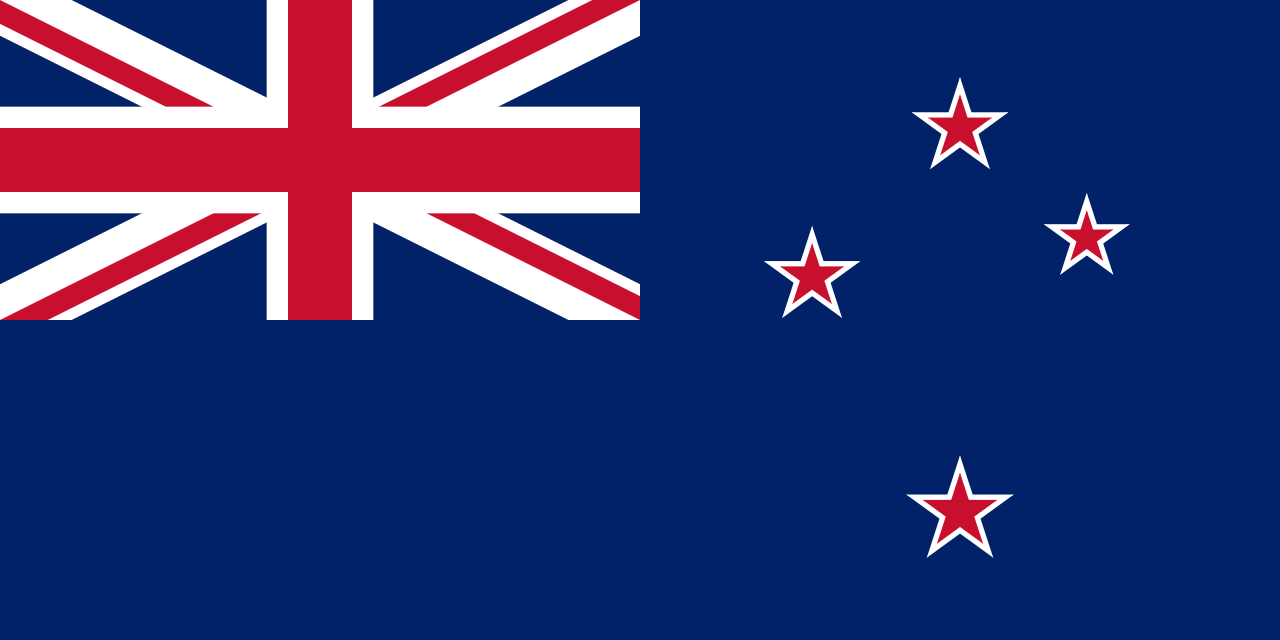
New Zealand
Also known as Dominion of New Zealand, nz, Aotearoa New Zealand
New Zealand is an island country in the southwestern Pacific Ocean. It consists of two main landmasses—the North Island and the South Island —and over 600 smaller islands. It is the sixth-largest island country by area and lies east of Australia across the Tasman Sea and south of the islands of New Caledonia, Fiji, and Tonga. The country's varied topography and sharp mountain peaks, including the Southern Alps, owe much to tectonic uplift and volcanic eruptions. New Zealand's capital city is Wellington, and its most populous city is Auckland.
AI overview
New Zealand is an island country in the southwestern Pacific Ocean made up of two main islands and over 600 smaller islands, located east of Australia. The country is notable for its varied terrain shaped by tectonic activity and volcanic eruptions, and it includes major cities like Auckland and the capital Wellington.
AI-generated from the Wikipedia summary — may contain errors.
Weather now
cached 26h ago-1°overcast clouds
95% 6.4 m/s OpenWeatherMap
7-day forecast
via Open-Meteo
Country
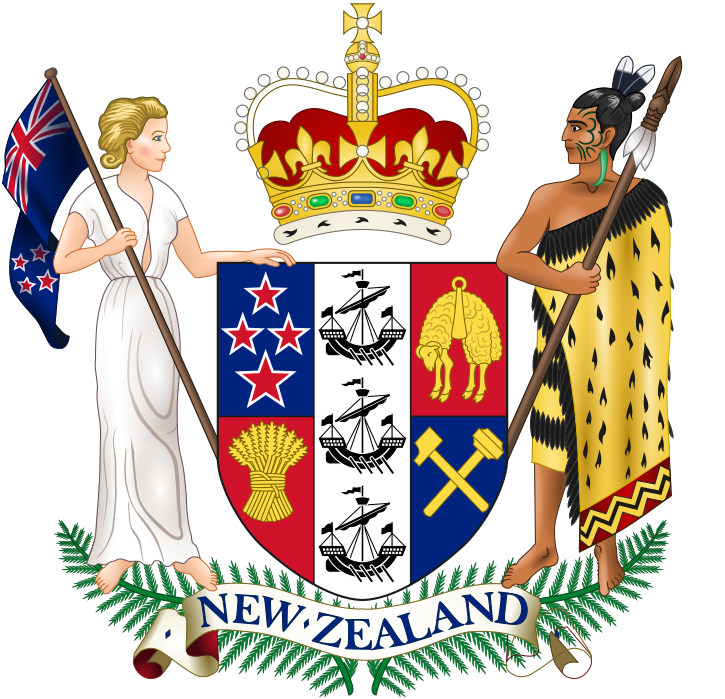

- Capital
- Wellington
- Population
- 5,324,700
- Region
Travel guide
Understand
New Zealand is increasingly known, both in the indigenous Māori language and in New Zealand English, as Aotearoa, often translated as "land of the long white cloud". Originally, Aotearoa referred to only the North Island.
The two main islands are officially named North Island / Te Ika-a-Māui and South Island / Te Waipounamu. Te Ika-a-Māui means "the fish of Māui"; in Māori legend, the North Island is a giant fish pulled up from sea by the demigod Māui, with its head to the south. Wellington is sometimes called te upoko o te ika (the head of the fish") and once boasted a monthly magazine called Fishhead. Te Waipounamu means "the greenstone waters"; greenstone is a nephrite jade found in the South Island and is highly valued by Māori people. An alternative (but unofficial) Māori name for the South Island is Te Waka-a-Māui (the canoe of Māui).
New Zealand's economic, social, linguistic and cultural characteristics closely resemble those of Australia, but there are also noticeable differences that New Zealanders are often eager to emphasise. In particular, the indigenous Māori culture has been woven into New Zealand's cultural fabric and is seen by most New Zealanders as an integral part of their national identity. It is important to note that the Aboriginal Australian and the New Zealand Māori cultures are not related, although they often have common cause with respect to colonialism.
New Zealanders enjoy a high standard of living, and the country is consistently ranked among…
Eat
thumb|Maori boil up, a soup of vegetables and pork bones Modern New Zealand cuisine has been influenced mainly by the country's British heritage, although immigration since the 1950s has put Mediterranean and Asia-Pacific twists to it. Māori have their own distinctive traditional cuisine.
The evening meal, called dinner or tea, is considered the main meal of the day. Snack breaks between meals are referred to as morning/afternoon tea.
New Zealanders typically only go out for dinner at a restaurant on special occasions such as birthdays or on romantic dates; most don't eat out on a highly frequent basis, although it is becoming more common. New Zealanders typically don't ask for the restaurant bill at the table, but rather vacate the table and ask for the bill at the front counter or bar.
New Zealand has a distinctive café culture, with arguably some of the best espresso on the planet. Cafés often have excellent food, serving anything from a muffin to a full meal.
~40 min read
Article
New Zealand is an island country in the southwestern Pacific Ocean. It consists of two main landmasses—the North Island (Te Ika-a-Māui) and the South Island (Te Waipounamu)—and over 600 smaller islands. It is the sixth-largest island country by area and lies east of Australia across the Tasman Sea and south of the islands of New Caledonia, Fiji, and Tonga. The country's varied topography and sharp mountain peaks, including the Southern Alps (Kā Tiritiri o te Moana), owe much to tectonic uplift and volcanic eruptions. New Zealand's capital city is Wellington, and its most populous city is Auckland.
The islands of New Zealand were the last large habitable land to be settled by humans. Between about 1280 and 1350, Polynesians began to settle in the islands and subsequently developed a distinctive Māori culture. In 1642, the Dutch explorer Abel Tasman became the first European to sight and record New Zealand. In 1769, the British explorer Captain James Cook became the first European to set foot on and map New Zealand. In 1840, representatives of the United Kingdom and Māori chiefs signed the Treaty of Waitangi, which paved the way for Britain's declaration of sovereignty later that year and the establishment of the Crown Colony of New Zealand in 1841. Subsequently, a series of conflicts between the colonial government and Māori tribes resulted in the alienation and confiscation of large amounts of Māori land. New Zealand became a dominion in 1907; it gained full statutory independence in 1947, retaining the monarch as head of state. Today, the majority of New Zealand's population of around 5.3 million is of European descent; the indigenous Māori are the largest minority, followed by Asians and Pasifika. Reflecting this, New Zealand's culture mainly derives from Māori and early British settlers but has recently broadened from increased immigration. The official languages are English, Māori, and New Zealand Sign Language, with the local dialect of English being dominant.
Gallery (16)
On the map
3 mapped locations
Connections
Categories
Archipelagoes of the Pacific OceanCountries and territories where English is an official languageCountries in AustralasiaCountries in OceaniaCountries in PolynesiaCPTPPIsland countriesMember states of the Commonwealth of NationsMember states of the United NationsNew ZealandOECD membersRealm of New Zealand