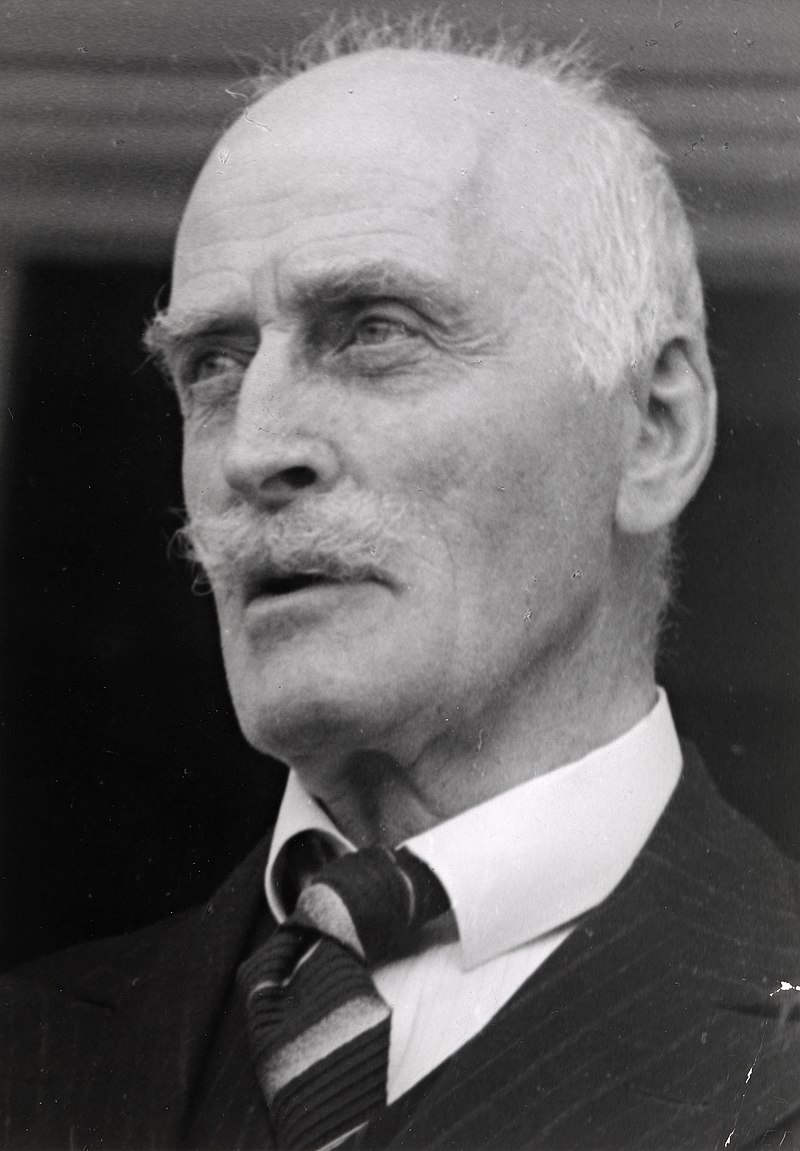
File:Hamsun_bldsa_HA0341.jpg · Wikimedia Commons · See Wikimedia Commons
OverviewAI-generated
Knut Hamsun was a male author from Norway whose work period spanned from 1877 to 1949. He was recognized in the Nobel Literature collection and received one Nobel Prize. His notable works include *August*, *Viktorie*, *Hunger*, and *Under høststjaernen*. The Hamsun Centre serves as the National Center for Author and Nobel Prize Winner Knut Hamsun.
He was born in 1859 and died in 1952. His writings have been referenced by 913 other encyclopedia articles. The Hamsun Centre maintains an official website at hamsunsenteret.no.
Synthesized by Vinony from 33 facts across 11 sources: Wikidata, Last.fm, Europeana Sparql, Crossref, Firecrawl, MusicBrainz, Open Library, Wikiquote, Nobel Prize, Vinony collections, Vinony graph. Generated from structured data (not the Wikipedia text) and checked against those facts — may still contain errors.
Nobel Prize
- The Nobel Prize in Literature1920
“for his monumental work, Growth of the Soil”
Official website

The Hamsun Centre | The National Center for Author and Nobel Prize Winner Knut Hamsun
Visit The Hamsun Centre in Nobel Prize-winning author Knut Hamsun's childhood village – Hamarøy. The center is located in the middle of the landscape that inspired Hamsun to write world-famous books such as Pan, Market Crop and Landstrykere., Visit The Hamsun Centre in Nobel Prize-winning author Knut Hamsun's childhood village – Hamarøy. The center is located in the middle of the landscape that inspired Hamsun to write world-famous books such as Pan, Market Crop and Landstrykere.
hamsunsenteret.no →Link to the official site · 10,457 chars · not written by Vinony
Wikidata facts
- Instance of
- human
- Given name
- Knut
- Gender
- male
- Citizenship
- Norway
- Place of birth
- Gudbrandsdalen
- Place of death
- Grimstad
- Occupation
- writer
- Political party
- Nasjonal Samling
- Languages spoken
- Danish
- Notable work
- Growth of the Soil
- Movement
- Neo-romanticism
- Official website
- hamsunsenteret.no/no
- Image
- Portrett av Knut Hamsun (1859-1952) (cropped).jpg
Show 16 more facts
- influenced by
- Friedrich Nietzsche
- Commons category
- Knut Hamsun
- date of birth
- 1859-08-04
- date of death
- 1952-02-19
- topic's main category
- Category:Knut Hamsun
- Commons gallery
- Knut Hamsun
- Commons Creator page
- Knut Hamsun
- nominated for
- Nobel Prize in Literature
- name in native language
- Knut Hamsun
- birth name
- Knut Pedersen Hamsun
- start of work period
- 1877-00-00
- end of work period
- 1949-00-00
- on focus list of Wikimedia project
- Wikipedia:Vital articles/Level/4
- place of burial
- Nørholm
- writing language
- Norwegian
Sources (10)
via Wikidata · CC0
Works in European collections
16 objects attributed to Knut Hamsun, held across European museums, libraries & archives · via Europeana

~22 min read
Encyclopedic overview
Knut Hamsun (/ˈhɑːmsʊn/; 4 August 1859 – 19 February 1952) was a Norwegian writer who was awarded the Nobel Prize in Literature in 1920. Hamsun's work spans more than 70 years and shows variation with regard to consciousness, subject, perspective and environment. He published more than 23 novels, a collection of poetry, some short stories and plays, a travelogue, works of non-fiction and some essays.
Hamsun is considered "one of the most influential and innovative literary stylists of the past hundred years" (ca. 1890–1990). He pioneered psychological literature with techniques of stream of consciousness and interior monologue, and influenced authors such as Thomas Mann, Franz Kafka, Maxim Gorky, Stefan Zweig, Henry Miller, Hermann Hesse, John Fante, James Kelman, Charles Bukowski and Ernest Hemingway. Isaac Bashevis Singer called Hamsun "the father of the modern school of literature in his every aspect—his subjectiveness, his fragmentariness, his use of flashbacks, his lyricism. The whole modern school of fiction in the twentieth century stems from Hamsun". Since 1916, several of Hamsun's works have been adapted into motion pictures. On 4 August 2009, the Knut Hamsun Centre was opened in Hamarøy Municipality.
Excerpted from Wikipedia’s “Knut Hamsun” article, available under the CC BY-SA 4.0 licence.
Gallery (5)
Available in 106 languages
- Español
- Français
- Deutsch
- 中文
- 日本語
- Русский
- Português
- Italiano
- العربية
- हिन्दी
- Afrikaans
- Albanian
- Aragonese
- Armenian
- Asturian
- azb
- Azerbaijani
- Bahasa Indonesia
Show 87 more
- Bangla
- Bashkir
- Basque
- be_x_old
- Belarusian
- Bosnian
- Breton
- Bulgarian
- Catalan
- Central Kurdish
- Chuvash
- Croatian
- Czech
- Danish
- Egyptian Arabic
- Esperanto
- Estonian
- Faroese
- Finnish
- Galician
- Georgian
- Greek
- Haitian Creole
- Hakka Chinese
- Hausa
- Hebrew
- Hungarian
- Icelandic
- Ido
- Iloko
- Interlingua
- Interlingue
- Irish
- Javanese
- Kannada
- Kazakh
- Kotava
- Kurdish
- Latin
- Latvian
- Lingua Franca Nova
- Lithuanian
- Low German
- Macedonian
- Malagasy
- Malay
- Malayalam
- Mazanderani
- Mingrelian
- Nederlands
- Norwegian
- Norwegian Nynorsk
- Novial
- Occitan
- Ossetic
- Polski
- Punjabi
- Quechua
- Romanian
- Scots
- Scottish Gaelic
- Serbian
- Serbian (Latin)
- simple
- Slovak
- Slovenian
- Svenska
- Swahili
- Tajik
- Tatar
- Tiếng Việt
- Türkçe
- Turkmen
- Ukrainian
- Urdu
- Veps
- Waray
- Welsh
- Western Frisian
- Western Panjabi
- Wu Chinese
- Yoruba
- zh_min_nan
- zh_yue
- فارسی
- ไทย
- 한국어
via Wikidata sitelinks · CC0